


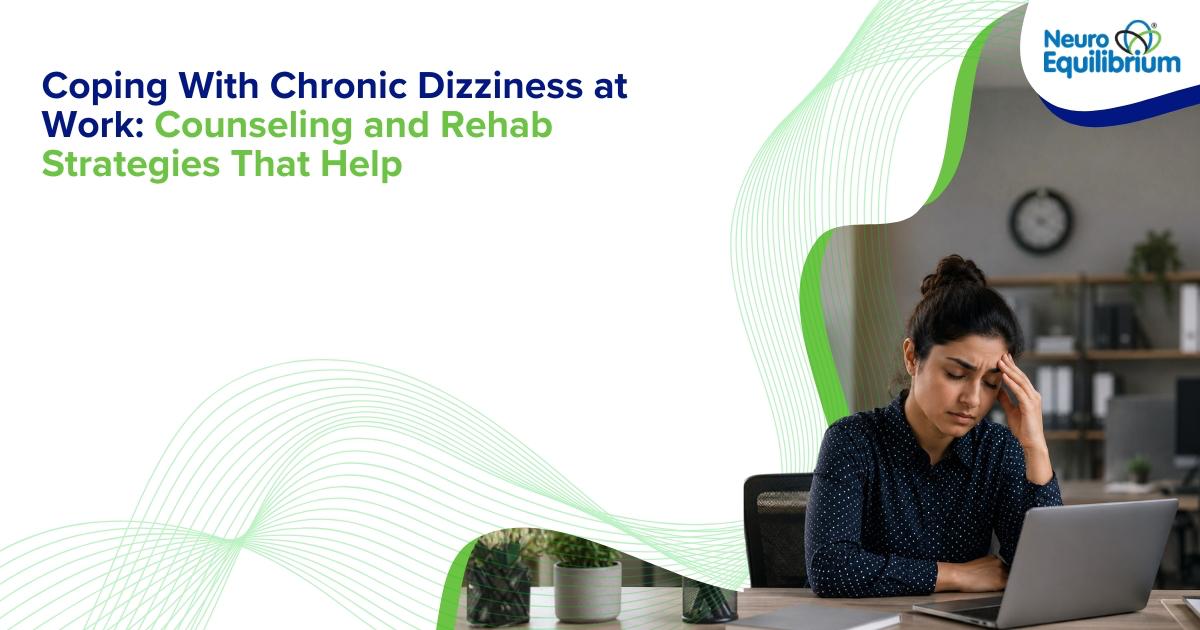





Chronic dizziness at work can make it harder to use the computer, participate in meetings, walk through a crowd, and change position. During the daytime, some may feel unsteady, feel “overwhelmed” by sight, and feel more sensitive to movement. If your brain needs to overexert itself to stay standing, there’s not enough energy to be creative or concentrate, and no joy in the workday because you’re afraid of lights or video calls.
The first step in managing chronic dizziness at work is to determine the cause of the dizziness. Treatment options may include vestibular rehab, counseling for dizziness, medical treatment, and job accommodations.
Why Can Persistent Dizziness Feel Worse During a Normal Office Day?
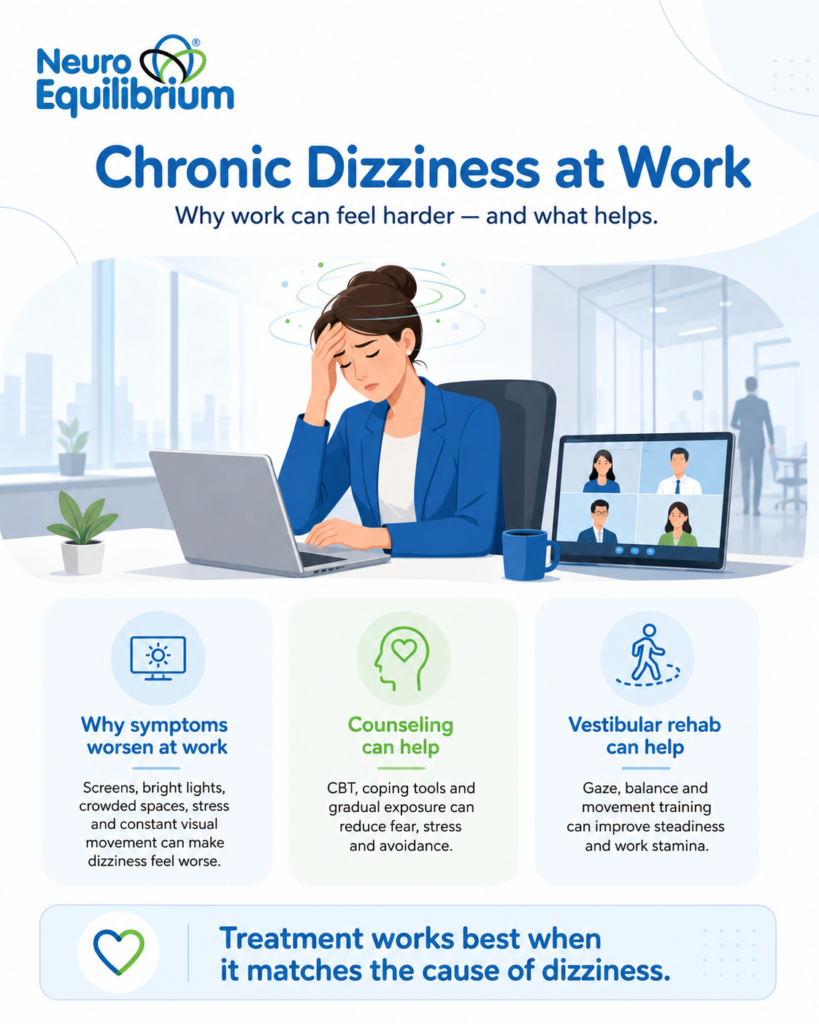
When you’re in the office, you have to deal with numerous different things at once. Your eyes may constantly shift between a laptop, phone, papers, and the people around you. You may view spreadsheets, attend video conferences, walk through crowded spaces, or work in brightly lit environments.
This additional visual and movement input can make it harder for a person with dizziness and movement sensitivity to feel steady, see clearly, or avoid symptoms such as headache, nausea, or a “foggy” sensation. PPPD can worsen while standing, moving, or being in visually stimulating environments. Vestibular migraine may also be triggered by factors such as prolonged screen use, irregular sleep, missed meals, stress, or bright lights.
That’s why symptoms might be worse at work than at home. The brain may be trying to compensate for the constant effort to maintain a sense of balance, vision, and body position.
Know More About
- Why Do Crowded Places Make Me Dizzy?
- Why Am I Dizzy? Top Dizziness Reasons and When to See a Specialist
- World Health Day 2026: Why Your Balance Health Deserves Attention
Stop the activity you are doing and sit somewhere safe
When dizziness suddenly appears during a meeting, while looking at a computer screen, or when walking around the workplace, the priority is to stay safe rather than trying to push through the symptoms. Sit down in a stable chair or lie down somewhere safe if needed. Avoid walking quickly, using stairs, operating machinery, or driving until the dizziness has settled. Moving slowly and getting up gradually can also reduce the risk of losing balance or falling.
When chronic dizziness occurs at work, check out these simple steps to take on the first signs:
- Stop the activity and find a place to sit safely.
- Slow head and body movements until you are more steady.
- If you have been working for several hours without sufficient fluid consumption, drink some water.
- If the symptoms are exacerbated by a busy visual environment, a TV screen, or a noisy environment, switch to a quieter setting.
- If you’re not feeling very steady on your feet, inform a coworker or supervisor.
- Avoid driving, cycling, climbing ladders, or operating equipment while you are dizzy.
- Make a quick note of what you were doing when the dizziness started. Screen use, standing for long periods, rapid head movements, stress, lack of sleep, or busy surroundings may help your vestibular specialist understand your symptom pattern.
Once the episode settles, do not rush immediately back into demanding tasks. Return gradually and follow the activity plan recommended by your vestibular therapist. For people dealing with recurring symptoms, vestibular rehabilitation can help the brain and balance system become better at handling movements and environments that currently trigger dizziness. Counseling can also be useful when fear of another episode begins to cause anxiety, avoidance, or difficulty concentrating at work.
If you are constantly experiencing dizziness at work, this shouldn’t just be something you learn to live with. When episodes recur, when they interfere with your normal activities, or when they make it hard to do your normal activities, a proper assessment can provide a clue as to what is causing the problem and help find out if vestibular rehabilitation, medical treatment, counseling, or some combination of these may be of benefit.
Important: If dizziness is new or is severe and accompanied by symptoms like difficulty speaking, weakness or numbness in an arm or leg, double or loss of vision, fainting, severe headache, chest pain, or marked difficulty walking, seek urgent medical help. These symptoms should not be considered normal dizziness.
What Workplace Changes Can Make Chronic Dizziness at Work Easier to Manage?
Strain on the balance system can be minimized by making small changes.
Avoid long, unbroken stretches of screen time take brief breaks to rest your eyes.Reduce glare, keep lighting comfortable, increase text size as needed and vary between screen and non-screen activities when possible. If you’ve been scrolling for a while, it can be helpful to focus on a stationary object for a few minutes. “following adjustments” but no bulleted list actually follows here may be useful if dizziness or sensitivity to movement is a problem while using a screen.
Ergonomic chairs and desk height can help avoid unnecessary strain. Attention to regular meals, fluid intake, and sleep patterns is also helpful, especially for those who suffer from dizziness associated with migraine.
If dizziness prevents you from safely driving, attending long meetings, or seeing the computer screen, speak with your employer about making temporary accommodations. These might include:
- Flexible breaks during the workday
- A limit on the number of video calls
- A more serene and less noisy office desk
- Temporary work-from-home days
- Alternating between computer tasks and non-computer tasks
- Not driving or operating unsafe machinery while dizzy or at certain level of height.
The aim is not to prevent normal activity altogether. The goal is to make the workday safer while addressing the underlying problem.
How Does Counseling for Dizziness Help When Fear Starts Making Symptoms Harder to Manage?
Excessive and persistent dizziness can form a cycle. A person feels unsteady, worries about becoming unsteady again, starts monitoring every sensation in the body, and may begin avoiding movements or places that feel unsafe. Daily activities can seem even more challenging because of that fear and attention.
Counselling can help to stop this cycle if a person suffers from dizziness.
CBT (cognitive behavioral therapy) teaches people to be aware of fear-inducing and unhelpful thoughts, and to react to them in a more balanced manner. The person learns practical coping skills and how to continue safe activities rather than assuming that every episode of dizziness means something serious is about to happen.
This is not a trick of the mind, and it is not an illusion; dizziness is real. Therapy can help address distress, stress, hypervigilance, and avoidance that may develop alongside a balance disorder. CBT, exposure therapy, and mindfulness-based cognitive therapy, if applicable, are also used in NeuroEquilibrium’s own treatment program for persistent dizziness.
Can CBT and Exposure Therapy Help With PPPD and Persistent Dizziness?
Treatment for PPPD and other forms of persistent dizziness may include CBT when fear of movement, falling, crowds, travel, or visually overstimulating environments begins to interfere with daily life.
CBT added to standard treatment has been shown to be beneficial for reducing dizziness-related disability and anxiety in those with PPPD; however, it should not be offered as a treatment for all causes of dizziness.
A therapist can employ:
- Thought restructuring: training to challenge and question frightening thoughts, e.g., “If I get dizzy during this meeting, something bad will happen.”
- Relaxation skills: to help decrease the physical stress response that may manifest at the onset of symptoms.
- Gradual exposure: slowly returning to movements/place that have become slowly returning to movements or places that have become hard to tolerate
- Coping skills: Gaining confidence in travel, meetings, screen usage, walking, and other typical activities.
Exposure is controlled and gradual. It may start with a simple visual or movement challenge and gradually progress to activities such as walking through a busy corridor or looking at a visually complex screen.
Mindfulness-based techniques can also form part of the counseling. The goal is to be aware of the symptoms without reacting in panic, and gradually diminish the danger response of the nervous system.
How Does Vestibular Rehabilitation Rebuild Balance and Work Stamina?
Vestibular Rehabilitation Therapy (VRT) is a specialized exercise program for individuals experiencing dizziness, vertigo, imbalance, or sensitivity to movement.
There is strong clinical evidence that vestibular rehabilitation can be effective for individuals with peripheral vestibular hypofunction, as it can improve gaze stability, balance, and daily functioning.
VRT can concentrate on:
- Gaze stabilisation: These exercises will assist the eyes to stay stable during head movements. These are helpful when text, objects, or the environment appear to jump or blur in motion.
- Habituation: The person is gradually exposed to movements or visual patterns that trigger symptoms so that sensitivity may reduce over time.
- Balance training: Training to develop stability during standing, walking, turning, or movement over various surfaces.
- Functional exercises: Rehabilitation can be a recreation of activities, such as walking while turning the head, changing direction, or performing two activities simultaneously.
A VRT program is a program that progresses. The aim is not to make somebody as dizzy as possible. The exercises are to be chosen based on the diagnosis and built up incrementally based on the person’s ability to take it.
Can Virtual Reality and App-Based Rehab Help With Screen and Visual-Motion Dizziness?
Some people feel particularly dizzy when scrolling, viewing moving graphics, walking through supermarkets, watching traffic, or moving through a busy office. These are visually complex environments.
These challenges can be simulated in a graded fashion in rehabilitation using controlled visual-motion exercises or virtual reality (VR) systems. Visual-motion exercises and virtual-reality methods are both supported by research, and clinical guidelines validate potential components of VR.
Personalized VRT, VR-based balance activities, Digital tracking, and app-supported modules are all considered to be part of our rehabilitation services. These tools enable rehabilitation to be more akin to real-life situations, rather than just simple standing and walking.
Exercises can eventually prepare the balance system to use for activities like:
- Viewing between a laptop and others
- Scrolling through documents
- Moving through a busy, crowded office this is two sentences saying the same thing, with a missing space between them, and reads as an unfinished single bullet
- Wandering around as you walk
- Turning the head during discussions (lifting the head)
- Coping with visually crowded spaces
This is why some patients may benefit from vestibular rehabilitation together with counseling for dizziness: one can address balance and motion tolerance, while the other can help with fear and avoidance.
Why Should the Cause of Dizziness Be Diagnosed Before Starting Rehab or Counseling?
Dizziness is a symptom and not a disease.
There are many different causes of dizziness, and the treatment may vary greatly for each condition, including BPPV, vestibular migraine, vestibular neuritis, Ménière’s disease, PPPD, and others. An example of this is that confirmed BPPV may be treated with an appropriate canal-repositioning manoeuvre. The correct manoeuvre depends on the affected canal and side and should be performed or advised under appropriate specialist supervision. If there is ongoing imbalance following the vestibular injury, it may need to be addressed with VRT.
The first step in a specialist assessment is to understand:
- When the dizziness occurs.
- What triggers it
- The length of each episode
- Symptoms during sitting, standing, or moving
- The presence or absence of headaches and migraine symptoms
- Whether there are any changes in hearing or tinnitus.
- What medications are you taking?
- The intensity of symptoms in the workplace and in daily activities
The tests required depend on the suspected cause, and not every person with chronic dizziness needs every vestibular investigation. Assessment may include tests such as VNG, caloric testing, SVV, DVA, or vHIT, while more specialised tests such as VEMP may be considered when clinically relevant. These tests assess various aspects of the balance system and are used by the clinician to select more accurately which treatment is most beneficial.
Diagnosis is a first-step approach that is important. While a counseling session for dizziness can not correct displaced crystals in the inner ear as in BPPV, a generic exercise program may not be effective for all vestibular disorders.
Why Choose NeuroEquilibrium for Chronic Dizziness Care?
It is more beneficial to treat dizziness as a symptom of a larger problem and to connect diagnosis with treatment when dizziness is interfering with functioning at work.
Specific treatment for vertigo may involve:
- Thorough clinical and balance assessment
- Advanced balance testing
- Diagnosis-led medical treatment
- Canalith repositioning procedures (CRP) if applicable for BPPV
- Individualised Vestibular Rehabilitation Therapy.
- Gaze stabilization, balance exercises
- Rehabilitation with VR and app.
- Online rehabilitation support
- CBT counseling methods are recommended.
- Exposure therapy
- Mindfulness-based cognitive therapy
Treatment is prescribed based on the cause, rather than the same solution for all patients. In the current care pathway, there is a complete assessment process, followed by customized medical treatment and vestibular rehabilitation, and counseling for PPPD and vestibular migraine is available.
This is especially helpful when physical balance symptoms are accompanied by avoidance, fear, or stress with work, travel, movement, or visually busy environments.
Chronic Dizziness at Work Can Improve When Treatment Matches the Cause
Work-related chronic dizziness has an impact on concentration, confidence, movement, and being able to enjoy a full workday.
Eliminating all of the triggers can also make life a little smaller day by day. Simultaneously, pushing through with symptoms without realizing what is causing them could result in the underlying balance disorder not being addressed.
A good way to do this is one step at a time: determine the cause, make practical changes in the workplace, when appropriate, try vestibular rehabilitation, and, if fear or avoidance has become a part of the cycle, seek out counseling for dizziness.
Vertigo and balance problems are addressed through careful diagnosis at NeuroEquilibrium, followed by treatment tailored to each person’s specific problem. Problems can’t be “based on” a diagnosis, the diagnosis addresses/informs treatment of the problem Book an appointment today.
Frequently Asked Questions
How to deal with chronic dizziness?
The key to managing chronic dizziness is to find the cause. Vestibular rehabilitation therapy, medication, hydration, stress management, and lifestyle changes are among the options for treatment. Don’t make sudden movements, sleep well, and exercise as directed by your doctor. For persistent dizziness for weeks or affecting daily life, see an ENT specialist, a neurotologist, or a neurologist for a comprehensive assessment.
Why do I always get dizzy at work?
Dehydration, extended screen time, stress, poor posture, low blood sugar, inner ear disorders, or insufficient ventilation can all cause dizziness at work. This can also be caused by eye strain and fatigue. Regular occurrence of the symptoms may be useful to monitor the time of onset and seek medical evaluation to determine the underlying cause and treatment.
Can vertigo come back after treatment?
BPPV can often respond well to an appropriate canal-repositioning manoeuvre, but recurrence can occur. The correct manoeuvre depends on the affected canal and side.
What could be causing a constant feeling of dizziness and loss of balance?
If dizziness and balance problems continue for a prolonged period, they may indicate a vestibular disorder, inner ear disease, vestibular migraine, neurological problem, side effect of medication, low blood pressure, or anxiety-related disorder. A thorough examination by a medical professional is essential to identify the underlying cause of the symptoms, as many conditions can cause them.
What is the red flag for dizziness?
If you experience any of the following symptoms, seek medical help: sudden severe dizziness, difficulty speaking, double vision, weakness of the face, numbness, severe headache, pain in the chest, fainting, or trouble walking. The symptoms could be a sign of a serious condition, like a stroke or a heart problem; contact medical help right away. Treatment at an early stage may be essential to avoid complications.