







1st October is the International Day of Older Persons, which is celebrated every year. It is also a reminder that healthy ageing isn’t just about living longer. It’s also about being able to move, walk, be confident, and be independent.
Dizziness or a light stumble in older adults is often treated as a matter of “old age” for many families without any attempt to seek medical care. A parent can begin holding onto the wall when walking, refrain from taking steps, may be hesitant to go to the bathroom, or may decline to go outside due to fear of falling. Attention is drawn to these changes. If you experience dizziness and falling, it’s common in old age, but it doesn’t have to be a part of it.
Balance is a result of the functioning of the inner ear, eyes, brain, muscles, joints, and nerves working together. If one or more of these systems is not functioning well, there is often a cause for this, and it can be managed.
Is Dizziness and Loss of Balance a Normal Part of Ageing?
As people age, their vision, muscle strength, reflexes, and sensation in their feet and inner ear balance system may be affected. This may make maintaining balance more challenging. But when elderly adults have ongoing dizziness, repeated dizziness or unsteadiness, or sudden changes in walking, it should be evaluated.
Older adults may experience balance problems due to one condition or multiple conditions working in conjunction. Mild inner-ear weakness, poor vision, and a medicine that lowers blood pressure may combine to make walking less safe.
When an older person starts to lose balance frequently, or begins to not enjoy normal activities because of the fear of losing their balance when walking, families should be mindful.
Know More About
- https://www.neuroequilibrium.in/fall-prevention-in-seniors-with-vestibular-disorders-evidence-based-strategies-that-work/
- https://www.neuroequilibrium.in/importance-of-fall-prevention-in-elderly/
- https://www.neuroequilibrium.in/prevention-of-falls/
Why Do Older Adults Become More Likely to Fall?
The vestibular system in the inner ear, vision, and sensory input from the muscles and joints are the three primary systems that contribute most to good balance. The brain integrates these signals and directs the body on what to do in order to remain upright.
One system can become weak while the others can make up for it. However, when multiple systems are impacted simultaneously, the chances of losing balance increase. The lack of lighting, slippery floors, weaker leg muscles, slower reactions, and precipitous loss of blood pressure can compound the challenge.
Elderly adults who fall frequently have more than one cause for falling. Understanding what factors are contributing to the problem can help create a more effective prevention and treatment program.
What Are the Most Common Causes of Dizziness in Elderly Adults?
A lot of elderly patients have different reasons for their dizziness. A pattern of symptoms is a helpful clue.
A common cause is benign paroxysmal positional vertigo (BPPV), a problem in the inner ear. Minuscule small calcium crystals get trapped in an Calcium carbonate crystals get dislodged into the canals in your inner ear. imbalance canal. This may result in episodes of brief spinning when rolling in bed, when looking up, bending down, or getting up.
Other possibilities are lessened vision, nerve issues, muscle weakness, dehydration, anaemia, blood-pressure changes and neurological or heart issues. In older adults, vertigo can be due to a variety of causes, and a correct assessment of the cause is more helpful than assuming that all dizziness is caused by an ear problem.
Vestibular weakness means the balance system in the inner ear is not working as well as it should. It can make a person feel unsteady, especially in the dark, while walking on uneven ground, or when moving around in busy environments. It can occur due to conditions such as vestibular neuritis, Ménière’s disease, or vestibular migraine. Ménière’s disease may also cause hearing changes, ringing in the ears (tinnitus), or a feeling of pressure or fullness in the ear.
Certain blood pressure, sleep or pain medications may cause drowsiness, low blood pressure or poor balance. Do not stop taking medicines without the doctor’s advice.
Why Should Frequent Falls in Elderly Adults Never Be Ignored?
Falls can result in fractures, head trauma, hospitalizations, and decreased mobility. It will also impact self-esteem.
The typical cycle is dizziness, fear of falling, and reduced mobility. A lack of movement may result in weaker muscles and balance.
A study has shown that dizziness is associated with an increased risk of falls in older adults. In an older age group who were dizzy, the odds of future falls and recurrent falls were found to be greater in a systematic review.
This is one of the reasons why it is crucial to have a repeated dizziness assessment before the serious injury even occurs.
What Warning Signs Suggest That an Older Adult’s Balance Needs Assessment?
Families have a tendency to recognise change before the older person will in a clear manner. Red flags include holding onto walls or furniture to walk with, walking to the side, difficulty walking on uneven surfaces, feeling significantly less steady in the dark, getting out of bed dizzy, and repeated unexplained falls.
As an older adult becomes unsteady, it could be the first sign that they are beginning to move at a much slower pace or no longer venturing out on their own. These changes are important because they may indicate that the problem is starting to impact independence.
When Does Dizziness in an Older Adult Need Urgent Medical Attention?
Not all dizziness is an emergency. In the case of sudden dizziness that is accompanied by weakness or numbness on one side, drooping of the mouth, difficulty speaking, a new severe headache, double vision, sudden trouble with walking, loss of consciousness, chest pain, or sudden hearing loss, urgent medical attention is required.
These symptoms can help to identify conditions that require immediate attention and evaluation, not routine balance care.
How Do Doctors Find the Cause of Balance Problems in Elderly Patients?
First, you need to figure out the pattern. Does the room spin? Have any of the following symptoms after standing up? Does dizziness occur when rolling about in bed or changing the head’s position in space?
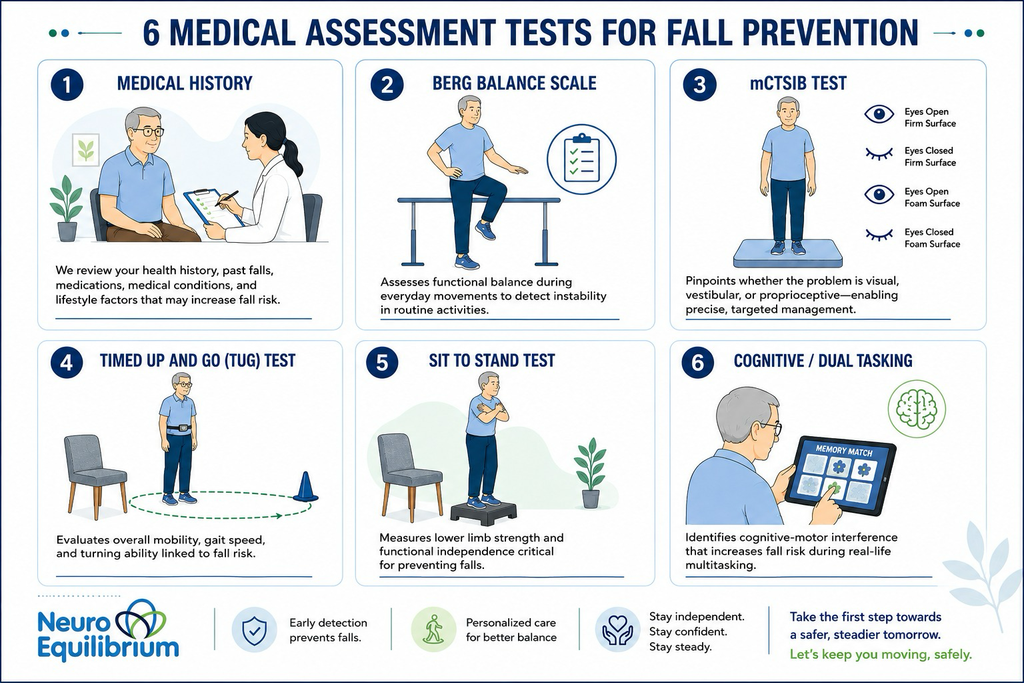
Eye movement testing, gait assessment, blood pressure measurement, and review of medication and history may be part of a balance assessment. Current falls guidance also suggests including questions about dizziness, gait problems, and concerns about falling in the assessment of older adults.
If a vestibular disorder is considered, other tests may be performed such as the Videonystagmography (VNG), video Head Impulse Test (vHIT), caloric testing, Dynamic Visual Acuity (DVA), Subjective Visual Vertical (SVV) and Computerised Dynamic Posturography (CDP).
These tests examine various aspects of the balance system and can offer the functional information that conventional structural scans cannot. Currently, VNG, SVV, DVA, caloric testing and other more advanced balance tests are included in the diagnostic pathway available on NeuroEquilibrium.
One of the tests used for posturography is a way of assessing how the body uses information from its eyes, inner ears, and body sensors to maintain stability. This can be beneficial in cases where dizziness in older people is associated with unsteadiness or falls.
Can Vertigo and Balance Problems in Older Adults Be Treated?
Treatment depends upon the underlying cause. No one single exercise, medicine, or manoeuvre is appropriate for all older adults who experience dizziness.
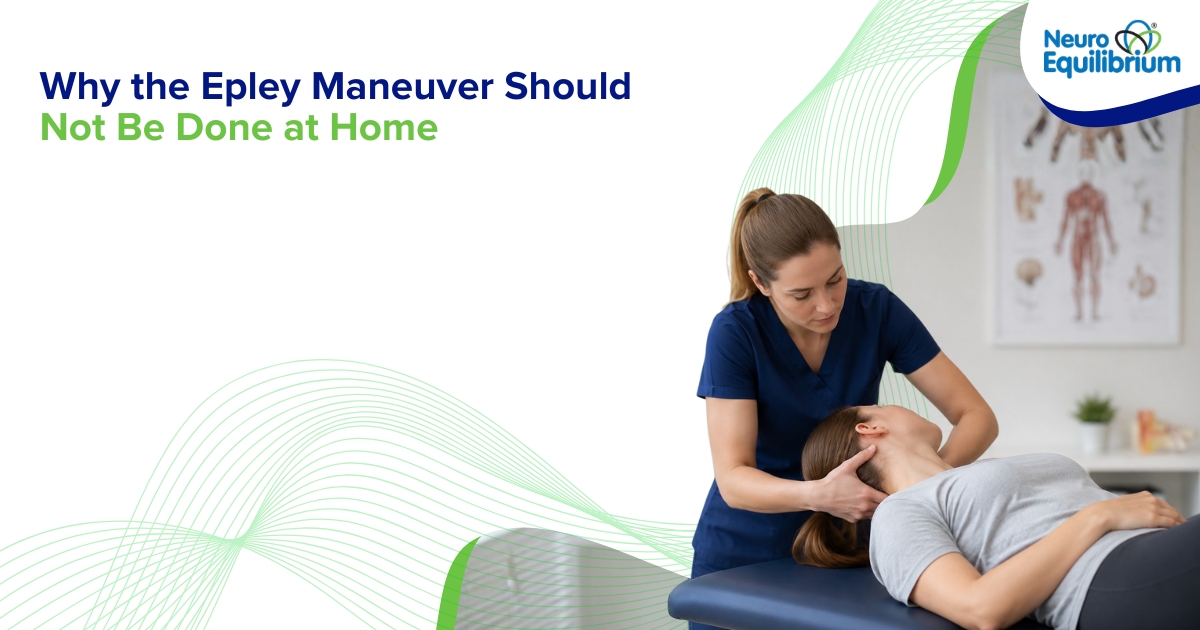
A trained clinician can apply a canalith repositioning manoeuvre (CRM), including the Epley manoeuvre or another manoeuvre selected for the affected canal for BPPV. Repositioning treatment is a known method of treating BPPV.
Personalised vestibular rehabilitation may include gaze-stability exercises, balance training, walking practice and controlled movement exercises for vestibular weakness.
Vision and hearing problems, muscle weakness, blood pressure and medication issues may also require treatment by a health professional. That’s why the best approach to treating vertigo in the elderly is to first determine its cause.
How Can Vestibular Rehabilitation Help Older Adults Stay Independent?
Vestibular Rehabilitation is not one-size-fits-all exercise therapy. It is generally customized to the individual’s symptoms, test results, and daily issues.
Exercises can have a beneficial effect on concentration with head movement, balance on a variety of surfaces, walking stability, and confidence in activities of daily living. Vestibular rehabilitation is also employed to assist people in adapting to vestibular weakness and enhance balance.
Carefully planned rehabilitation may be beneficial to restore movement confidence when dizziness causes fear and decreases activity in elderly adults.
What Practical Steps Can Families Take for Fall Prevention for Elderly Adults?
Helpful strategies are to keep the floor clear of loose rugs and wires, improve lighting, install grab rails when necessary, use non-slip surfaces in the bathroom, wear sturdy shoes, have a vision check, and ask the treating physician to evaluate medications if dizziness or falls start.
When dizziness returns in older family members, it is important to determine its cause rather than just saying “Be careful.”
Environmental risks can be decreased at home but not in place of a medical evaluation if there is an underlying balance disorder.
When Should an Older Adult See a Vertigo or Balance Specialist?
If dizziness continues to recur, if you’ve had more than one fall, if walking is becoming less steady, if turning the head causes dizziness, if you spin when trying to get out of bed, or if a normal scan does not show any abnormalities but you still have balance problems.
Assessment should also be considered if there are hearing or ear symptoms or if fear of falling has begun to restrict normal daily activities.
Elderly persons may experience persistent dizziness, which may be complex; therefore, using a combination of symptom history and functional balance testing may be helpful in limiting the cause.
Why Choose NeuroEquilibrium for Dizziness and Balance Assessment?
Specialist vestibular tests (VNG, SVV, DVA, caloric testing, vHIT and Computerised Dynamic Posturography) may be performed to assess the symptoms, and a care pathway created to address the individual needs.
Treatment may involve vestibular rehabilitation (if appropriate) and guided repositioning manoeuvres for BPPV. This helps determine the reason for the dizziness and to choose care according to the reason.
This International Day of Older Persons, Healthy Ageing Should Include Better Balance

The preservation of mobility, dignity and confidence are also key components of healthy ageing.
Repeated falls and increasing unsteadiness, or dizziness in elderly adults should not be trivialized as a sign of “old age”. The inner ear, the eyes, blood pressure, medication, nerves, muscles, or a combination of these may cause it. Knowing those factors can help in finding more appropriate treatment and rehabilitation.
Families can help remember this International Day of Older Persons: A fall is an event, not a diagnosis. NeuroEquilibrium can evaluate the balance system and direct care based on the cause of the problems if they recur.
Frequently Asked Questions
What is the most common cause of dizziness in older people?
The most common cause of dizziness in older adults is benign paroxysmal positional vertigo (BPPV), a condition caused by tiny crystals moving within the inner ear. Other causes include side effects of certain medicines, low blood pressure, dehydration, issues with balance, and changes in the vestibular system as one gets older. It is essential that seniors are evaluated properly since there are several reasons for dizziness.
What are red flags for dizziness in older people?
Signs of concern are a sudden onset of severe dizziness, trouble speaking, drooping face, weakness on one side, chest pain, fainting, double vision, severe headache, and trouble walking. These symptoms can be a sign of stroke or other serious medical condition and need immediate medical attention.
What can I do to relieve dizziness?
If dizzy, sit or lie down right away, drink water, and avoid sudden head movements; go to a quiet area and rest. For those who have a disorder of the inner ear, certain treatments might be available, including vestibular exercises or repositioning maneuvers. If the dizziness is persistent or recurrent, it needs to be assessed by a health care provider.
What to do when older people feel dizzy?
If a senior citizen becomes dizzy, assist them to sit or lie down to avoid a fall. Provide water if dehydrated and watch for signs of weakness, confusion, or difficulty speaking. Seek medical care if dizziness is severe, recurrent, or coupled with neurological symptoms.
What are some home remedies for dizziness?
Home remedies include: drinking plenty of water, eating regular meals, getting plenty of rest, avoiding sudden changes of position and restricting alcohol intake. Balance and vestibular exercises can be beneficial for some vestibular problems. But if dizziness presents more than once, it can’t be overlooked – particularly among older adults – as it may need professional evaluation and management.