







Persistent Postural-Perceptual Dizziness (PPPD) may lead to continual rocking, swaying, floating, or unsteadiness even when the room is not spinning. Balance exercises are not the only aspect of recovery for many. Both VR (vestibular rehab) and PPPD (persistent postural-perceptual dizziness) Counselling can be useful in retraining how the brain processes movement and visual information and in reducing fear, avoidance, and frequent checking of dizziness. Used together, they can support a gradual return to everyday activities. Before starting a recovery plan, however, the diagnosis should be confirmed because long-lasting dizziness can have several possible causes.
PPPD can cause chronic dizziness when the brain stays overly alert to movement and visual information
PPPD is a well-established chronic functional vestibular disorder. The word “functional” does not mean that the symptoms are imagined. It means there may not be a single damaged structure that explains every symptom. Instead, the balance system may begin processing movement, visual information, and body sensations in an unhelpful way.
Symptoms are usually present on most days for at least three months. They are often worse while standing, walking, or being in places with a lot of visual detail. Busy markets, patterned floors, traffic, crowds, computer screens, escalators, or scrolling on a phone may feel particularly challenging.
PPPD may develop after BPPV, vestibular neuritis, vestibular migraine, concussion, another illness, or severe stress. The original trigger may improve, but the brain can remain hypervigilant to movement and sensations associated with dizziness. Understanding this pattern is important because PPPD is not simply “anxiety,” although anxiety and fear can influence how symptoms are experienced. This creates a bidirectional feedback loop: anxiety heightens perceived dizziness and body sensitivity, which increases panic and avoidance, thereby further amplifying dizziness symptoms over time.
Know More About
- BPPV vs Persistent Postural-Perceptual Dizziness (PPPD): Key Differences
- How Neuro Rehabilitation Helps Patients Recover from Stroke, Vertigo, and Brain Injuries
- Mobile Apps for Vestibular Rehabilitation: What Actually Works? A Physiotherapist’s Guide
A proper vestibular assessment should come before a PPPD recovery plan
Long-lasting dizziness does not automatically mean PPPD. Similar symptoms may occur with BPPV, vestibular migraine, Ménière’s disease, vestibular weakness, neurological disorders, blood-pressure problems, and other conditions.
Assessment usually begins with the symptom pattern and medical history, followed by a clinical examination of areas such as eye movements, head movements, walking, balance, and positions that trigger symptoms. Validated psychometric tools and functional questionnaires such as the Dizziness Handicap Inventory (DHI), Hospital Anxiety and Depression Scale (HADS), or the Niigata PPPD Questionnaire are also used to assess symptom severity and impact. Vestibular testing may then be considered when clinically indicated. Depending on the findings, testing may include VNG, vHIT, DVA, SVV, VEMP, posturography, or a hearing evaluation.
Not every person needs every test. Specialized investigations such as VEMP or posturography should be used only when clinically relevant. The objective is to determine if it’s PPPD or if another vestibular disorder exists or if more than one disorder is contributing to the problem. The diagnosis-first approach also helps to tailor the rehabilitation program to the person’s actual challenges.
Vestibular rehabilitation retrains balance and motion tolerance in people with PPPD.
Vestibular Rehabilitation Therapy (VRT) is a structured exercise program designed to help the brain process balance information more efficiently. The program is usually individualized because one person may struggle mainly with head movement, while another may become dizzy in visually busy environments.
Exercises can involve gaze stabilization, balance retraining, walking with head turns, sensory reorganizing, and habituation. Habituation is the controlled practice of a movement/trigger to reduce the brain’s sensitivity to it gradually.
If symptoms are triggered by supermarkets, traffic, malls, etc., then a gradual exposure to scrolling or visual motion may also be added. Virtual reality can be utilized in some specialized programs to create difficult environments in a safe environment.
If the balance system is challenged, there may be a temporary increase in dizziness, but the symptoms should not get worse or remain intensified for a longer time. Chronic dizziness counselling can assist this process and help the person to cope with short-term symptoms and not immediately assume that movement will be unsafe.
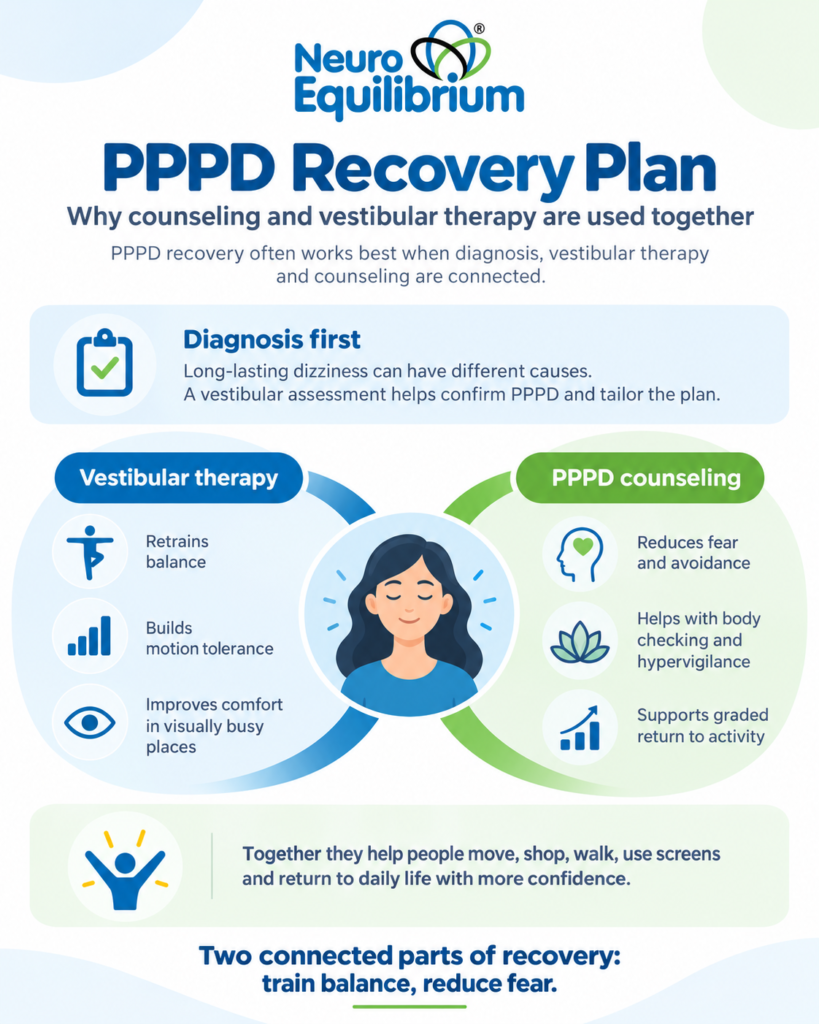
PPPD counseling can help reduce fear, avoidance, and constant checking of dizziness
The dizziness that can last for months can affect a person’s gait and their thinking and activities. Others develop specific “safety behaviors” such as walking in a stiff-legged manner, leaning against walls, avoiding head movements, or repeatedly checking in on dizziness. While these maladaptive coping strategies feel protective in the moment, they actually prevent the brain from learning that normal movement is safe, thereby maintaining long-term symptoms.
These are understandable reactions, but they can maintain the sense that normal movement is threatening. Patterns can be identified and explored with PPPD counseling using Cognitive Behavioral Therapy (CBT). Under the cognitive model of PPPD, therapy targets the catastrophic misinterpretation of normal balance sensations such as believing slight dizziness means immediate danger or an impending fall and replaces these intrusive thoughts with structured, adaptive responses.
Education, cognitive restructuring, relaxation, pacing, and graded exposure may be used by a trained professional. A person should not assume that a problem is going to occur if they feel dizzy when shopping, but they should learn to recognize the symptoms, stay calm, and shop at a manageable level.
Chronic dizziness counseling can also improve fear of falling, frustration, decreased confidence, and avoidance. It isn’t about trying to ignore the dizziness. The goal is to diminish the fear and hypervigilance that can help perpetuate symptoms.
While CBT can be helpful in combination with other aspects of PPPD treatment, specifics of the treatment and results vary from person to person.
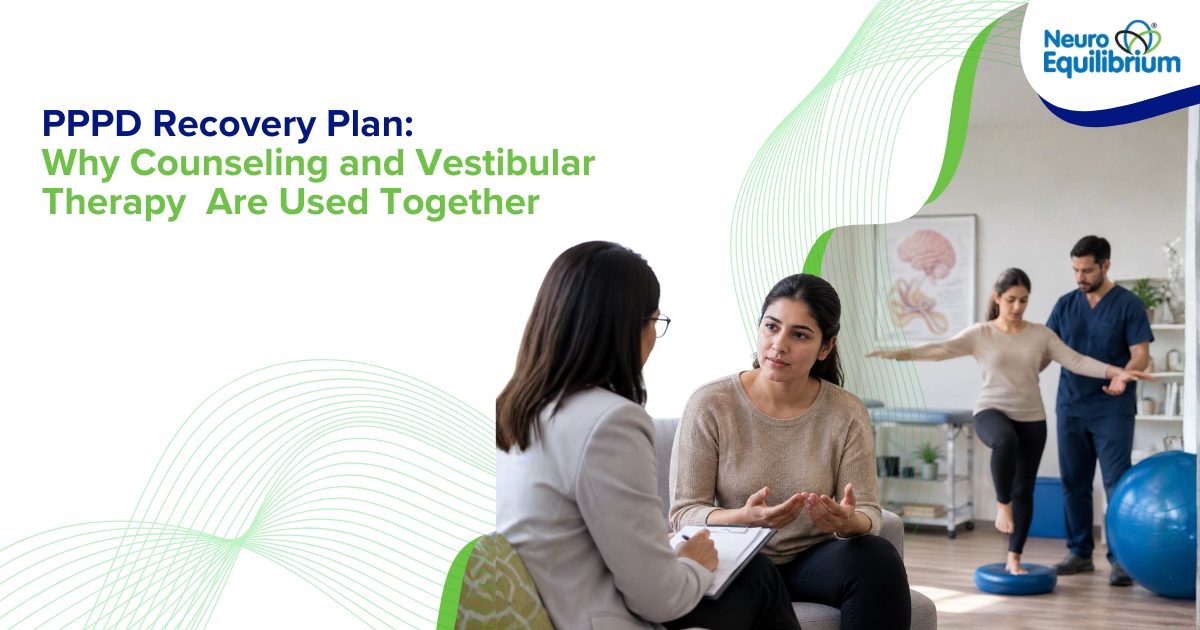
Vestibular therapy and chronic dizziness counseling are used together because they address two connected parts of recovery.
Vestibular therapy gives the brain physical practice. It works on the relationship between vision, inner-ear signals, body sensation, and movement.
Counseling helps a person take part in that practice without becoming trapped in fear, body checking, or avoidance. If movement still feels highly threatening, it may be harder to build confidence. At the same time, reducing fear without gradually returning to movement and visual triggers gives the balance system fewer opportunities to adapt.
Together, the treatments can form a useful cycle: recognize the symptom, try a manageable challenge, learn that the challenge can be tolerated, and then progress to the next step.
PPPD counseling and VRT are therefore not competing treatments. They address different but connected parts of a recovery plan.
A PPPD recovery plan should move gradually from symptom control to real-life activity.
Recovery is usually gradual rather than an immediate change from having symptoms to being symptom-free. A more realistic goal is steady improvement in everyday function.
Early treatment may involve understanding the diagnosis, identifying precipitating factors, improving routine, and starting simple gaze or balance exercises. PPPD counseling may begin alongside rehabilitation when fear, avoidance, or hypervigilance is interfering with progress.
As symptoms become more manageable, rehabilitation may progress to walking while turning the head, moving over different surfaces, tolerating more visual distraction, increasing activity duration, and practicing more challenging situations.
Practical goals may include:
- Shopping independently
- Moving around with greater confidence
- Working comfortably at a screen
- Returning to exercise
- Walking through crowds in public places
- Attending social events
- Moving the head without constantly worrying about becoming dizzy
The length of recovery varies from person to person. Some people may improve within weeks, while others may need months. Progress can be influenced by how long symptoms have been present, whether other vestibular conditions or migraine are also present, general health, anxiety, and how consistently the treatment plan is followed.
PPPD exercises can briefly increase dizziness, but the challenge should stay controlled
A common question is: “Why do the exercises cause dizziness when they are supposed to help?”
Rehabilitation may involve gradually testing movements or visual environments that the brain has become sensitive to. During this training, symptoms may temporarily increase.
The aim is not to force through severe dizziness. If an exercise leaves someone feeling much worse for a long time, the intensity, duration, or complexity of the movement or visual stimulus may need to be adjusted.
PPPD counseling can also help a person understand the difference between a manageable training response and a fear response, without automatically feeling the need to stop all movement.
How NeuroEquilibrium approaches PPPD assessment and rehabilitation
PPPD care may be more effective when diagnosis, vestibular assessment, rehabilitation, and psychological support are considered together rather than as separate problems.
When clinically required, advanced vestibular testing may be used alongside individualized VRT, gaze and balance training, habituation, and walking practice within a specialized dizziness-care pathway. Fear, anxiety, avoidance behaviors, or visual-motion sensitivity may also be addressed through counseling support when they interfere with recovery.
Most importantly, treatment should be based on the diagnosis. A person who develops PPPD after BPPV may need a different approach from someone who has PPPD alongside vestibular migraine or vestibular weakness.
What should you do next if PPPD is affecting daily life?
If dizziness has continued for months or is interfering with walking, screens, travel, work, exercise, or crowded environments, the next step is to have the symptom pattern properly assessed rather than assuming PPPD is the cause.
At NeuroEquilibrium, the aim is to understand why dizziness is persisting, determine whether an underlying vestibular condition is present, and develop an individualized rehabilitation plan when appropriate. If PPPD is confirmed, the plan may include vestibular rehabilitation together with PPPD counseling or chronic dizziness counseling when fear, avoidance, or hypervigilance is affecting recovery.
The goal is gradual improvement in movement tolerance, balance, confidence, and participation in everyday life.
Frequently Asked Questions
What is the best treatment for PPPD?
Treatment for PPPD may include vestibular rehabilitation therapy (VRT), cognitive behavioral therapy (CBT), and prescribed medication when clinically appropriate. The aim is to reduce dizziness and balance difficulties while improving tolerance to movement and visual stimuli. The most suitable combination depends on the person’s symptoms, diagnosis, and other health factors.
Does PPPD ever fully go away?
Many people with PPPD experience significant improvement, and some may become largely or completely symptom-free with appropriate treatment. Recovery can take time and may involve vestibular exercises, stress management, counseling, and gradual exposure to triggering situations. The pace of improvement varies from person to person.
Is PPPD a mental illness?
No. PPPD is a chronic functional vestibular disorder, not a mental illness. Anxiety and stress may occur alongside PPPD or make symptoms feel worse, but they do not mean that the dizziness is imagined. Psychological support may be included in treatment when fear, avoidance, or hypervigilance is affecting recovery.
Is PPPD a lifelong condition?
PPPD is not necessarily lifelong. Symptoms can persist for months or longer, but many people improve with appropriate treatment and rehabilitation. Progress varies between individuals, and the treatment plan may include vestibular therapy, counseling, and lifestyle changes based on the person’s needs.
What makes PPPD worse?
Busy visual environments, crowds, screen scrolling, stress, anxiety, fatigue, prolonged standing or walking, and fast movements can aggravate PPPD symptoms for some people. Recognizing personal triggers and following an appropriate treatment plan can help reduce their impact and improve everyday functioning.