

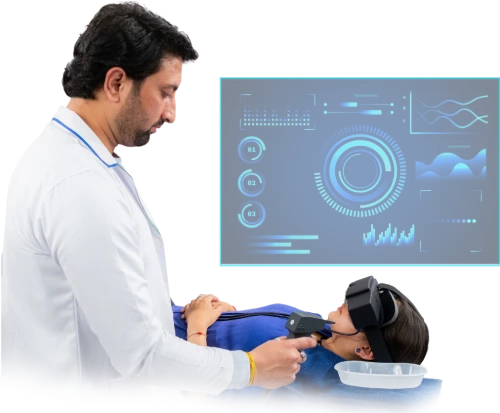
The best Dizziness treatment is a medical way of diagnosing and treating various forms of balance related issues.
One must realize that the conditions of dizziness and vertigo are not synonymous:
The two terms are used interchangeably by many people yet the therapy varies according to the specific kind of symptom.
The therapy of dizziness itself is aimed at:
Most of the dizziness issues can be addressed with proper assessment.
Dizziness may be relative to an individual. Some of them can be a bit uneasy and some can be extremely uncomfortable.
Common signs include:
A professional is supposed to consult the patient in case his/her symptoms are common or getting worse.
Dizziness can be caused by many factors. The balance system is a system that consists of the inner ear, brain, eyes and nerves. Dizziness may be experienced in case any of the components malfunctions.
Common causes include:
In other instances, it is not necessarily just a single factor. This is why it is necessary to evaluate it in detail.
The difference between the lightheadedness and vertigo will help in the appropriate treatment of the dizziness.
Accurate diagnosis is the most important step in treating dizziness.
Our experts follow a structured and patient-friendly approach.
We carefully listen to:
This aids in the distinction of dizziness and vertigo.
We provide certain, non-risky diagnostics tests in the evaluation of the inner ear and balance system.
These may include:
Such tests are employed in order to get an insight on whether the issue is migraine, inner ear or is linked with any other causes.
We would like to be literally explicit as to the reasons that prompted us to initiate treatment.
Treatment depends on the diagnosis. We provide personalized dizziness treatment plans designed for each patient’s condition and comfort.
Special repositioning manoeuvres are done under supervision of trained clinician. In case the inner ear crystals are in the wrong place causing dizziness, depending on the diagnosis, special repositioning manoeuvres are done under supervision of a trained clinician.
These:
It is a non-invasive procedure that is performed by an expert.
Vestibular Rehabilitation Therapy is very effective in a number of balance disorders.
This includes:
These activities recondition the brain in order to balance.
On the basis of the test results, our specialists develop individual training plans.
In case the dizziness is accompanied by migraine:
Frequency and intensity of episodes can be mitigated by proper management.
In light-headedness, without vertigo:
It aims at restoring sanity and confidence.
In certain instances recovery can be time consuming. Regular follow-ups ensure:
The safety and comfort of patients is central to us at all levels.
It is crucial to choose the appropriate center in order to recover.
Our dizziness service is dependable due to the fact that:
Explicit answers and considerate treatment make patients have confidence in the recovery progress.
Treatment with a medical assessment is indicated in the event of:
Early identification will avoid complications and facilitate quick healing.
Being dizzy can be a debilitating and a stressful experience. It can diminish autonomy and cause fear. Nevertheless, there is good and safe treatment.
The dizziness treatment is given the treatment of the highest level of the diagnostics and personal treatment plans. Our experts will be keen on finding the precise cause and provide some treatment that would have lasting cure.
Dizziness or vertigo cannot be disregarded. Take a leap in our direction, to a confident life and movement today and make a reservation. We will be pleased to be with you on the road to recovery.
Effective treatment will be determined by the cause of dizziness. Some disorders like the Benign Paroxysmal Positional Vertigo (BPPV) can be remedied fast by repositioning exercises. Additional balance disorders might need Vestibular Rehabilitation Therapy (VRT), migraine management/ treatment, or medical care. The diagnosis should be thorough so as to have a specific and prolonged relief.
Vertigo is a certain form of dizziness in which a person feels that the environment is spinning around him/her. When you feel like you are spinning in the room due to the movement of your head, it can be a sign of vertigo but not general lightheadedness. A balance test performed by a professional can be used to dispel the false impression of vertigo and other types of dizziness.
You are advised to contact an expert in case:
Early screening is used to avoid complications and receive an earlier recovery in a personalized manner.
Most of the causes of dizziness and particularly, inner ear diseases such as Benign Paroxysmal Positional Vertigo (BPPV), can be addressed successfully and remedied when associated with the right treatment. Lifestyle changes, medical advice, and vestibular exercises have the capability of managing other disorders like Vestibular migraine. The secret of the lasting relief lies in proper diagnosis and an individual treatment program.
The majority of treatments of dizziness are not invasive or painful. Vestibular Rehabilitation Therapy (VRT) Procedures like repositioning maneuvers or vertigo as well as balance exercises. These therapies are meant to be safe, comfortable and effective and have minimum discomfort to patients.
Sit or lie down immediately, keep your head still, drink water, avoid sudden movements, and do not drive or climb stairs until the dizziness settles. If dizziness is triggered by turning in bed, looking up, or bending, it may be BPPV, which often needs a canal-specific repositioning maneuver.
A dizziness management plan for seniors should include identifying the type of dizziness, reviewing medications and blood pressure, checking hearing and vision, testing for BPPV, assessing fall risk, using vestibular tests when needed, starting customized vestibular rehabilitation, and making home safety changes. NeuroEquilibrium recommends that dizziness in seniors should not be dismissed as normal aging, because many causes are treatable and proper management can reduce fall risk.
Vertigo, Headaches, nausea, or ringing in your ears? Find its root cause. Talk to expert.