







Have you been experiencing dizziness for weeks or months without knowing why? You are not alone. Millions of people suffer from vertigo daily, and many do not get a clear answer. Two of the most common and confusing causes of vertigo are BPPV and PPPD. The first step to finally feeling better is to understand the difference between the two.
What Is BPPV and Why Does It Make You Feel Like the Room Is Spinning?
BPPV is a short term used to refer to Benign Paroxysmal Positional Vertigo. It is a disease within your inner ear. Suppose your inner ear is a little balance machine. It contains tiny calcium crystals, almost as small as grains of sand, which cause your brain to know whether you are on your back or your side.
Sometimes, these small crystals move into the wrong part of the inner ear, and they confuse your brain. The result? Suddenly, sharp spinning, the typical vertigo.
The spinning usually lasts less than a minute, often 10–30 seconds. But these seconds can be frightening. The majority of people do not fail to notice it when they:
- Roll over in bed
- Look up at a shelf
- Bend down to pick something up.
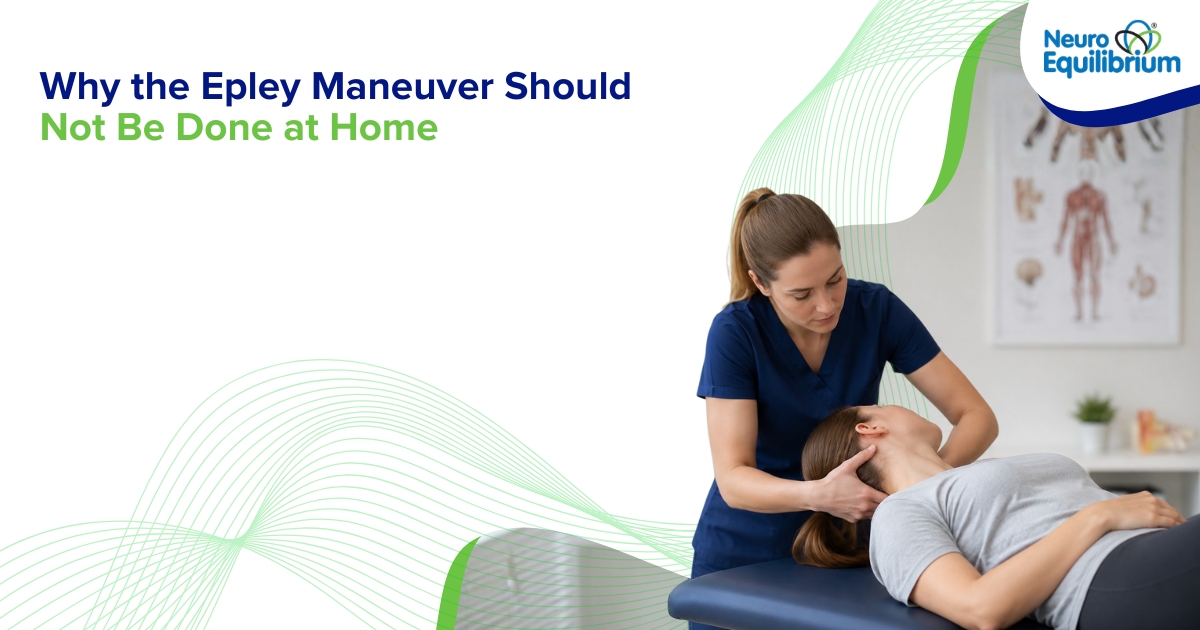
The good news? BPPV Treatment is quite successful. Canalith Repositioning Maneuvers (e.g., Epley maneuver) are a basic type of head movement that can be safely performed by a trained specialist to move those loose crystals back into place. Many patients are relieved even after the first session. No surgery. No long-term medication.
Know More About
- How the Epley Maneuver Can Help Relieve BPPV Symptoms Fast
- How Do I Know If My Vertigo Is BPPV or Something Else?
- Just Diagnosed with BPPV? Here’s what to do next?
What Is PPPD and Why Does the Dizziness Never Seem to Go Away?
PPPD stands for Persistent Postural-Perceptual Dizziness. This is very different from a BPPV.
PPPD is not produced from loose crystals. It occurs when the brain remains in a prolonged state of alert. This is the typical beginning: an individual experiences a frightening case of dizziness. It may even be a BPPV episode, and even after fixing the physical issue, the brain continues to behave as though something is wrong.
Your brain will become accustomed to worrying about dizziness, and it continues to send signals of concern.
In PPPD, individuals will experience:
- A constant feeling of swaying or rocking, as if on a boat.
- Not just brief seconds of instability during the day.
- Symptoms worsen when scrolling on a phone, going to a busy market, or sitting in a moving car.
The dizziness is not caused by movement, as would be the case with BPPV. Rather, it is caused by an upright position, stress, a crowded visual scene, and anxiety. The more a person worries about the dizziness, the worse it becomes. It turns into a loop that feels hard to break.
BPPV vs PPPD: A Simple Side-by-Side Comparison
“BPPV is a mechanical inner ear disorder where calcium crystals dislodge into semicircular canals, causing brief, intense spinning triggered by specific head movements, treated with repositioning maneuvers like Epley.
PPPD is a chronic functional disorder often following BPPV, creating persistent swaying/unsteadiness worsened by upright posture, crowds, screens, and anxiety, managed long-term with Cognitive Behavioral Therapy.”
Dr. Anita Bhandari, Co-founder, NeuroEquilibrium Vertigo Clinics
Here is an easy way to understand the key differences:
| Feature | BPPV | PPPD |
| Cause | Displaced inner ear crystals | Brain stuck in “alert” mode |
| Type of sensation | Strong spinning (true vertigo) | Constant swaying or rocking |
| Triggers | Specific head movements | Upright posture, crowds, screens, anxiety |
| How long does it last? | Seconds (under 1 minute) | Constant, day after day |
| Best treatment | Repositioning maneuvers | Cognitive Behavioral Therapy (CBT) |
A 2022 isopress confirms: PPPD affects 20-30% of chronic dizziness patients with persistent swaying worsened by posture/crowds/screens (vs BPPV’s brief spinning), often developing after BPPV in 30-50% of cases.
How Do Doctors Actually Diagnose Whether You Have BPPV or PPPD?
This is where good testing is critical. You cannot always distinguish between them based solely on how you describe your symptoms, because many people have both conditions. In fact, PPPD typically happens after BPPV. The initial episode of spinning frightens the brain to the point that it remains on high alert even after the crystals are back in place.
An accurate diagnosis would entail a complete balance examination. Experts use state-of-the-art equipment, including:
- A videonystagmography (VNG) test monitors your eye movements to determine the functioning of your balance system.
- The Video Head Impulse Test (vHIT) measures the sensitivity of your inner ear to rapid head movements.
- The quality of balance control on different surfaces is assessed using Computerized Posturography.
- Gait lab testing analyzes your walking pattern and balance.
The tests can be used to rule out other serious causes of vertigo, such as Meniere’s disease or vestibular migraine, and to develop a treatment plan appropriate to your particular situation.
What Does BPPV Treatment Actually Involve?
A BPPV Treatment is the most rewarding of all medicine, as it is so rapid. The Epley maneuver, Semont maneuver, or Zuma maneuver is a series of movements performed by a trained specialist while the patient is sitting or lying on an examination table. The loose crystals are guided back to their correct position by each movement of the inner ear canals.
Most patients are much better after one or two sessions. There is no need for long-term medication. There are no side effects. It is quick, safe, and highly effective.
Nevertheless, you should not attempt these maneuvers at home without guidance, as they might worsen symptoms or even make them more severe.
What Does Vertigo Treatment for PPPD Look Like?
PPPD is a long-term condition. Since the issue lies in how the brain processes balance, the most effective treatment focuses on retraining the brain’s response.
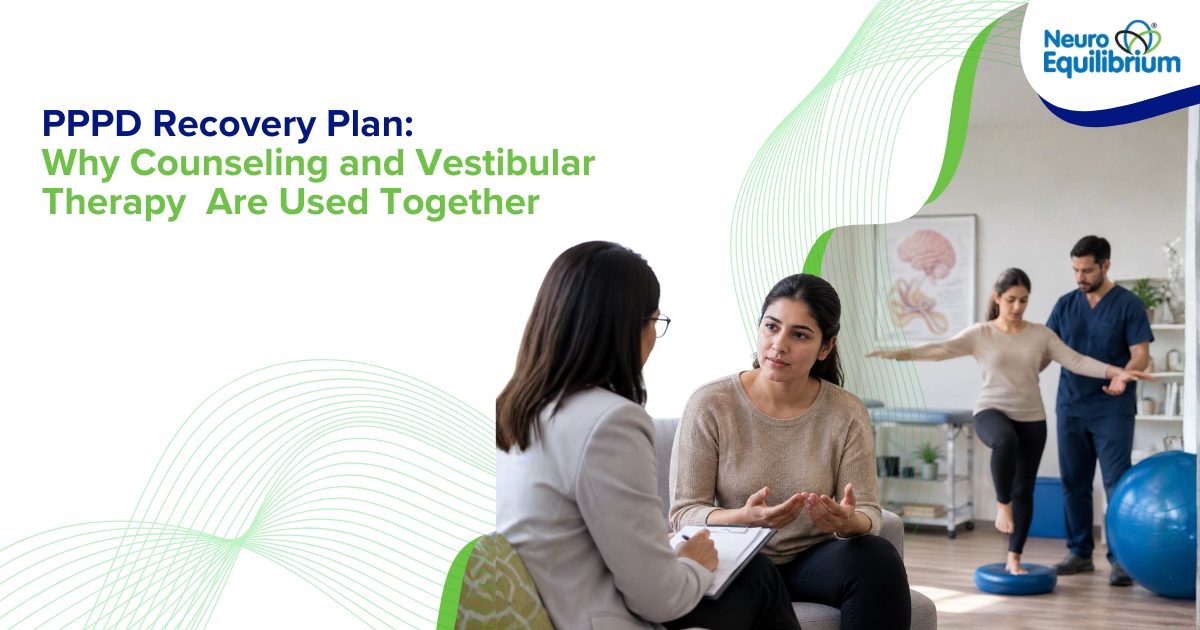
The gold standard is Cognitive Behavioral Therapy (CBT). A therapist helps the patient understand how anxious thoughts and physical dizziness are related. With time, the patient will learn to:
- Replace fearful thoughts of falling with calmer, more rational thoughts.
- Gradually face situations that arouse dizziness (such as crowded shopping places)
- Use relaxation techniques to reduce brain alertness.
Vestibular rehabilitation exercises can also be included in the plan. These exercises gently retrain the brain to feel confident in the balance system again.
It is a long process, and the majority of patients have actual long-term improvement.

Can You Have Both BPPV and PPPD at the Same Time?
Yes, and this is more common than most people realize. This is one of the most important reasons why correct diagnosis is so important. When a physician treats only BPPV and ignores the PPPD component, the patient may initially experience improvement, but may soon find the dizziness has returned. But in reality, the BPPV no longer exists, but the PPPD was never discussed.
The only way to develop a complete treatment plan is through a comprehensive assessment that examines both the mechanical factors and the brain’s reaction to them.
Why Choose NeuroEquilibrium for Your Vertigo and Balance Concerns?
When you have been experiencing dizziness and have not yet received clear answers, it might be time to consult an expert who specializes in balance disorders.
NeuroEquilibrium is the biggest chain of vertigo and balance centers in India. As opposed to a general physician or ENT that might occasionally see dizziness patients, NeuroEquilibrium clinics are designed specifically for this: to find out what is causing your particular dizziness.
Here’s what makes the approach different:
- State-of-the-art diagnostic equipment: VNG, SVV, DVA and Caloric Testing are used to evaluate different aspects of vestibular function and support an accurate diagnosis. testing are all available in a single location.
- Condition-specific treatment: either you require a rapid repositioning procedure to treat BPPV or a comprehensive rehabilitation to treat PPPD, the treatment is condition-specific
- A directed maneuver system: NeuroEquilibrium is powered by a unique BPPV Maneuver Guidance System that aids with the proper execution of repositioning each time.
- Online rehabilitation alternatives: Patients without easy access to a clinic can also receive vestibular rehabilitation remotely.
Getting dizzy is not something that you have to learn to live with. Both BPPV and PPPD can be successfully treated with the proper diagnosis and care.
The Bottom Line: Dizziness Has a Name, and It Has a Treatment
And whether your world spins for a few frightening seconds each time you turn in bed or you have been experiencing that you have felt like you were walking on a rocking boat for months, there is a reason and a solution.
BPPV is a mechanical problem with a quick physical solution. PPPD is a brain disorder that can be treated with the help of the appropriate therapy. Understanding the difference is powerful. Correct diagnosis is life-changing.
Do not wait if you or a loved one is suffering from persistent dizziness. NeuroEquilibrium has helped thousands of patients in India regain their balance, and you could be next.
Get the first step to a more reliable and confident life by contacting a NeuroEquilibrium clinic in your area.
Frequently Asked Questions
What is the main difference between BPPV and PPPD?
Benign Paroxysmal Positional Vertigo is a mechanical inner-ear disorder caused by the movement of the crystals, resulting in short-term spinning vertigo. Persistent Postural-Perceptual Dizziness, however, is a brain condition in which one experiences dizziness due to heightened sensitivity and alertness, resulting in a continuous feeling of swaying or rocking.
How can I tell if my dizziness is BPPV or PPPD?
When your dizziness is temporary, severe, and provoked by certain head movements (such as turning in bed), it is more likely to be BPPV. When it is always present, such as feeling unsteady or wobbly all day, particularly in crowds, in front of the screen, or under stress, it can be PPPD. Both can co-exist and require a proper clinical assessment.
What is the fastest way to treat BPPV?
The Epley maneuver, a sequence of directed head movements, is the most useful approach to treating BPPV, and the maneuver replaces the crystals in the inner ear. When a trained professional conducts the sessions, many patients are relieved after one or two sessions.
Why does PPPD last longer than BPPV?
The fact that PPPD is an issue of balance processing and dizziness as opposed to a medical problem of the ear makes the condition persist. It frequently involves more chronic therapies such as cognitive behavioral therapy (CBT) and vestibular rehabilitation to retrain the brain and minimize symptoms.
Can BPPV and PPPD occur simultaneously?
Oh, yes, it is very common. PPPD tends to be developed following an episode of BPPV. The brain might still experience dizziness even after the inner-ear problem is corrected. This is why it is necessary to accurately diagnose and treat it using a combination of methods.