







Have you ever gotten in a hot shower and then felt the world tip over you? You take the wall in your hand, your heart is beating round, everything is shaking. You are not alone, and you are not dreaming. This is an actual vertigo issue that thousands of individuals find themselves going through on a daily basis. We should deconstruct it into an easy-to-understand language.
“According to research conducted by PMC in 2023 confirms this: 30 minutes in 39°C water caused orthostatic hypotension in 87% of participants, with young adults experiencing greater dizziness (3/10 severity) due to blood pooling from vessel dilation. This explains why standing showers amplify the effect over baths.”
Why Does a Hot Shower Make You Feel Dizzy?
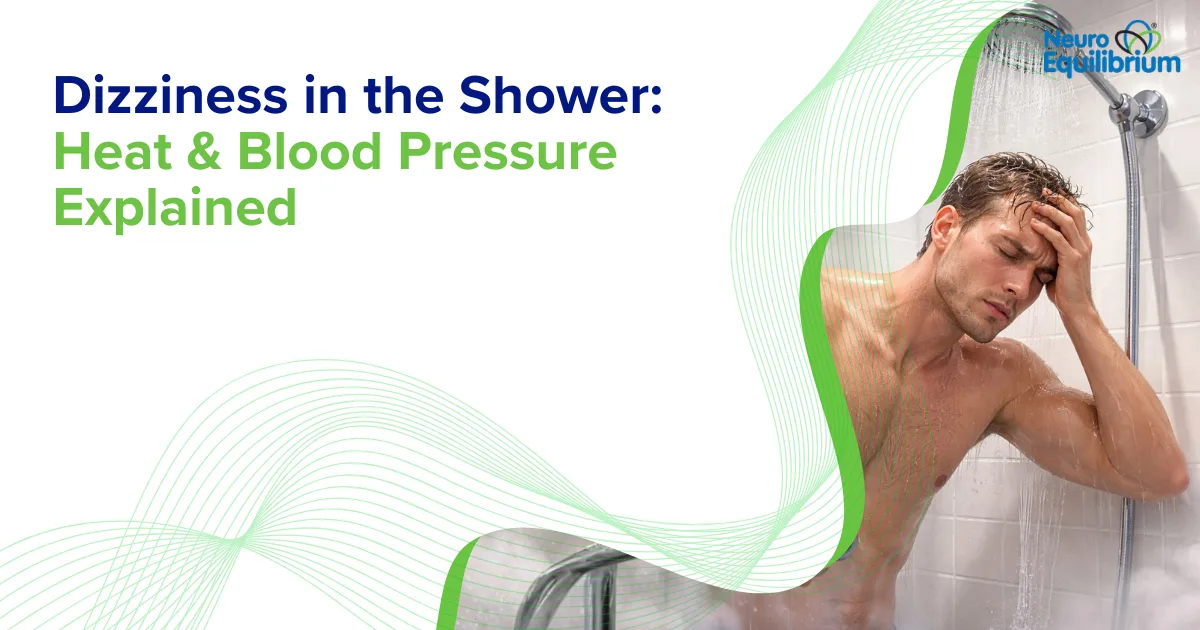
Hot water causes your blood vessels to dilate to cool your body. Imagine you have blood vessels which are similar to roads- as they enlarge, the blood is said to be pooling at a certain place in the lower part of your body, particularly in your legs. The brain suddenly receives a bit less blood than it needs, which is why the dizziness comes on.
It is not a bad feeling for no particular reason. It is the body reacting to an actual change in blood pressure. The technical term for it is vasodilation, though technically, heat causes your body’s blood vessels to dilate, and the pressure in your blood vessels decreases.
This is also the reason why being in a hot shower is worse than being in a bathtub. When you are standing, blood already flows downward due to gravity. When it is heated, the effect is doubled.
Know More About
- Proprioceptive Dizziness- When Dizziness Comes From Muscles & Joints
- What Is Cerebellar Ataxia? Meaning, Symptoms, and Treatment Explained
- How to Cure Motion Sickness Permanently: Doctor Insights
Shower Dizziness: Trigger and Duration Clues
| Pattern | Typical onset | How long it may last | Possible direction |
| Lightheaded after several minutes of hot water | Gradual during heat exposure | Usually improves after cooling, sitting or lying down | Heat-related vasodilation, dehydration or low BP |
| Faint on stepping out | Immediately after standing or leaving heat | Seconds to minutes | Orthostatic intolerance may be possible |
| Spinning when looking up to wash hair | Immediately with head position | Usually seconds or under one minute when BPPV is the cause | BPPV |
| Persistent imbalance throughout and after shower | May not depend on one precise movement | Minutes or longer | Vestibular disorder, migraine or another medical cause |
| Dizzy with palpitations | During heat or standing | Variable | Cardiovascular, autonomic, medicine or anxiety-related causes |
| Sudden severe vertigo with neurological symptoms | Abrupt | Persistent or severe | Emergency central cause must be excluded |
What Is Orthostatic Hypotension and Why Should You Know About It?
The vertigo caused by a rapid drop in blood pressure is medically known as orthostatic hypotension (also known as postural hypotension). The word Ortho means “up,” and hypotension means “low blood pressure.”
This works in the following way:
- You stand in the hot shower.
- Heat makes your blood vessels dilate.
- You have blood in your legs and your skin.
- Your blood pressure drops by up to 20 mm Hg.
- There is less blood flow to your brain.
- You are dizzy, lightheaded, or unsteady.
Some people even faint if the decrease in blood pressure is so significant. This is a severe vertigo issue since loss of consciousness in the shower, with wet tiles and hard faucets around her, can be a serious fall.
“One of my patients described stepping out of a hot shower and feeling the room suddenly spin like rising too fast from a steaming bath. This lightheadedness was classic orthostatic hypotension: a sudden drop in blood pressure from heat-induced vasodilation, leaving her legs shaky and clutching the wall for balance.”
— Dr. Anita Bhandari, Co-founder, NeuroEquilibrium Vertigo Clinics
What Causes Dizziness in the Shower?
1. Heat-Related Vasodilation
Hot water causes vasodilation, increasing skin blood flow and widening peripheral blood vessels. In susceptible individuals, this can impair the body’s ability to maintain blood pressure upon standing, leading to lightheadedness.
2. Orthostatic Hypotension
This becomes more likely when dizziness happens after standing, stepping out of the shower or changing position and feels like faintness, weakness or vision going dark.
3. Dehydration or Low Circulating Volume
sweating, illness, vomiting, diarrhoea, inadequate fluid intake, diuretic use, or prolonged heat exposure can lower blood pressure and increase the likelihood of orthostatic symptoms.
4. Medicines
Antihypertensives, diuretics and some other medicines may contribute to low blood pressure, sedation or impaired balance. Patients are advised not to discontinue a prescribed medicine or alter its dosing schedule without prior consultation with the prescribing clinician.
5. BPPV
Washing hair commonly involves looking upward, bending forward and moving the head repeatedly. In BPPV, these positional changes may trigger brief spinning even when blood pressure is normal.
Read about the characteristic pattern of BPPV.
6. Other Vestibular Disorders
Vestibular migraine, Ménière’s disease, vestibular neuritis and persistent balance disorders can also make showering difficult. Reduced visual cues when the eyes are closed, moving the head and standing on a slippery surface may expose an existing balance deficit.
7. Blood Glucose or General Medical Causes
Low glucose, anaemia, infection, pregnancy-related circulatory changes, heart rhythm disorders and other medical conditions may produce dizziness that happens to become noticeable during a shower.
Who Is Most at Risk for This Vertigo Problem?
Not all people are dizzy in the shower. However, some groups are far more likely to do so:
- Older Adults: The older we are, the slower the body adjusts blood pressure. This is particularly susceptible in the case of falls that may follow a dizzy spell in older adults, and the impacts of a fall may be life-altering.
- Individuals on Specific Drugs: Blood pressure drugs, prostate drugs, antidepressants, and even a few allergy drugs may cause you to be more susceptible to low blood pressure. A hot shower is a much more dangerous place to be when you happen to be on one of these.
- Pregnant Women: Pregnancy changes hormones, leading to relaxation of blood vessels and a tremendous increase in blood volume. This indicates that pregnant women are already in the streets with a lower blood pressure on average, and the shower heat is an addition that is too intense for them.
- Dehydrated People: When you skip water, have more caffeine, or shower first in the morning, after 78 hours without fluids, you decrease your blood volume. Little blood flow= high probability of dizziness.
- Individuals having Pre-Existing Inner Ear Conditions: Conditions such as BPPV (Benign Paroxysmal Positional Vertigo), Meniere’s Disease, or Vestibular Neuritis do not cause the initial drop in blood pressure, but the movement, steam, and change in positioning of the head during the shower can certainly lead to the onset of an episode of vertigo in one who already has the conditions.
Why Does Steam Make the Vertigo Problem Worse?
The amount of oxygen per breath of steam-filled air is less than that in a normal room. A drop in blood pressure is already being dealt with by your body, and now it is becoming a little less oxygenated with each breath. Since blood carries oxygen, and low blood pressure reduces oxygen flow in the body, this further contributes to dizziness. This two-puncher can make light-headedness seem much worse, despite a small drop in blood pressure that underlies the sensation.
You know why, if you have ever noticed, that you feel very well in a cool shower, but very bad in a hot, steaming one.
How Does This Relate to Your Balance System?
To maintain your sense of balance, three components are at work: your inner ear, your eyes, your muscles, and joints. Your blood pressure drops all at once, and all three systems get confused because they are not receiving sufficient signals transported by the blood to the proper places.
A particular part of your ear, the inner ear, or the part that detects motion and position, is very sensitive to changes in blood flow. That is why even a slight reduction in blood pressure may make the room feel like it is turning. It is your brain attempting to determine where up is with incomplete information.
It is just this contribution of blood pressure concerns to balance concerns that makes a vertigo problem when taking a shower, not something to be dismissed casually as the shower being hot.
Spinning vs Lightheadedness vs Imbalance
| Sensation | How patients often describe it | More likely directions |
| Vertigo | “The room is spinning” or “I am rotating” | BPPV, vestibular migraine, Ménière’s disease, vestibular neuritis or central causes |
| Lightheadedness | “I may faint”, “my vision is fading”, “I feel weak” | Orthostatic hypotension, dehydration, medicine effect, low glucose or cardiovascular cause |
| Imbalance | “I am swaying”, “I cannot walk straight”, “I need the wall” | Vestibular dysfunction, neurological problems, visual dependence, neuropathy or general weakness |
Simple Things You Can Do Right Now to Prevent Shower Dizziness
The good news: there are simple things you can do now.
- Drink water before showering and in the morning. There is a big difference between one glass.
- Lower the water temperature. This is because a warm shower (not hot) minimizes vasodilation and helps maintain more stable blood pressure.
- Move slowly. Don’t hurry when you switch off the water and step out. Wait a minute or two and then walk.
- Install a shower seat or grab bar. They are not only used by the elderly, but anyone who gets dizzy can sit or hang onto them.
- Before you shower, eat if you have been fasting. Low blood sugar with low blood pressure is a time bomb.
- Open a window or turn on the exhaust fan to add less steam and more oxygen to the air.
- Do not take a shower when you are tired of being sick. Exhaustion causes your body to become less adaptable to a change in blood pressure.
- When you are using blood pressure medicine, discuss with your doctor whether the time of day you take it (in the morning or evening) might affect how well it manages lightheadedness.

A Safer Shower Plan if You Often Feel Dizzy
Before the shower:
- Avoid very hot water
- Make sure the floor and bath mat are non-slip
- Keep a grab bar or stable support available
- Use a shower chair when standing is unsafe
- Follow your normal hydration and meal plan
- Avoid showering alone if there is a recent history of fainting or falls
During the shower:
- Keep water warm rather than excessively hot
- Sit down immediately if you become faint
- Avoid sudden head tilting if positional spinning is a known trigger
- Do not close your eyes while standing if this substantially worsens balance
- Keep the shower duration shorter if heat clearly triggers symptoms
When stepping out:
- Pause before walking
- Use a grab bar
- Dry your feet before moving across a slippery surface
- Sit down if vision dims or you feel faint
What Pattern Should Make You Think About BPPV?
BPPV is more likely when the shower itself is not the main trigger. Instead, spinning appears when you:
- Tilt the head backwards to rinse shampoo
- Bend forward
- Turn rapidly towards one side
- Look upwards
- Move from bending to upright
- Later experience the same spinning when turning in bed
BPPV typically produces brief attacks lasting less than one minute after a specific head-position change. Blood-pressure lightheadedness is more likely to feel faint or weak and to be linked with standing.
Associated Signs That Help Narrow the Cause
| Associated symptom | Why it matters |
| Vision goes dark after standing | Supports an orthostatic pattern |
| Palpitations | May require cardiovascular, medicine or autonomic review |
| Dry mouth or recent vomiting/diarrhoea | Dehydration may be contributing |
| Tinnitus, ear fullness or hearing loss | Supports hearing and vestibular assessment |
| headaches, light sensitivity or visual motion sensitivity | Vestibular migraine may be possible |
| Brief spinning after head movement | BPPV may be possible |
| Persistent inability to walk straight | Requires medical assessment, urgently when sudden |
| Weakness, speech change or double vision | Emergency neurological evaluation is required |
When Is Dizziness in the Shower a Warning Sign You Cannot Ignore?
Some lightheadedness during a hot shower may not be harmful. However, this is where your vertigo issue becomes severe, to an extent that would make you seek an expert:
- You are regularly dizzy in the shower, even in tepid water.
- You have swooned or nearly swooned.
- The dizziness is accompanied by chest pain, a racing heart, shortness of breath, or blurred vision.
- You experience spinning sensations (true vertigo) at other times of the day, as well.
- You have shaky legs even when out of the shower.
- Your vertigo is becoming increasingly pronounced.
Spinning vertigo (the sensation that the room is spinning) is not a blood pressure problem, but instead an inner ear problem. This difference is important as the treatment is entirely different. Special balance testing and not a blood pressure reading is necessary to make a proper diagnosis.
When Is Shower Dizziness an Emergency?
Seek emergency medical care immediately for sudden dizziness with:
- Facial drooping
- One-sided weakness or numbness
- Slurred or confused speech
- Double vision or sudden vision loss
- A new inability to stand or walk
- Loss of consciousness
- A sudden severe headache
- Chest pain
- Severe breathlessness
- A seizure
- A serious fall or head injury
These symptoms can indicate a neurological or cardiovascular emergency rather than routine heat-related lightheadedness.
Seek urgent same-day assessment when:
- You actually fainted
- You repeatedly nearly faint
- There is sudden hearing loss
- The dizziness is severe and continuous
- There is repeated vomiting or dehydration
- Symptoms started after a medicine change
- The episode occurred during pregnancy with severe headache, vision changes, bleeding, chest symptoms or fainting
- The symptom pattern is rapidly worsening
Why Choose NeuroEquilibrium for Your Vertigo Problem
You have been turning a blind eye to your shower dizziness or simply learning to coexist with it. You need to find out the truth. NeuroEquilibrium is a treatment centre designed around the needs of those affected by this type of issue; it is a vertigo and balance clinic.
As with a visit to a general doctor, at NeuroEquilibrium, we use sophisticated balance assessment technology to determine precisely what is causing your vertigo; it could be your inner ear, your blood pressure control, or some combination of the two. Examinations such as Videonystagmography (VNG), Computerized Posturography, and Video Head Impulse Testing (vHIT) provide a comprehensive view of your balance system’s performance.
The staff does not simply give you medicine and send you home. Depending on your test results, they will prescribe the appropriate course of treatment, whether that’s vestibular rehabilitation exercises, lifestyle adjustments, or pharmaceuticals.
When you find that day-to-day activities like showering are dangerous due to your vertigo, you should get more than a guess. You need a diagnosis, a plan, and a team that makes it their business to do nothing but this.
The Bottom Line: Don’t Let Shower Dizziness Become Your Normal
A hot shower should not be a risk. When you experience that same wobbly feeling under the hot water, next time, you know, your body is talking to you. Your blood is hemorrhaging, your pressure is going down, and your brain is telling you to assist.
In most cases, simple solutions such as colder water, improved hydration, and reduced movement can make a tremendous difference. However, when vertigo recurs, or when you have previously needed to hold onto the wall to prevent a fall, it is time to seek a professional assessment.
Frequently Asked Questions
How do you treat vertigo?
The treatment of vertigo is determined by the cause, but the most frequent options are the repositioning maneuvers, such as the Epley Maneuver, to address the inner-ear problems, medications that reduce dizziness and nausea, and a treatment regimen known as Vestibular rehabilitation therapy (VRT) to enhance balance. Physicians can also cure underlying factors like infections, migraine, or Meniere’s disease in order to provide long term relief.
How to avoid vertigo?
Preventing vertigo should include recognizing and addressing the triggers, including sudden head movement, dehydration, stress, and sleeplessness. It can be helpful to remain hydrated, get enough sleep, and to avoid too much caffeine or alcohol. Balance exercises, moving slowly during position changes such as getting out of bed can help reduce the risk of an episode as well.
What causes vertigo flare-ups?
The abrupt motions of the head, turning in the bed, bending, dehydration, stress, and exhaustion usually lead to vertigo flare-ups. Recurrent episodes can also be a result of medical conditions like Benign Paroxysmal Positional Vertigo, Meniere Disease, Vestibular Migraine as well as triggers like bright lights or movement.
What are the top 3 causes of vertigo?
The three leading causes of vertigo are Benign Paroxysmal Positional Vertigo, the most prevalent and involves vertigo induced by movement of the head; Vestibular Neuritis, inflammation of inner ear resulting in sudden severe dizziness; and Meniere Disease which is an accumulation of fluid in the inner ear and may be accompanied by hearing loss and ringing of the ears.
How to stop vertigo quickly?
In order to prevent the occurrence of vertigo, sit or lie down as soon as possible in a safe position and hold your head straight until the spinning feeling passes. Symptoms also can be reduced by staying hydrated and taking prescribed drugs like Meclizine.