







A few weeks into treatment, something shifts. The TV needs to be a notch louder. A faint ringing shows up in a quiet room at night. Or you stand up and feel unsteady in a way you can’t quite explain, so you chalk it up to just feeling unwell.
It’s easy to brush these changes off, especially when you’re already dealing with a serious illness. But sometimes they’re the first sign that a medication is affecting the inner ear – something doctors call ototoxicity.
What is ototoxicity?
Ototoxicity is damage to the inner ear caused by certain medications or other toxic substances.
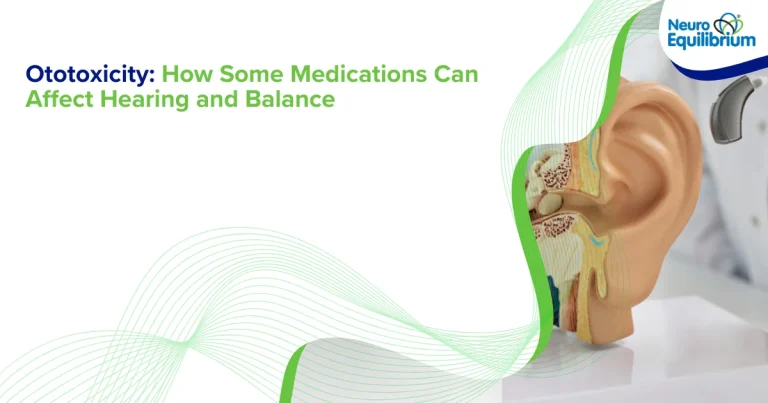
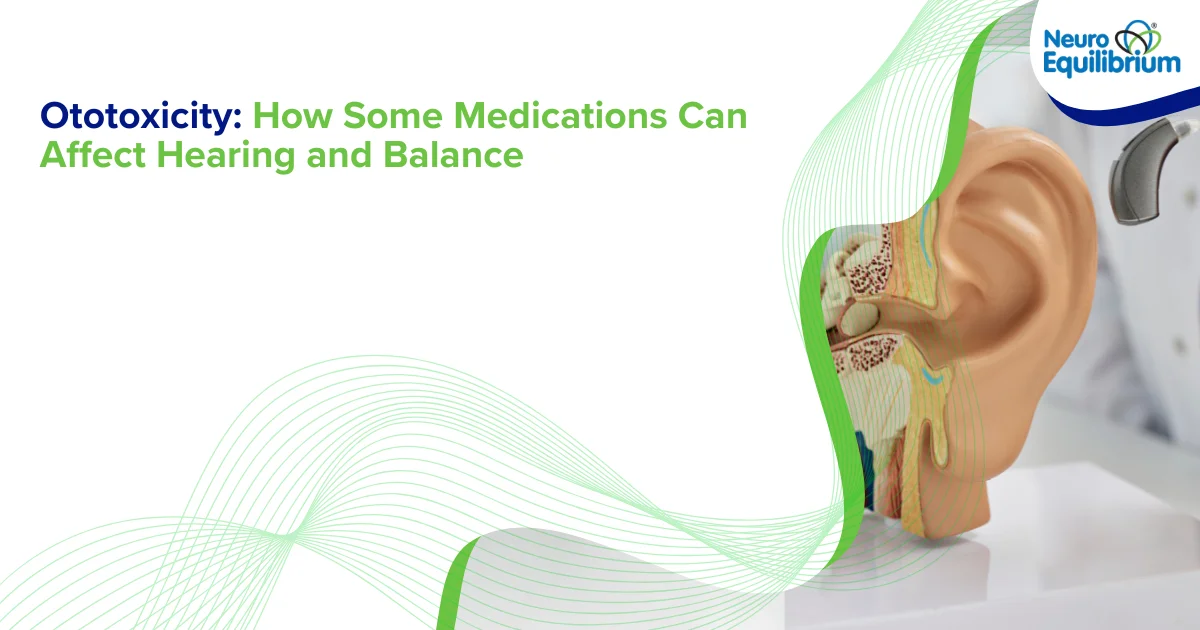
The inner ear actually does two jobs. The cochlea handles hearing, and the vestibular system right next to it keeps you balanced and oriented. Because they sit so close together, something that harms one can end up affecting the other too.
So depending on what’s involved, ototoxicity can show up as:
- Hearing loss
- Tinnitus – ringing or buzzing in one or both ears
- Dizziness or vertigo
- Imbalance or trouble walking
- Increased sensitivity to sound
- Difficulty understanding speech, especially in noisy places
Here’s what makes it tricky: these changes tend to creep in gradually. They’re not always obvious right away, which is why they often get caught late – sometimes a family member notices before the patient does.
Sometimes the damage is temporary and clears up once the medication is stopped. Other times it’s permanent. That’s exactly why catching it early and monitoring properly matters so much.
Which medications can cause ototoxicity?
A handful of drug groups are known to carry this risk:
Aminoglycoside antibiotics. Drugs like gentamicin, amikacin, and tobramycin can damage the inner ear, particularly with longer courses of treatment or in patients who have certain risk factors. They can affect hearing, balance, or both.
Platinum-based chemotherapy. Cisplatin, and to a lesser degree carboplatin, can cause sensorineural hearing loss. This matters a lot for children being treated for cancer, which is why hearing checks are such a standard part of their care.
Loop diuretics. Furosemide can have ototoxic effects, especially at high intravenous doses or in patients with added risk factors. In some cases, the hearing changes can reverse.
A few other medications have also been linked to ototoxicity in specific situations. The risk isn’t fixed – it depends on the drug itself, the dose, how it’s given, how long treatment goes on, kidney function, and whether other ototoxic drugs are being taken at the same time.
Here’s the most important point in this whole article: never stop a medication on your own without talking to your doctor first. These drugs are often treating serious infections or cancer, and the benefit usually outweighs the risk. If you notice hearing or balance changes, bring them up with your doctor – don’t stop the medicine yourself.
Know More About
- The Link Between Hearing Loss and Vertigo: Understanding the Hidden Connection
- Sudden Hearing Loss With Dizziness: Why These Symptoms Need Urgent Attention
- How Neuro Rehabilitation Helps Patients Recover
Ototoxicity and vertigo
Ototoxicity can cause vertigo and imbalance when medications damage the vestibular organs or the nerve pathways connected to them.
In practical terms, the semicircular canals and otolith organs – the parts of your inner ear that sense head movement and tell your brain which way is up – stop working accurately. That can show up as vertigo, oscillopsia (that unsettling feeling that your surroundings bounce when you move your head), unsteadiness, an off walking pattern, or trouble keeping balance in the dark or on uneven ground.
Here’s the catch: unlike hearing damage, vestibular damage can happen without any noticeable hearing loss. Nothing sounds different. The audiogram might look fine. But balance has quietly changed – and because nobody’s looking for it, it often slips under the radar.
That’s why a thorough medication history, a proper vestibular exam, and the right audiological and vestibular testing all matter for catching this early.
Why ototoxicity is hard to diagnose
The early damage tends to be subtle. Hearing changes often start in the high frequencies, which most people just don’t notice in everyday conversation. Mild balance issues get blamed on fatigue or the illness itself. And the symptoms overlap with a lot of other ear and neurological conditions.
So diagnosis comes down to piecing several things together:
- A detailed medical and medication history
- A baseline hearing test
- Regular audiological monitoring
- A look at any tinnitus or balance symptoms
- Vestibular testing when it’s warranted
- Further tests if another cause seems likely
Hearing and balance monitoring during treatment
If you’re on a medication known to carry ototoxic risk, monitoring is your best safeguard.
A baseline hearing test before treatment starts gives you something to compare against – without it, any later change is much harder to interpret. Follow-up testing can then catch shifts during or after treatment, ideally before they start affecting everyday communication. Depending on age and situation, this might include pure-tone audiometry, high-frequency audiometry, otoacoustic emissions, auditory brainstem response, speech audiometry, and vestibular testing when balance symptoms show up.
One thing people often miss: monitoring shouldn’t necessarily stop once the medication does. Some ototoxic damage doesn’t show up until after treatment ends, so follow-up may still be worthwhile for a while afterward.
Ototoxicity in children
Kids being treated for serious illness are especially vulnerable here.
A child going through chemotherapy, or being treated for a severe infection, may end up on medications with known ototoxic potential. Since their speech, language, and educational skills are still developing, hearing loss that goes unnoticed can have effects that reach well beyond just hearing. That’s why early baseline testing and regular monitoring matter so much whenever a child is on a potentially ototoxic drug.
Parents and caregivers are often the first to pick up on something. Worth watching for: asking for things to be repeated a lot, turning the TV or a device up louder, trouble following conversations, new tinnitus, slower responses to sound, unsteadiness, or difficulty understanding speech over background noise.
Can ototoxicity be prevented?
Not every case, no. But the risk can often be reduced with careful planning and monitoring.
Doctors may use the lowest effective dose where it makes sense clinically, keep an eye on kidney function, avoid unnecessary combinations of ototoxic drugs, arrange baseline and follow-up hearing tests, watch more closely in higher-risk patients, and act quickly on early hearing or balance changes. In some cases, an alternative medication might be a reasonable option.
What is the treatment for ototoxicity?
It depends on the underlying cause and whether the damage can be reversed.
Where it makes sense medically, the treating physician might adjust the medication, change the dose, or consider an alternative. That decision has to be made carefully and individually, since abruptly stopping an essential medication can be dangerous in its own right.
If hearing loss has already set in, management might include hearing aids, assistive listening devices, tinnitus management, speech and language support for kids, and – in select cases of severe or permanent hearing loss – cochlear implantation.
For balance problems, Vestibular Rehabilitation Therapy can help. It’s worth being clear on what it can and can’t do: it doesn’t repair inner-ear damage or restore hearing. What it can do is improve balance and reduce the day-to-day impact of vestibular damage, by helping the brain make better use of whatever balance information it still has. Any program should follow a proper assessment and be built around what that assessment actually finds.
When should you see an ENT specialist or audiologist?
If you’re on a potentially ototoxic medication, talk to your treating team about hearing monitoring before or early in treatment – not after symptoms show up.
Get checked out if you notice new or worsening hearing trouble, persistent ringing or buzzing, vertigo or dizziness, new balance issues, difficulty understanding speech, or any hearing change during or after chemotherapy or antibiotics.
Getting evaluated early helps figure out whether it’s actually ototoxicity or something else – and that distinction changes what happens next.
The balance that matters
Ototoxicity is a real challenge. The symptoms can be subtle, the effects vary from person to person, and some damage doesn’t go away. At the same time, many of the medications involved are essential for treating serious infections, cancer, and other conditions.
So the goal was never to avoid these medications altogether. It’s to weigh their benefit against the potential risk to hearing and balance.
Baseline testing, regular monitoring, catching symptoms early, and good communication between physicians, ENT specialists, and audiologists give patients the best shot at catching these effects in time. For patients – and especially for kids – that early catch can make a real difference to communication, development, and quality of life.
Medical Disclaimer
The content on this blog is intended for informational and educational purposes only. The information provided should not be considered a substitute for professional medical advice, diagnosis, or treatment, as vertigo and dizziness can have different underlying causes and symptoms may vary from person to person. Always consult a qualified vertigo specialist for an accurate diagnosis and personalized treatment recommendations. Do not disregard professional medical advice or delay seeking medical care based on information you read on this blog.
Frequently Asked Questions
What is ototoxicity?
Inner-ear damage caused by certain medications or toxins. It can affect hearing, balance, or both, and the damage is sometimes reversible, sometimes permanent.
What are the symptoms?
Hearing loss, tinnitus, dizziness or vertigo, unsteadiness, sound sensitivity, and trouble following speech in noise. None of these confirm ototoxicity on their own, but they’re worth reporting to your doctor.
Which medications can cause it?
Aminoglycoside antibiotics (gentamicin, amikacin, tobramycin), platinum-based chemotherapy (cisplatin, carboplatin), and loop diuretics (furosemide) are the main ones. Risk depends on dose, duration, kidney function, and drug combinations.
Can it cause dizziness and balance problems?
Yes. Vestibular damage can cause vertigo, unsteadiness, and trouble walking – and it can happen even without any hearing loss.
Can medication-induced hearing loss be reversed?
Sometimes. Loop-diuretic effects can be reversible; other causes are often permanent. Early detection improves the odds.
What should I do if I notice hearing or balance changes?
Tell your prescribing doctor right away. Don’t stop or change the medication yourself – for serious infections or cancer, the benefit may outweigh the risk, and stopping abruptly can be dangerous.