







If an older parent or loved one has become unsteady on their feet or had a fall, it’s rarely just a one-off. It’s usually the brain juggling weaker signals from more than one system at once, and it’s worth understanding which ones – rather than putting it down to age and hoping it settles on its own.
What Actually Happens When Balance Starts to Slip?
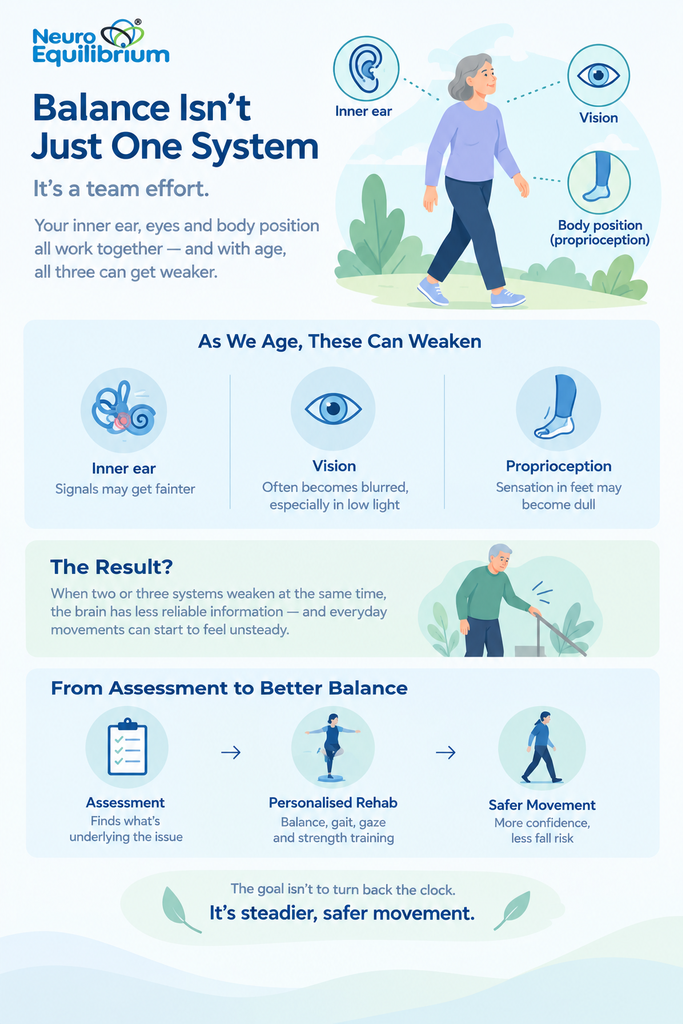
Here’s something most people don’t realise: balance isn’t run by one part of the body. It’s a team effort between your inner ear, your eyes, and the nerves in your legs and feet that tell your brain where your body is in space. Your brain is constantly stitching these three streams of information together, moment to moment, without you ever thinking about it.
The trouble is, all three of those systems can quietly weaken with age. The inner ear’s signals may get fainter. Vision often becomes blurred, especially at night or in low light. Furthermore, sensation in the feet might become dull, particularly for persons with diabetes or circulatory problems. On their own, any one of these changes might go unnoticed. But when two or three start slipping at the same time, the brain suddenly has a lot less reliable information to work with – and that’s when everyday things like turning around, standing up too fast, or walking on an uneven footpath start to feel genuinely unsteady.
This is a very different picture from a classic vertigo attack, like BPPV or vestibular neuritis, where something specific and identifiable happens all at once. Age – related imbalance tends to creep in slowly, with contributions from multiple sources, which is exactly why it’s so easy to write off – there’s no single dramatic moment to point to, just a gradual erosion of confidence in movement.
A few other things can add to the picture too: certain medications (especially when several are being taken together), a drop in blood pressure on standing up, weaker muscles or stiffer joints, cataracts or other vision changes, and yes, inner-ear conditions like BPPV, which actually becomes more common as we age.
So Is It Just Aging, or Is There Something to Check?
Both, honestly – and that’s not a cop-out answer. Some decline in balance with age is expected and normal. But persistent unsteadiness, an actual fall, or a creeping fear of falling isn’t something to simply accept and work around. It’s worth having assessed.
A proper balance evaluation can pinpoint which of those sensory systems are struggling and whether there’s something treatable sitting underneath the general effects of getting older – a vestibular weakness, undiagnosed BPPV, or a medication that’s quietly making things worse.
If a parent or family member has become noticeably unsteady or has had a fall, a balance assessment is a reasonable next step – book a vestibular evaluation to understand what’s actually contributing.
Know More About
- Vertigo Physiotherapy Session: Tests, Exercises & Recovery
- Physiotherapy Balance Exercises You Can Start at Home Today
- Fear of Falling After Vertigo: How Counseling and Balance Therapy Work Together
What Actually Happens During an Assessment
An assessment for an older adult with balance issues tends to be broader than people expect – it’s rarely just one quick test. Depending on the history, it might involve going through past falls or near-falls, current medications, and other health conditions in detail; watching how the person walks, stands, and manages the tricky moments like getting up from a chair; checking vision and sometimes blood pressure while standing; and, if an inner-ear cause seems likely, specific vestibular testing.
Not everyone needs every single test on that list. The point of the assessment isn’t to run through a checklist – it’s to figure out which systems are actually contributing to the problem, so that whatever rehabilitation follows is built around that person, not handed out as a generic routine.
Where Rehabilitation Comes In
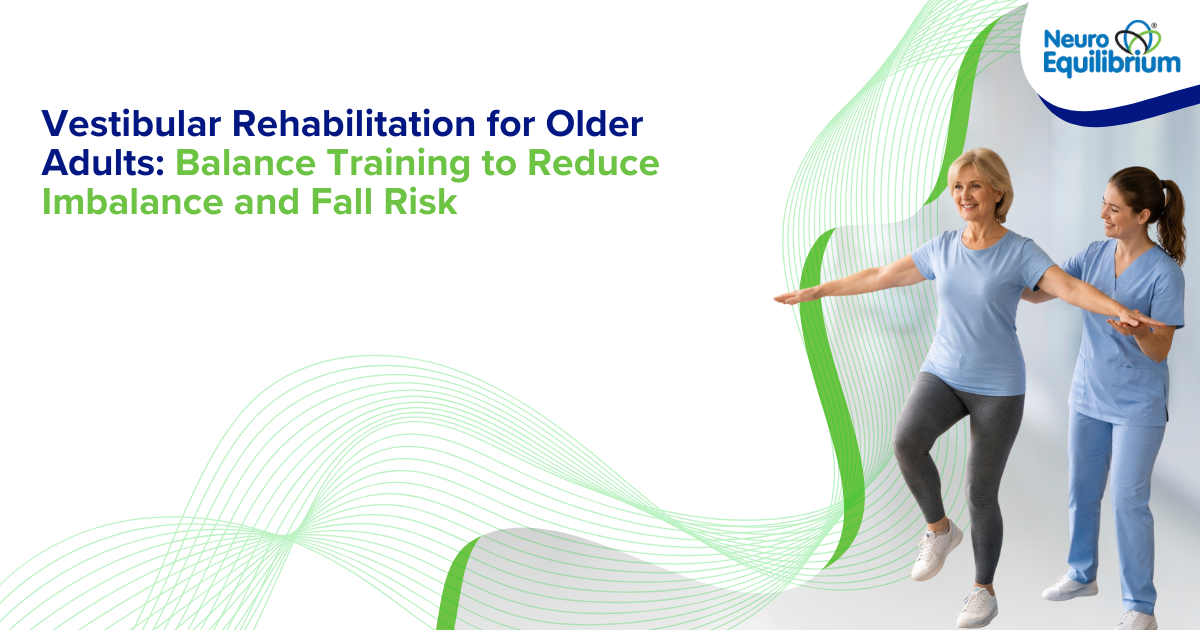
The idea behind vestibular and balance rehabilitation is fairly simple, even if the exercises themselves take practice: the brain can often learn to lean more heavily on whichever senses are still working well, even after another one – say, the inner ear – has weakened with age.
For an older adult, that usually looks like a mix of things. Balance retraining, where standing and shifting weight is practised in gradually more challenging conditions – different surfaces, eyes closed, that sort of thing – always within a safe, supervised setting. Gait training, which focuses specifically on walking, turning, and changing direction, since a lot of falls actually happen during those transition moments rather than while just standing still. Gaze stabilisation exercises, when they’re relevant, to help keep vision steady during head movement. And often some attention to strength and flexibility, because balance also depends on muscles being able to respond quickly when someone stumbles.
None of this looks quite like the exercises given to a younger patient recovering from a single vertigo episode. The pace, the intensity, the level of supervision – all of it gets adjusted for safety, for whatever other health conditions are in play, and for where the person is starting from in terms of mobility and confidence.
What Kind of Progress Can You Expect?
Rehabilitation at this stage of life usually isn’t about getting balance back to what it was thirty years ago – that’s not a realistic goal, and setting it up that way just sets people up for disappointment. It’s about becoming more stable, lowering the risk of a fall, and rebuilding the confidence to move through daily life without constant worry: getting up at night without gripping every piece of furniture, managing the stairs, walking outside, simply not bracing for the next stumble.
Progress shows up gradually, and it’s usually tracked through practical, everyday things rather than a single number – how steady someone feels while walking, how confidently they handle sitting down or standing up, whether they’ve started doing things again that they’d quietly stopped. How long it takes varies a lot from person to person, depending on overall health, what the assessment uncovers, and – perhaps more than anything – how consistently the exercises actually get done.
A Few Things Worth Clearing Up
There’s a persistent idea that “nothing can be done at this age.” It’s understandable why people think it, but it isn’t quite true. Age can affect how quickly someone responds to rehabilitation, sure, but it doesn’t mean balance training has nothing left to offer. Plenty of the contributors to age-related imbalance can still be identified and worked on.
Then there’s the walking stick problem – the sense that reaching for a cane or a walker means admitting defeat. It doesn’t. When it’s genuinely needed, a mobility aid supports safer movement while the underlying balance issue is being rehabilitated. It’s a tool, not a surrender.
And falls themselves often get dismissed as bad luck – a slip, a bit of clumsiness, nothing more. More often than not, though, a fall is the body’s way of flagging that something in the balance system needs attention. Figuring out why it happened is usually the better move than hoping the next one simply won’t.
When It’s Time to Get This Looked At
A few signs are worth taking seriously enough to book an evaluation: an actual fall or a close call, noticeably more caution or hesitation while walking, avoiding stairs or uneven ground or going out alone, frequent lightheadedness on standing up, or ongoing dizziness that’s started interfering with day-to-day life.
Noticed a few of these signs in a parent or loved one? Speak with a vestibular specialist about a balance and fall-risk evaluation.
Medical Disclaimer
The content on this blog is intended for informational and educational purposes only. The information provided should not be considered a substitute for professional medical advice, diagnosis, or treatment, as vertigo and dizziness can have different underlying causes and symptoms may vary from person to person. Always consult a qualified vertigo specialist for an accurate diagnosis and personalized treatment recommendations. Do not disregard professional medical advice or delay seeking medical care based on information you read on this blog.
FAQs
Is vestibular rehabilitation actually safe for elderly patients?
When it’s properly assessed and supervised, yes – balance and vestibular exercises can absolutely be adapted for older adults, including those managing other health conditions. The programme is built around the individual, not handed out as a one-size-fits-all routine.
How is this different from ordinary physiotherapy?
Vestibular and balance rehabilitation zeroes in specifically on the systems involved in staying upright – the inner ear, the eyes, and the body’s sense of position – rather than focusing mainly on muscle or joint strength, although strength and flexibility usually end up being part of the plan too.
Can this genuinely lower the risk of falling?
Balance and gait-focused rehabilitation is a well-recognised part of addressing fall risk in older adults, particularly once an underlying contributing cause has actually been identified. It’s one piece of a bigger picture that can also include reviewing medications and checking for hazards at home.
What if a parent won’t admit there’s a problem, or doesn’t want to talk about it?
This comes up a lot, and there’s a simple workaround: frame it as a general balance check-up rather than something tied to a specific fear or failure. It tends to land much better that way.