


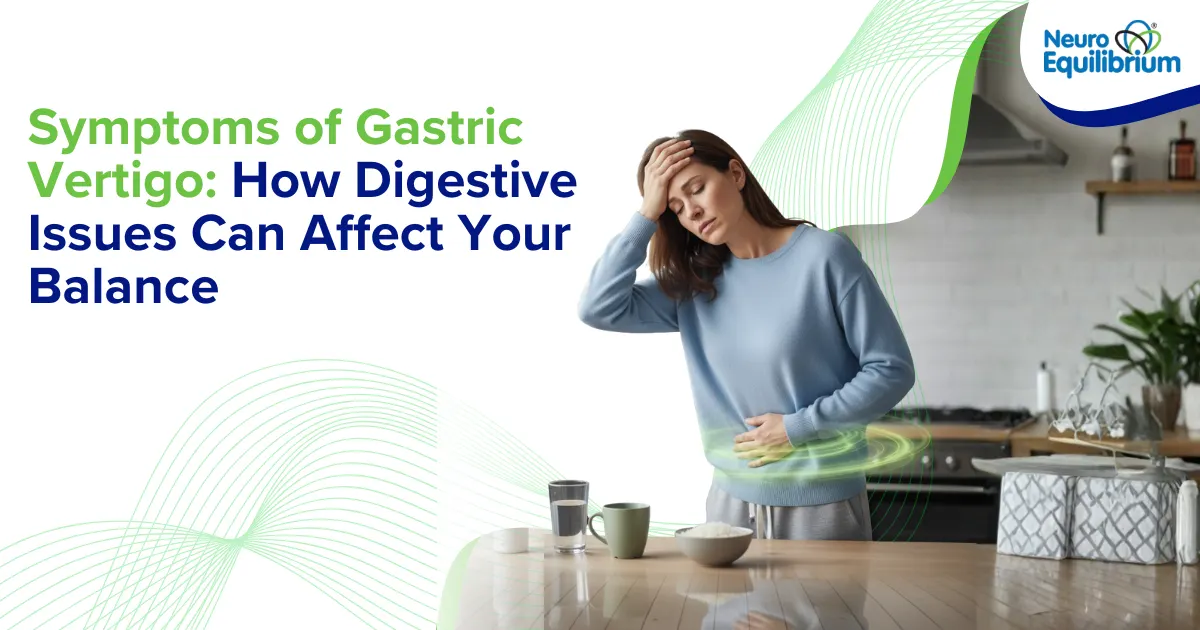





How bloating, acidity, and nausea commonly appear alongside vertigo and why the stomach is rarely the true cause
Feeling dizzy, unsteady, or as if the world is spinning can be scary. Many people search for answers and come across the term “gastric vertigo.” While this isn’t a medical disease by itself, it describes a situation where digestive problems and balance issues seem connected.
In many cases, people notice stomach discomfort, bloating, acidity, nausea, or vomiting alongside dizziness or vertigo. Because of this overlap, many people wonder whether can acid reflux cause vertigo or can acidity cause head spinning.
This makes it easy to assume the stomach is causing the vertigo. But the real story is a bit deeper.
Vertigo is a symptom, not a disease. It can arise from issues in the inner ear, brain, or nerves and sometimes from body chemistry imbalances that indirectly affect digestion.
Let’s explore how this works in a simple, clear, patient-friendly way.
Inner-ear and brain signal mismatch that creates spinning or rocking sensations
Vertigo refers to a false sense of spinning or rocking, even when you’re still. It occurs due to a mismatch between signals from the inner ear and the brain’s balance system (vestibular system).
Some people say:
- “I feel like I’m on a boat.”
- “The room is spinning.”
- “I can’t walk straight.”
Vertigo can appear suddenly and may be short-lived or last for hours.
Know More About Vertigo
- Home Management of Vertigo
- Vertigo in Pregnancy: What You Need to Know
- Vertigo Treatment: Causes, Symptoms, and Medical Options
Why the term is informal and usually reflects overlapping digestive discomfort and vestibular problems
The phrase gastric vertigo is commonly used when:
- A person has gastric issues like acidity, indigestion, or bloating
- And also experiences vertigo, dizziness, or imbalance
However, the stomach is usually not the root cause of vertigo. Instead, vertigo may trigger nausea or weakness from digestive issues may make the dizziness feel more intense. This is why people sometimes report symptoms like dizziness due to gastric problem or describe episodes as head spinning due to gas.
How vertigo causes nausea and how dehydration, low sugar, or heavy meals can worsen dizziness
Vertigo affects the balance centres, which can trigger nausea and vomiting.
Digestive issues like dehydration, low sugar, vitamin deficiencies, or heavy meals can make dizziness worse. This creates a cycle that feels like both problems are one condition. Some people also experience dizziness immediately after meals or even report dizziness while eating first bite food, which may be related to sudden blood pressure or blood sugar changes.

Spinning, bloating, acidity, weakness after meals, headache, imbalance, fatigue
Here are common complaints people experience when dealing with symptoms of gastric vertigo:
- Dizziness or light-headedness
- Feeling like the room is spinning
- Stomach bloating or gas
- Nausea or vomiting
- Sudden weakness after meals
- Headache or migraine-like pressure
- Difficulty walking steadily
- Feeling tired or “drained”
- Burping or acidity makes dizziness feel worse
These symptoms of gastric vertigo may appear occasionally or repeatedly. People experiencing these symptoms often ask whether can stomach gas cause vertigo or can acidity cause head spinning.
Comparison between true vestibular vertigo and digestion-related light-headedness
Vertigo is a very specific type of dizziness defined as the false sensation of spinning, rotation, tilting, or swaying, even when the person is standing still.
Nausea and vomiting are typically secondary symptoms that accompany a severe episode of true vestibular vertigo. They are results of the balance chaos, not the cause of the spinning sensation itself.
This distinction helps explain why digestive discomfort may occur together with vertigo but rarely causes the spinning sensation itself.
Conditions That Link Digestion and Vertigo
Many inner ear and nerve-related conditions can cause both dizziness and nausea.
Examples include:
- Benign Paroxysmal Positional Vertigo (BPPV)
- Vestibular Migraine
- Vestibular Neuritis / Labyrinthitis
- Meniere’s Disease
So the stomach upset is often a result of the dizziness, not the cause. This is why patients sometimes ask whether does vertigo cause stomach pain or digestive discomfort during severe dizziness episodes.
Effects of dehydration, anemia, vitamin deficiencies, and skipped meals
Certain digestive and metabolic factors can trigger or worsen dizziness:
- Low Blood Sugar (Skipping meals)
- Dehydration
- Anemia (Low Hemoglobin)
- Vitamin D, B12, or Magnesium Deficiency
These conditions may create symptoms that feel similar to vertigo even when the inner ear is functioning normally.
Dietary Triggers for Vertigo Management
Here are some dietary factors and tips that can help with vertigo management.
| Condition | Dietary Impact | Management Strategy |
| Meniere’s Disease | Extra fluid pressure in inner ear | Reduce salt intake |
| Vestibular Migraine | Certain foods trigger dizziness | Avoid caffeine, red wine, aged cheese, chocolate |
| General Dizziness | Sudden blood pressure changes | Limit excessive alcohol and caffeine |

Recurrent dizziness, imbalance, hearing changes, severe headaches, nausea with vertigo
See a specialist if:
- Your dizziness keeps returning
- You feel unsteady while walking
- Nausea or vomiting happens along with dizziness
- You feel ringing in the ears or hearing loss
- You have severe headaches with your dizziness
Avoid self-medication or unverified home remedies.
Vertigo needs a proper diagnosis to identify and treat the root cause effectively.
Accurate diagnosis matters more than blaming digestion alone
Although gastric vertigo is not a standalone illness, many people experience both stomach discomfort and dizziness together.
The key is identifying the actual cause whether it’s inner ear crystals, migraines, dehydration, or vitamin deficiencies through accurate diagnosis.
The next step to take is to seek special attention when you are having persistent symptoms of gastric vertigo, such as dizziness, nausea, imbalance, or weakness.
NeuroEquilibrium is an expert diagnostic, state-of-the-art balance testing and tailored vertigo treatment to assist the restoration of balance and confidence in everyday living.
Sources
- Naoum G., et al. (2022). Association between gastrointestinal symptoms and extragastric manifestations such as dizziness and fatigue. PMC. https://pmc.ncbi.nlm.nih.gov/articles/PMC9233578/ (PMC)
- Viliušytė E., et al. (2015). Associations between peripheral vertigo and gastro-oesophageal reflux disease (GERD). PubMed. https://pubmed.ncbi.nlm.nih.gov/26115947/ (PubMed)
- “When stomach problems and dizziness occur together.” Stomach pain and dizziness — causes & management. Medical News Today. https://www.medicalnewstoday.com/articles/stomach-pain-and-dizziness (Medical News Today)
- “Abdominal pain and dizziness: possible causes after meals or digestive distress.” Healthline. https://www.healthline.com/health/abdominal-pain-and-dizziness (Healthline)
- “Vertigo: symptoms, causes and treatments.” HealthDirect (Australian health portal) — overview of classic vertigo causes & symptoms. https://www.healthdirect.gov.au/vertigo (Healthdirect)
Frequently Asked Questions
Can digestive problems really cause dizziness?
Digestive discomfort alone rarely causes true vertigo. However, dehydration, blood sugar fluctuations, or heavy meals can make dizziness feel worse, which is why some people describe it as dizziness due to gastric problems.
Can stomach gas cause vertigo?
Severe bloating or gas can create discomfort and light-headedness, which may feel like dizziness. However, true vertigo usually originates from the inner ear rather than stomach gas.
Can acid reflux cause vertigo?
Acid reflux itself does not typically cause vertigo, but discomfort, dehydration, or poor sleep related to reflux may intensify dizziness symptoms.
Why do I feel dizzy after eating?
Some people experience dizziness after eating due to changes in blood sugar, blood pressure, or dehydration. Rarely, symptoms such as dizziness while eating the first bite of food may occur because of sudden nerve responses or metabolic changes.
Does vertigo cause stomach pain?
Vertigo commonly causes nausea or vomiting. While stomach pain is not typical, the intense nausea associated with vertigo may make the stomach feel uncomfortable.