



Feeling like the room is spinning can be scary, especially when it comes out of nowhere. If you are dealing with a vertigo problem, you may be surprised to learn that hormones can sometimes play a role. Hormones control many systems in our bodies, including blood pressure, fluid balance, and even the tiny balance organs inside our ears.
In this guide, written from the point of view of someone searching for answers, we’ll explore how conditions like pregnancy, thyroid disorders, menopause, and PCOS may connect to dizziness and when it’s time to seek proper vertigo treatment.
What does vertigo feel like, and why is it different from normal dizziness?
Vertigo is not just feeling light-headed. It often feels like:
- The room is spinning
- You are moving when you’re not
- You might fall
- Nausea or vomiting
- Trouble walking straight
This type of vertigo usually comes from the inner ear or the brain’s balance system. Hormones can disturb both, which is why life stages with big hormonal shifts often bring new symptoms.
Know More About
- Causes of Vertigo in Women
- Vertigo in Pregnancy: What You Need to Know
- What Is Ear Fluid Imbalance: Causes, Symptoms, and Treatment
How can hormonal changes disturb the inner ear and cause vertigo?
Inside your ear are tiny fluid-filled canals and crystals that help you sense movement. Hormones can affect:
- Fluid levels in the ear
- Blood flow to balance nerves
- Migraine triggers
- Sugar levels and hydration
When these change suddenly, the balance system may misfire, leading to spinning sensations and the need for proper treatment for vertigo rather than home remedies.
How pregnancy hormones can trigger vertigo and balance trouble
Pregnancy is one of the clearest examples of hormones affecting balance.
Fluid changes in the inner ear
Rising oestrogen and progesterone levels can cause fluid retention in the body, including the ears. Increased fluid pressure may worsen inner-ear disorders and cause severe vertigo.
Vestibular migraine during pregnancy
Hormonal swings are a well-known trigger for vestibular migraine, where vertigo is the main symptom rather than a headache. These dizzy spells can come suddenly and feel intense.
Why is vertigo common in early pregnancy
Studies suggest that around 22% of pregnant women experience vertigo in the first trimester. This is when hormones shift the fastest, confusing the balance organs.
Nutrient shortages later in pregnancy
In the second trimester, calcium and vitamin D levels may drop. These nutrients keep the ear crystals in place. When crystals slip, a condition called BPPV can occur, another major cause of spinning vertigo that requires targeted vertigo treatment.
Blood pressure and sugar changes
Pregnancy hormones relax blood vessels, sometimes lowering blood pressure. Standing up too fast can cause sudden dizziness. Low blood sugar or dehydration can also exacerbate symptoms.
How thyroid disorders may contribute to repeated vertigo symptoms
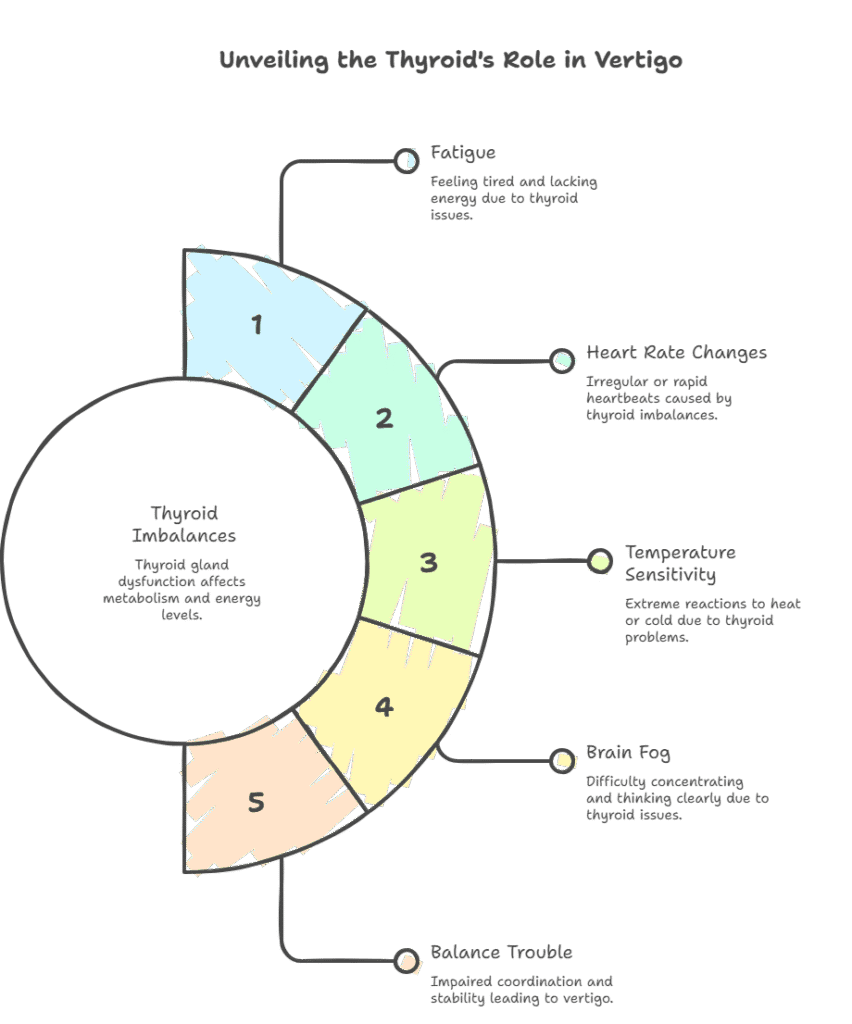
The thyroid gland controls metabolism and energy. When it works too fast or too slow, people may notice the following:
- Fatigue
- Heart rate changes
- Temperature sensitivity
- Brain fog
- Balance trouble
Although research is still growing, thyroid imbalances can affect circulation and nerve signals to the inner ear. This may not cause vertigo on its own, but it can make the condition harder to ignore and harder to recover from without the right treatment.
Can PCOS-related hormone shifts make vertigo more likely?
PCOS (Polycystic Ovary Syndrome) involves changes in oestrogen, insulin, and stress hormones. Some people with PCOS also experience:
- Migraines
- Blood sugar swings
- Anxiety or fatigue
All of these can increase dizziness or trigger vestibular migraine episodes. While PCOS is not always the direct cause, hormonal instability may set the stage for recurring balance problems that require careful vertigo treatment instead of guesswork.
Why menopause can bring new vertigo problems later in life
Menopause causes oestrogen levels to drop, sometimes suddenly. This can affect:
- Blood vessel tone
- Bone and calcium levels
- Sleep
- Migraine patterns
Lower oestrogen may influence inner-ear fluids and circulation, making spinning episodes more common. Many women notice a new vertigo problem during this phase and start searching for safe, long-term treatment for vertigo rather than relying on motion-sickness pills.
How doctors figure out whether hormones are linked to your vertigo problem
If hormones may be playing a role, proper testing matters. Specialists usually:
- Review symptoms and triggers
- Check hearing and balance
- Perform eye-movement tests
- Study posture and walking
- Look for BPPV
- Coordinate with blood tests or scans when needed
The goal is to identify the exact cause before starting vertigo treatment, because vertigo caused by ear crystals is treated very differently from migraine-related vertigo or circulation problems.
What modern vertigo treatment options help hormone-related balance issues?
Good treatment for vertigo is not one-size-fits-all. Depending on the cause, care may include the following:
- Precise repositioning maneuvers for BPPV
- Balance retraining exercises
- Vestibular rehabilitation therapy
- Migraine-focused programs
- Lifestyle and posture guidance
- Nutrition awareness
- Monitoring recovery with advanced tools
When a vertigo problem is linked to pregnancy or menopause, non-drug approaches are often preferred first, focusing on restoring balance safely.

Why choose NeuroEquilibrium for advanced vertigo care?
Proper location is important when spinning episodes occur during daily life. At NeuroEquilibrium, our specialists focus on balance testing, technology-assisted diagnosis, and patient-specific rehabilitation programmes that address the underlying problem rather than symptoms.
Their strategy is an integration of careful consideration, accurate manoeuvres, and long-term therapy strategies to ensure patients do not get frustrated living with a recurrent vertigo issue or continuously seek the correct cure for vertigo.
Final thoughts: Hormones and vertigo don’t have to control your life
The balance system can be affected by the hormonal stages, such as pregnancy, menopause, a change in thyroid, or even PCOS, in unexpected ways. Fluid, pressure, and nutrient changes are all significant, and guessing the cause can delay healing.
If the spinning sensations recur, expert assessment is warranted rather than letting them go. Long-term relief can be achieved through modern testing and personalised care. We offer specialised solutions to help individuals regain freedom and overcome vertigo, without fear.
What is the reason for vertigo?
The majority of vertigo causes involve inner ear or balance system issues, such as BPPV, inner ear infection or swelling of the inflammatory nerves of the inner ear.
How do you treat vertigo?
The treatment of vertigo depends on its cause and can be balance exercises, repositioning manoeuvres, medications or treatment of the underlying cause.
Why do I get vertigo so often?
Recurrent vertigo may occur as a result of recurrent inner ear problems, migraine, low blood pressure, stress or persistent balance disorders.
Is vertigo common during pregnancy?
Yes, vertigo can occur during pregnancy due to hormonal changes, low blood sugar, dehydration, or changes in blood circulation.
What are the top 3 causes of dizziness?
The inner ear issues, low blood pressure, and low blood sugar are the top three causes of dizziness.