



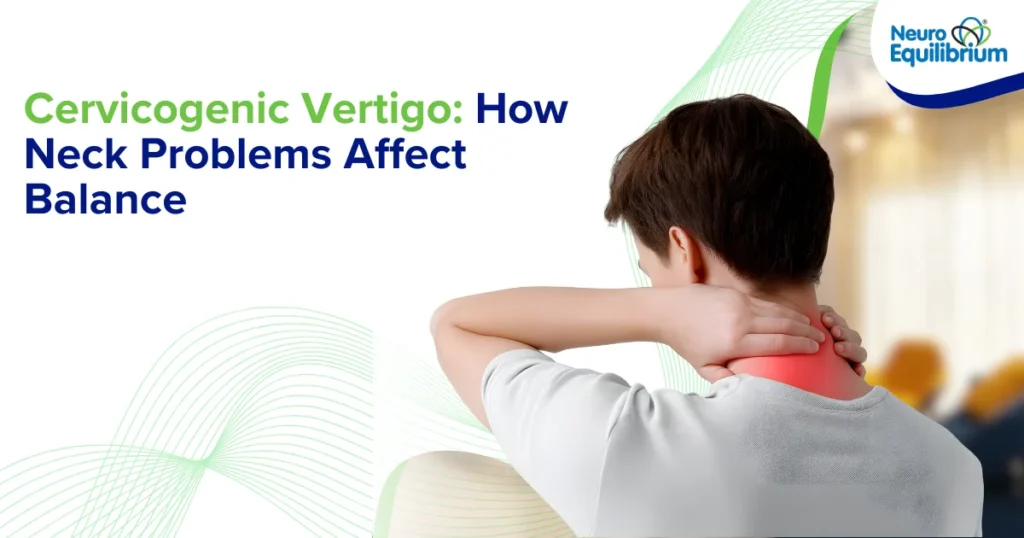
Why Neck Issues Can Mimic Inner-Ear Vertigo and Go Undiagnosed
Dizziness or imbalance can be alarming, especially when you cannot pinpoint the cause. Although most vertigo originates from the inner ear or brain, problems in the cervical spine can also affect balance and may lead to cervicogenic vertigo. Because these symptoms overlap with other conditions, it often goes undiagnosed, leaving people confused and searching for answers. We will try to explain what cervicogenic vertigo is, how neck issues contribute to dizziness, what mechanisms are involved, and why a thorough evaluation with specific vertigo tests is essential for finding the real cause and choosing the right treatment.
What Cervicogenic Dizziness Is and How Neck Signals Confuse the Brain
Cervicogenic vertigo (also known as cervicogenic dizziness) is a condition in which the brain’s balance mechanisms receive incorrect signals from the neck. The human balance mechanism depends on the synchronized input of:
- The inner ear (vestibular system)
- The eyes
- Position and motion sensory nerves in the neck.
The brain becomes confused when the neck sends distorted or conflicting signals due to pain, stiffness, damage, or other structural problems. A person might become light-headed, unsteady or even feel the ground moving under him/her instead of undergoing severe spinning. Specific movements of the head or neck usually trigger these sensations.
Related Articles on Differentiating Neck vs Inner-Ear Causes
- Positional Vertigo Treatment: Causes, Diagnosis, and Treatments
- Vertigo vs Dizziness: Understanding the Key Differences and When to Seek Medical Help
- Why Some Vertigo Treatments Don’t Work the First Time
Main Cervical Spine Conditions That Trigger Dizziness
Several cervical spine conditions may influence balance. The most frequent contributors include:
1. How Poor Posture and Tight Neck Muscles Affect Balance
Such unhealthy postures that are sustained during a long duration can cause a lot of tension in the neck muscles, which can be as a result of bending forward to the screens or prolonged hours of studying. This strain interferes with the proprioceptors and causes the instability or mild dizziness which may be accompanied by cervicogenic vertigo. A stiff neck does not appear to be that serious however in the long run, it may impair the quality of signal transferred to the brain in relation to balance.
2. Why Neck Injuries Lead to Persistent Dizziness
It is through this disruption of the neural tracts that deal with balance, either temporarily or permanently, due to the injuries that can be caused by the neck whiplash. Whereas the acute pain has subsided, people can report chronic dizziness, lack of concentration or balance which can be a sign of cervicogenic vertigo.
3. Degeneration and Arthritis as Balance Disruptors
The degeneration of the age, disc problems, or arthritic changes may aggravate the harmonious working of cervical joints. This may disrupt proprioception, make the eyes, ears and neck perceive something that seems like, causing the lack of balance or being lightheaded, which occasionally causes cervicogenic vertigo.
4. Rare Vascular Causes of Neck-Related Dizziness
In a disorder known as vertebrobasilar insufficiency, some of the movements of the neck may limit the supply of blood to the parts of the brain that regulate the sense of balance. Though this is rare, it may cause dizziness, blurred vision, or instability, and in some cases may be confused with cervicogenic vertigo.
Why Cervical Problems Rarely Cause Spinning Sensations
A common misunderstanding is that degenerative neck disorders directly cause true spinning vertigo, i.e., spinning sensations. Cervical problems are rarely spinning causing bad balance. This misconception usually causes people to relate the neck pain with the vertigo and resort to unnecessary tests that include X-rays or MRIs.
True spinning vertigo is most commonly associated with:
- Benign Paroxysmal Positional Vertigo (BPPV)
- Vestibular migraines
- Inner ear infections
- Neurological conditions
Understanding this difference helps avoid misdiagnosis and unnecessary testing.
Vestibular Migraine and Secondary Neck Pain
In some cases, dizziness does not start in the neck at all. Instead, it originates from the brain or the inner ear, and neck pain appears only as a secondary symptom. A good example is vestibular migraine.
In vestibular migraine, dizziness or vertigo is the primary symptom, and it may occur with or without a headache. Many people also notice neck pain before or during a migraine episode. This often happens because stress, a common migraine trigger, causes increased tension in the neck muscles. In such situations, treating the neck alone will not relieve the dizziness, because the underlying issue is neurological rather than cervical, and therefore not related to cervicogenic vertigo.
Cervicogenic Vertigo vs Inner-Ear and Neurologic Vertigo
| Feature | Cervicogenic Vertigo (Neck-Related) | Other Types of Vertigo (Inner Ear or Neurologic) |
| Primary Cause | Dysfunction in the cervical spine, muscle tension, nerve irritation, whiplash, arthritis | Inner ear problems such as BPPV, Ménière’s disease, vestibular neuritis, or neurological disorders |
| Type of Sensation | Unsteadiness, imbalance, light dizziness; true spinning is less common | Spinning sensation (true vertigo) is typical and often intense |
| Triggering Movements | Neck movements, poor posture, prolonged screen use, sudden neck rotation | Turning in bed, looking up or down, rapid head movements, loud noises (depending on condition) |
| Associated Symptoms | Neck pain, stiffness, headaches, reduced neck mobility, shoulder tightness | Ear ringing, hearing loss, ear pressure, nausea, prolonged spinning episodes |
| Neck Pain Presence | Almost always present and often worsens with cervical movements | Usually absent unless the vertigo stems from trauma |
| Balance Problems | Mild to moderate imbalance that correlates with neck discomfort | May cause significant imbalance, nausea, vomiting, and difficulty standing still |
| Duration of Episodes | Minutes to hours, often fluctuating with neck strain | Seconds (BPPV), hours (Ménière’s), or days (vestibular neuritis) depending on cause |
| Effect of Neck Position | Symptoms worsen when holding the neck in one position too long or during certain neck motions | Symptoms relate more to head movement or inner ear fluid changes rather than neck posture |
| Improvement With Neck Treatment | Symptoms improve with physiotherapy, posture correction, gentle neck mobilization, or treating cervical issues | Symptoms improve with vestibular maneuvers, medications, or inner ear treatments |
| Diagnostic Clues | Neck tenderness, restricted neck motion, symptoms reproduced with cervical tests | Positive Dix-Hallpike test, abnormal vestibular tests, hearing changes |
| When It Happens | After neck injuries, whiplash, arthritis flare-ups, chronic postural strain | Can occur after viral infections, stress on inner ear, aging, or without clear cause |
Stepwise Diagnostic Approach After Ruling Out Other Causes
Cervicogenic vertigo is difficult to diagnose because there is no single test that can confirm it. Doctors must first rule out other, more common causes of dizziness. Only after these other conditions are excluded can cervicogenic dizziness be considered.
Diagnosis usually involves several steps.
1. Role of Injury History and Posture
Some details on neck pain, posture patterns, past injuries, and triggers of dizziness will help determine whether the neck is the cause.
2. Neck Mobility, Muscle Spasm, and Balance Tests
Physicians evaluate the movement of the neck, muscle spasms, and the ability of certain movements of the neck to cause dizziness. They also assess balance, gait, and coordination.
3. VNG, vHIT, Posturography, and Other Vertigo Diagnostics
To distinguish cervicogenic vertigo from ear- or brain-related vertigo, one might perform advanced tests of vertigo, including:
- Videonystagmography (VNG)
- Video Head Impulse Test (vHIT)
- Dynamic Visual Acuity (DVA)
- Computerized posturography
- Additional tests of the vestibular functioning.
Such tests aid in the determination of the causes of dizziness, either inner ear, or the central nervous system and cervical spine.
4. Why Response to Neck Therapy Confirms the Diagnosis
A key part of diagnosing cervicogenic dizziness is seeing whether symptoms improve when the neck problem is treated. If dizziness gets better with neck therapy, it supports the diagnosis. Because no single test can confirm the condition, evaluation by a trained balance or vestibular specialist is very important.
Combined Cervical and Vestibular Rehabilitation Strategies
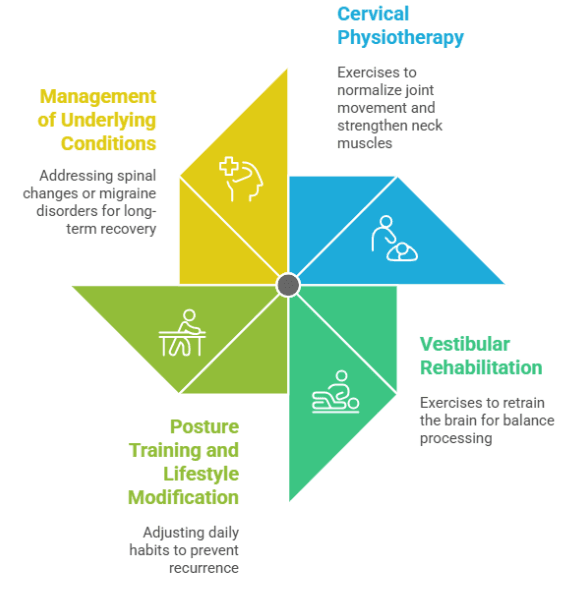
Most individuals experience significant improvement with a combination of appropriate therapeutic strategies. Treatment commonly includes:
1. Exercises to Restore Neck Motion and Proprioception
Specific exercises can be used to normalize the movement of the joints, loosen the muscles and strengthen the neck. Improved neck mechanics enhance proprioceptive signals.
2. Brain-Retraining for Balance Control
Special exercises are a method of retraining the brain to process the balance information in the proper way. They enhance postural stability, coordination and gaze stability.
3. Ergonomic Corrections to Prevent Recurrence
To prevent recurrence, correcting daily habits such as adjusting screen height, taking movement breaks, and avoiding awkward neck postures helps prevent recurrence.
4. Treating Arthritis, Disc Disease, and Migraine
In case there are some underlying spinal changes or migraine disorders, the correct treatment plans are incorporated to ensure long-term recovery.

Practical Next Steps for Evaluation and Recovery
If you notice dizziness along with neck discomfort, poor posture, or symptoms triggered by head movement, the following steps are advisable:
- Assess your posture and daily habits.
- Note when symptoms worsen and whether neck movement plays a role.
- Seek evaluation from a balance-specialized medical professional.
- Undergo appropriate vertigo tests to determine the root cause.
- Follow the recommended combination of neck therapy and vestibular rehabilitation.
Early diagnosis significantly improves outcomes and prevents chronic imbalance.
Specialist Diagnostics and Individualized Neck–Balance Care
Cervicogenic vertigo is a complex but manageable condition that develops when the neck interferes with the brain’s balance-processing systems. Because its symptoms closely resemble those of inner-ear disorders, a detailed evaluation using specialized vertigo tests is essential for finding the true cause. With an accurate diagnosis and a personalized treatment plan, most people recover well, regain confidence, and return to their normal activities.
Choosing a center that specializes in dizziness and balance disorders can make all the difference in identifying what is really behind your symptoms. At NeuroEquilibrium, our network integrates advanced diagnostic technology with an individualized approach to assessment and rehabilitation. Our expertise in both vestibular and cervical causes of dizziness ensures that patients receive precise, targeted care rather than temporary symptom relief, especially in complex cases of cervicogenic vertigo.If you are experiencing neck-related dizziness or suspect cervicogenic vertigo, visiting NeuroEquilibrium may be a significant step toward lasting recovery. Our holistic approach provides clarity, confidence, and a clear path to better balance and well-being. Book an appointment here.
What causes cervical vertigo?
Cervical vertigo is usually caused by problems in the neck that interfere with normal balance signals. These may include whiplash injuries, arthritis, degenerative disc disease, poor posture, herniated discs or tight neck muscles. In some cases, reduced blood flow in the neck, such as in Bow Hunter Syndrome, can also trigger dizziness. At NeuroEquilibrium, advanced cervical and vestibular testing helps identify whether the dizziness is coming from structural issues in the neck, reduced blood flow or another underlying source.
What symptoms are associated with cervical vertigo?
Common symptoms include lightheadedness, spinning sensations, neck pain, stiffness, headaches, restricted neck movement and problems with balance. Symptoms often worsen after moving the head or neck. NeuroEquilibrium uses specialized diagnostic tools to distinguish cervical vertigo from inner-ear or neurological causes, helping ensure patients receive accurate diagnosis and individualized treatment for long-term relief.
How is cervical vertigo diagnosed and treated?
Diagnosis involves ruling out other causes of vertigo, especially inner-ear disorders. A history of neck pain or injury along with dizziness is an important clue. Treatment typically addresses the neck problem behind the dizziness and may include physical therapy to improve mobility and strength, manual therapy to reduce muscle or joint restriction, and medication for pain or inflammation. In rare cases of severe disc damage or artery blockage, surgery may be needed. NeuroEquilibrium’s detailed cervical and vestibular evaluations allow clinicians to create targeted treatment plans based on the patient’s specific findings.
How do you treat cervicogenic vertigo?
Cervicogenic vertigo is treated by correcting the neck dysfunction causing the dizziness. Physical therapy is often the primary treatment and helps restore posture, flexibility and strength. Vestibular rehabilitation can also be used to address balance issues that develop over time. Manual therapies such as osteopathic or chiropractic techniques may help relieve joint or muscle tension. Medications provide temporary pain relief but do not correct the root cause. Surgery is considered only when significant structural problems or impaired blood flow do not respond to conservative care. NeuroEquilibrium combines cervical assessment with vestibular testing to create precise, effective recovery plans.
How to cure vertigo permanently?
There is no single permanent cure for vertigo because the condition can have many different causes. Long-term relief comes from treating the underlying issue. For example, BPPV is often resolved with repositioning maneuvers like the Epley, vestibular neuritis improves with vestibular rehabilitation, cervicogenic vertigo requires neck treatment and posture correction, and migraine-related vertigo improves with trigger management and medications. Ménière’s disease may require lifestyle changes and long-term symptom management. Accurate diagnosis is essential for lasting improvement, and NeuroEquilibrium’s advanced vertigo evaluation systems help identify the exact cause so the right treatment can be provided.