








You might have noticed that when you turn your head, it feels as though the entire room is spinning around you. Over time, this dizziness can become more intense, especially when trying to get out of bed or looking upward.
In case you or your loved one are experiencing something alike, this guide will assist you in realizing the reason why BPPV among the seniors requires a unique and cautious approach.
What Is BPPV and Why Does It Feel Worse with Age?
BPPV is a common inner ear problem. Little crystals of calcium lodged in your ear are dislodged and placed in the wrong position. This disorients your brain and spins you around.
BPPV may be uncomfortable to younger persons. However, when it comes to older people, it may seem more severe and threatening. Even a minor incident may influence the balance and confidence.
This is why it becomes highly important to find an effective bppv treatment with the assistance of a trained bppv doctor when we are older.
Know More About
- How Do I Know If My Vertigo Is BPPV or Something Else?
- How the Epley Maneuver Can Help Relieve BPPV Symptoms Fast
- Just Diagnosed with BPPV? Here’s what to do next?
Why BPPV Increases the Risk of Falls in Elderly Patients
Elder People Might Feel Afraid of Falling. And it is a matter of concern as,
When they suddenly have a feeling of dizziness, they lose balance, And it may cause:
- Slipping while walking.
- Falling in the bathroom.
- Loss of faith in everyday movement.
Falls may result in fractures, hospitalization and protracted recovery periods.
That is why, a bppv specialist is not only interested in treating dizziness but also preventing falls. These risks can be minimized through early bppv treatment.
Why You Should Not Try BPPV Treatment at Home Without Guidance
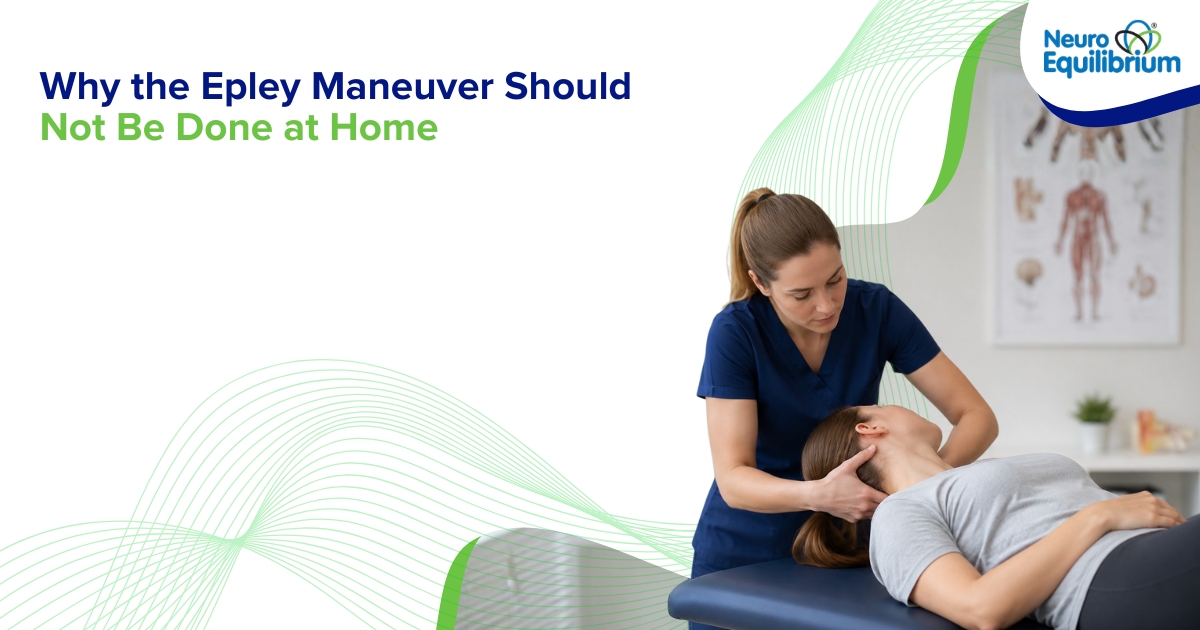
Many people attempt to follow online videos of repositioning maneuvers, such as the Epley maneuver, thinking they are a quick fix for vertigo. However, these movements can be risky, especially for elderly patients. In my experience, attempting these without professional guidance can lead to further complications rather than relief.
These maneuvers involve specific head movements designed to reposition crystals within the inner ear. In older adults, factors like neck stiffness or spinal issues make these abrupt motions potentially injurious. Therefore, it is essential to consult a vestibular specialist. Depending on your specific diagnosis, they will determine and safely perform the appropriate maneuver tailored to your needs.
- Neck stiffness is typical.
- There can be issues of the spine.
- The abrupt motions may be injurious.
These maneuvers are safely performed under the conditions of a trained vestibular specialist. This is why it is always preferable to visit a specialist in bppv rather than resort to some home remedies.
How Doctors Modify BPPV Treatment for Elderly Patients
Treatment is not equally effective for everyone, and its effectiveness often decreases with age.
An experienced vestibular specialist can apply various methods, which can include:
- Moving around rather than pushing.
- Alternatives in the event of neck or back pains.
- Gradual and progressive sessions to prevent pain.
The bppv treatment is not only aimed at preventing dizziness but to prevent it safely and comfortably.
Why Dizziness in Older Adults Is Not Always Just BPPV
It is a common misconception that all dizziness in older adults stems from BPPV; in reality, it can be caused by a variety of underlying factors.
An excellent Vestibular Specialist investigates other potential causes such as:
- Multiple medicine side effects.
- When standing up, blood pressure alters.
- Diabetes or heart problems.
That is why correct diagnosis is important. Before commencing treatment, a Vestibular Specialist makes sure that the dizziness is as a result of BPPV.
How Vestibular Rehabilitation Helps You Feel Stable Again
Even after the initial dizziness has subsided, many patients experience a lingering sense of imbalance or uncertainty while walking. To address this, Vestibular Rehabilitation Exercises are often recommended to help restore confidence and stability.
Vestibular Rehabilitation Therapy (VRT) is a special program that assists in:
- Improve balance.
- Strengthen muscles.
- Regain trust in motion.
This plays a major role in the treatment of elderly patients with bppv. A Vestibular Specialist will design easy exercises that can be easily followed- even at home.
Why BPPV Comes Back More Often in Older Adults
It is a common misconception that BPPV is permanently cured after a single treatment; in reality, the condition may reappear, particularly in older patients.
Reasons include:
- Normal inner ear wear and tear.
- Deficiency of Vitamin D.
- Reduced physical activity.
An effective bppv physician does not only treat the already existing episode but also prevents further instances.
Simple Daily Habits That Support BPPV Recovery
Small lifestyle changes in addition to appropriate bppv treatment can lead to a significant difference:
- Sleeping on a few pillows raised.
- No sharp movements of the head.
- Keeping fit through safe activities.
- Taking Vitamin D and calcium are good.
A bppv specialist may often recommend these habits in order to minimize recurrence.
When Should You See a BPPV Specialist?
If you’re experiencing any of these, don’t ignore it:
- When lying down or rising suddenly spinning around.
- Feeling lightheaded turning your head.
- Balance loss or fear of falling.
- Frequent attacks of vertigo.
Time to visit a doctor of bppv to be properly checked and safely treated.

What Kind of Care and Support You Can Expect
Being a patient, it was the overall approach that worked the best, not just the quick fixes.
The appropriate care typically involves:
- Proper diagnosis with sophisticated tests.
- Customized repositioning maneuvers.
- Balance and rehabilitation activities.
- Guidance for long-term prevention.
Such a systematic intervention guarantees effective and lasting bppv treatment.
Why Choose NeuroEquilibrium for BPPV Care
NeuroEquilibrium is best place to treat BPPV as our patient-centered approach:
- In-depth analysis of the causes of dizziness.
- State-of-the-art diagnostic equipment.
- Individual care plans; the elderly.
- Pay attention to treatment, as well as prevention.
Our care is more than mere care, as every patient has to feel safe, understood, and supported in his or her journey.
Final Thoughts: Don’t Ignore Vertigo as “Just Age”
BPPV is treatable. However, in the old patients, it requires the appropriate attention, care and skills. This negligence may lead to a higher risk of falls and lower quality of life.
Appropriate bppv specialists and prompt initiation of bppv therapy can restore confidence, stability and peace of mind.
In case you or your loved one is experiencing these symptoms, you might want to contact professionals at NeuroEquilibrium that realize the specific needs of elderly patients and offer care that really matters.
Frequently Asked Questions
What medication is used for BPPV?
Benign Paroxysmal Positional Vertigo generally does not require medication as a first-line treatment, as it is caused by displaced inner-ear crystals. Instead, repositioning maneuvers are considered the most effective treatment. While drugs like Meclizine or anti-nausea medications do not treat the underlying cause, they may be taken in the meantime to alleviate acute symptoms of dizziness and nausea.”
How long does it take to recover from BPPV?
Benign Paroxysmal Positional Vertigo may heal rapidly, as a few days to a few weeks. The benefits that are gained after a single or two sessions of the repositioning maneuvers have a significant effect on many people. But, there are instances that the symptoms might reappear and need repeat treatment.
How do you get rid of BPPV fast?
Benign Paroxysmal Positional Vertigo can be relieved most quickly through specialized repositioning maneuvers. While the Epley maneuver is the most common, other techniques such as the Semont, Foster (Half Somersault), or Gufoni maneuvers may be used depending on which ear canal is affected. A vestibular specialist will perform a diagnostic test to determine the exact location of the displaced crystals and then execute the specific maneuver tailored to that diagnosis.
What should you avoid with BPPV?
In benign paroxysmal positional vertigo, you should not be able to make sudden head movements, bend over rapidly, lie flat or turn your head in a swiveling motion because these are the activities that can bring about the symptoms. It is also useful not to sleep without supporting the head and to change positions slowly.
Which side to sleep with BPPV?
In case of Benign Paroxysmal Positional Vertigo, sleeping on the uninvolved side (the side that does not cause dizziness) is usually prescribed. It is also possible to keep your head a bit lifted with pillows so that you could reduce the symptoms and avoid nighttime vertigo attacks.