








It is always very frightening, especially considering that the feeling of being dizzy or the rotation of the room takes place again. Most individuals begin with an ordinary ENT (Ear, Nose, and Throat) physician as they have hopes that the problem will be solved by being treated without much intrigue. In some cases, that is enough. Nevertheless, when the condition of dizziness persists or when it comes back and when no progress is made, one may address a specialist who has knowledge expertise in the field of balance and inner ear diseases is a Neurotologist.
Neurotologist is the expert in the processes of your body that control the sense of balance. They would seek to find a true source of your symptoms, not just to alleviate them temporarily using extremely complex tests and targeted cure. Such an expert coming around the scene would make everything right and confident about the course of action and what needs to be done next.
In subsequent descriptions, we will endeavor to respond to the query as to when you may have to go to a vertigo doctor and why their treatment is not comparable to that of a general ENT doctor and what you may expect during your visit and treatment. We are attempting to make you feel knowledgeable, favored, and enabled to make the most suitable choice concerning your health in order to be able to go on with living without feeling dizzy every now and then.
So, Which Doctor Should You Consult Vertigo First?
This is one of the most common questions patients ask and the answer depends on where you are in your symptom journey.
Here is a simple, practical guide to the typical patient pathway:
| Stage | Whom to Consult | When It Makes Sense |
| First episode or mild symptoms | General Practitioner (GP) or family doctor | For an initial check-up, basic blood tests, and BP assessment |
| Suspected inner ear cause (spinning, BPPV, hearing changes) | ENT specialist (Otolaryngologist) | Most vertigo is inner-ear related and ENTs are a good first specialist stop |
| Persistent, recurring, or complex dizziness | Vertigo specialist / Neurotologist | When ENT treatment hasn’t resolved symptoms or the cause is unclear |
| Symptoms alongside weakness, speech difficulty, or severe headache | Emergency department immediately | These may indicate neurological emergencies |
In India, many patients searching “whom to consult for vertigo” or “for vertigo which doctor to consult” will do well starting with a qualified ENT. However, if symptoms continue beyond a few weeks, recur repeatedly, or affect your daily functioning, stepping up to a neurotologist or a vertigo ENT specialist with additional neurological training is the right move.
Understanding the Difference: General ENT vs. Vertigo Specialist
Think of your body like a team. A general ENT specialist is quite competent in repairing the vast majority of ear or throat diseases, such as infections or sinus. However, the balanced organs in your inner ear, nerves, and even the manner in which your brain decodes your body messages might be the cause of such conditions as vertigo and chronic dizziness.
A specialist in vertigo is a doctor who has advanced practice and training in not only Ear/Nose/Throat but also neurology (the functioning of the nervous system). By this, they do not merely know how your balance system (how things look) is, but how it actually works (how things actually make you feel dizzy), which is the cause of your dizziness.
| General ENT Doctor | Neurotologist Vertigo Specialist |
| Treats common ear, nose, and throat problems such as infections, sinus issues, and hearing concerns | Focuses specifically on dizziness, vertigo, and balance disorders |
| Looks at structural problems in the ears, nose, and throat | Examines how the inner ear, nerves, and brain work together to control balance |
| May manage basic vertigo cases | Handles complex or long-lasting dizziness and spinning sensations |
| Training is mainly in ENT medicine | Has advanced training in ENT plus neurology and balance systems |
| Often treats visible or physical problems | Studies how your balance system functions and why it creates dizzy sensations |
| Usually the first doctor patients see | Often the next step when symptoms continue or are hard to explain |
Know More About Vertigo
- Vertigo Tablets Explained: Uses, Side Effects & Safe Alternatives
- Vertigo Medication Guide: When and How to Use Vertigo Tablets
- Cervicogenic Vertigo: How Neck Problems Affect Balance
Signs You Should See a Vertigo Specialist
Here are clear clues that a general check-up might not be enough, and a vertigo specialist could help you better:
1. Your Dizziness Won’t Go Away
When you have been feeling dizzy for weeks or months, regardless of whether you have taken rest or tried any treatments, then that is an indication that something is amiss with your condition that requires further examination. The chronic symptoms should not be overlooked; a specialist will be able to get deeper into the causes that may be overlooked easily.
2. You Feel the World Spinning Even When Still
This classic vertigo feeling like the room is whirling even when you’re sitting often comes from inner ear balance problems. It’s not something a regular exam always picks up, but a specialist knows exactly what to look for.
3. Movement Makes It Worse
If simply turning your head, rolling over in bed, or bending forward triggers dizziness, this could be a sign of specific balance system issues (like BPPV). A doctor for vertigo has tests designed for this.
4. You Have Hearing Symptoms Too
Dizziness accompanied by ear ringing, hearing loss, or fullness might point to conditions like Ménière’s disease, something ENT doctors might treat, but a specialist will evaluate in more detail.
5. Medication Isn’t Helping Long-Term
Sometimes medicines help only a bit or stop working once you stop taking them. A specialist will look beyond symptom relief to solve the root cause of your vertigo.
6. Your Balance Is Affecting Daily Life
If dizziness makes walking hard, makes you afraid of falling, or stops you from socializing, you deserve care from someone who focuses on balance disorders every day.
Why General Scans Aren’t Always Enough
Imagine having a fancy camera picture of your car’s engine. It shows what it looks like, but not how well it runs. That’s what happens with normal MRI or CT scans: they can spot big problems (like tumours or bleeds), but they miss how well your balance system is functioning.
A vertigo specialist uses advanced tests like:
- VNG (Videonystagmography) – tracks eye movements to uncover hidden balance issues.
- DVA (Dynamic Visual Acuity) – checks how well you see when your head moves.
- SVV (Subjective Visual Vertical) – sees how your brain perceives verticals.
- Balance tests – that measure your actual stability and risk of falling.
These tests look at function, not just structure, which is key to finding the real cause of your dizziness.

How a Vertigo Specialist Helps You Get Better

A specialist like a neurotologist does more than diagnose; they create a care plan tailored just for you. Some ways they help include:
Precise Diagnosis
They find out exactly what part of your balance system is off inner ear, nerve communication, or brain processing.
Customized Treatment Plans
Instead of guessing, vertigo care often includes specialized exercises, repositioning techniques (like those used for BPPV), and therapies designed to retrain your brain and balance responses.
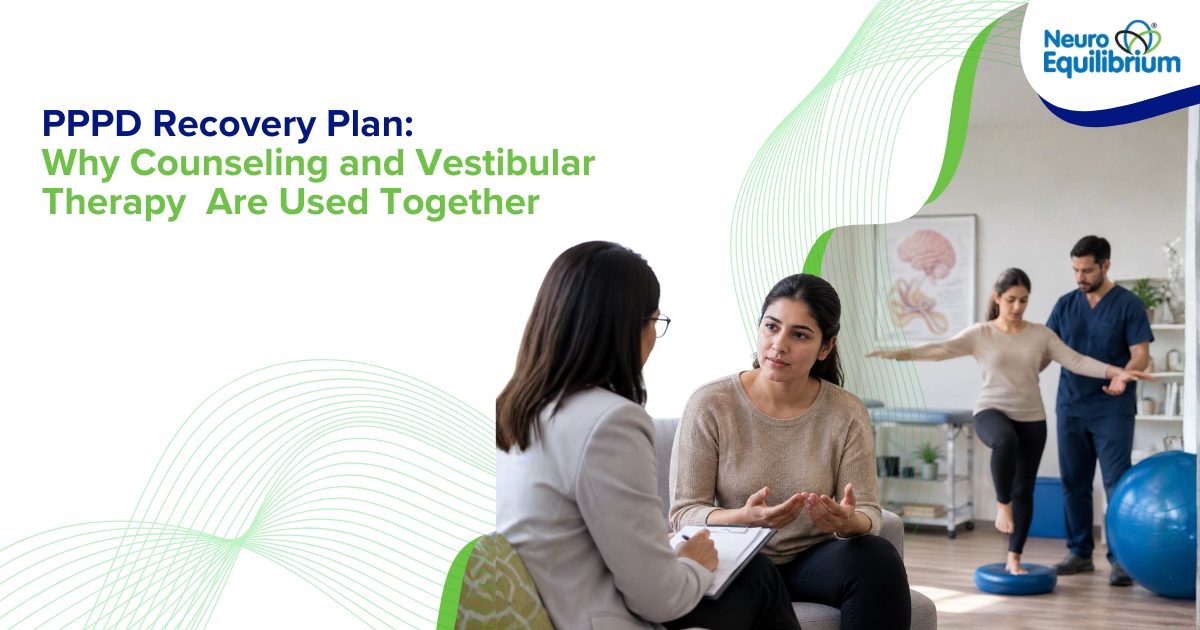
Vestibular Rehabilitation
They are guided balance exercises (occasionally with the aid of virtual reality) which enables your brain to adjust to dizziness with time.
Holistic Support
Assistance with lifestyle changes, fall prevention, and follow-ups through apps and virtual instructions can also help you stay in touch with your care team.
What Is the BPPV Medical Procedure? (Canalith Repositioning Explained)
If your dizziness is triggered by head movements, especially turning in bed or looking up, the most likely diagnosis is Benign Paroxysmal Positional Vertigo (BPPV). It is the most common cause of vertigo. And the good news is, it has a highly effective, non-surgical medical procedure to treat it.
What happens in BPPV: Tiny calcium crystals (called otoconia or canaliths) become dislodged from their normal position in the inner ear and float into the semicircular canals. When your head moves, these misplaced crystals shift and send false spinning signals to the brain.
The Medical Procedure: Canalith Repositioning (Epley Maneuver)
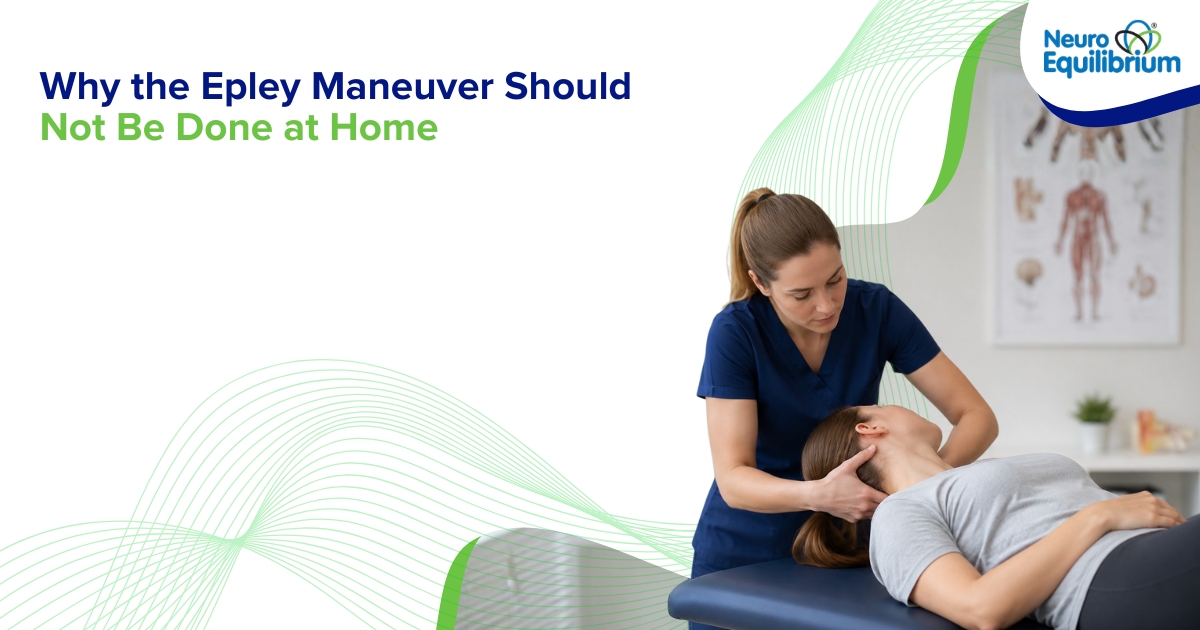
The Epley maneuver, the standard medical procedure for BPPV, involves guiding your head through a specific series of positions to move the displaced crystals out of the semicircular canal and back where they belong. It is:
- Painless and non-invasive
- Performed in-clinic in under 15 minutes
- Effective in approximately 8 out of 10 patients
- Often successful in a single session, though repeat sessions may be needed
A trained vertigo specialist or a vestibular physiotherapist performs the procedure. While variations of it can be done at home, it is strongly recommended to have the correct ear identified and the technique shown to you by a specialist first doing it on the wrong side can prolong symptoms.
This is one of the most important reasons to see a vertigo specialist rather than relying only on medication: BPPV cannot be resolved with tablets alone. It requires the right physical repositioning procedure to correct the underlying mechanical problem.
When to Seek Immediate Emergency Help For your Symptoms
There are warning signs and these symptoms require life-saving treatment before scheduling a visit to the specialist:
- Dual or blurred vision out of the blue.
- Proper speech or speech difficulty.
- Weakness or numbness of one side.
- Loss of consciousness
These may indicate neurological emergencies in case you observe them, proceed to the emergency services.
Why Choose NeuroEquilibrium for the Best Vertigo Treatment
When dizziness starts taking over your life, quick fixes are not enough. You need real answers and long-term solutions. That is where we come in.
At NeuroEquilibrium, we focus entirely on balance disorders, vertigo, and chronic dizziness. These are not side concerns for us. Our entire approach is built around understanding how the inner ear, nerves, and brain work together to maintain balance, and what goes wrong when dizziness begins.
While many clinics treat vertigo occasionally, we specialize in it every day. Our centers are designed for patients who are actively seeking a vertigo specialist or a dizziness doctor they can trust. This focused care allows us to uncover causes that are often missed during routine evaluations.
We believe the right diagnosis is the first step toward the right treatment. That is why we offer advanced balance testing under one roof. Our modern systems measure real-time responses from the inner ear sensors and eye movements, giving us far more insight than standard scans or basic hearing tests alone.
Every patient’s story is different, and so is our care. We create individualized treatment plans based on detailed test results, not guesswork. These may include specialized repositioning techniques, balance therapy, and programs that help the brain relearn how to stay steady, especially for those who have not found relief elsewhere.
With centers across multiple cities, we make it easier to access expert care without long travel times. This helps families receive timely treatment and keep up with follow-up visits comfortably.
Above all, we put patients first. Living with vertigo can be frightening and exhausting, and we take that seriously. We listen carefully, explain conditions in simple language, and guide you step by step through recovery so you always understand what is happening and what to expect next.
What to Expect at Your First Visit to a Vertigo Specialist
Here’s a simple roadmap so you know what happens:
Detailed medical history discussion
We begin by talking through when your symptoms started, how often they happen, what triggers them, and how they affect your daily life. This helps us understand the full picture of what you are experiencing.
Balance and eye-movement testing
You will undergo specialized, painless tests that show how your inner ear and brain work together to control balance. These measurements allow us to identify where the problem may be coming from.
Personalized care plan
After reviewing your results, we explain everything in simple terms and create a treatment plan tailored specifically to your condition, lifestyle, and recovery goals.
Follow-ups and at-home exercises
You may receive balance exercises to practice at home or recommendations for follow-up visits. These steps are designed to support long-term recovery and help you regain confidence and stability.
Conclusion
Vertigo and chronic dizziness are not simply that you feel out of shape, but they can affect your life and self-esteem on a daily basis. Although the general ENT can assist in most issues, a vertigo specialist or a dizziness doctor can be called upon when the symptom continues, has no rational cause, is movement-induced, and interferes with day-to-day operations. Such experts possess the means, education, and accuracy to reach the source of the problem and assist you in discovering true relief.
Whether you are at the stage of asking “which doctor to consult for vertigo” or you have already tried medication without lasting results, the answer is the same: a specialist with dedicated vestibular expertise. Should you be fed up with spinning, imbalance, and recurring dizziness, reach out to a vertigo expert close to you for comprehensive treatment. Book an appointment today.
Frequently Asked Questions
What is the best doctor to see for vertigo?
The most appropriate physician to consult for vertigo is typically an ENT (ear, nose, and throat) doctor, as most cases of vertigo are caused by inner ear disease. They can diagnose balance disorders and prescribe appropriate treatment. They can also refer you to a neurologist in other instances.
Which type of doctor is best for vertigo?
The first and most preferred doctor to consult for vertigo is an ENT doctor. In case the cause is pertaining to the nerves or the brain, a neurologist can also be engaged. A vestibular therapist can also be useful with some patients.
What is the new treatment for vertigo?
Current therapies of vertigo comprise of the advanced treatment involving the vestibular rehabilitation therapy, canalith repositioning therapy, and the enhanced diagnostic instruments such as the video head impulse test. Technology-based balance training is also used in some clinics. The management is based on the underlying cause of vertigo.
Is vertigo an ENT or neurologist issue?
Vertigo is an ENT problem, the most common, as it tends to begin in the inner ear. But when there is a possibility that the person may have a brain or nerve issue, then a neurologist is consulted. In certain situations, the two experts can collaborate.
How to tell if vertigo is neurological?
Vertigo can be neurological in case it is associated with such symptoms as weakness, speech difficulties, vision problems, severe headache, or numbness. These are signs that need to be treated. This can be clarified by a doctor in terms of examination and tests.