



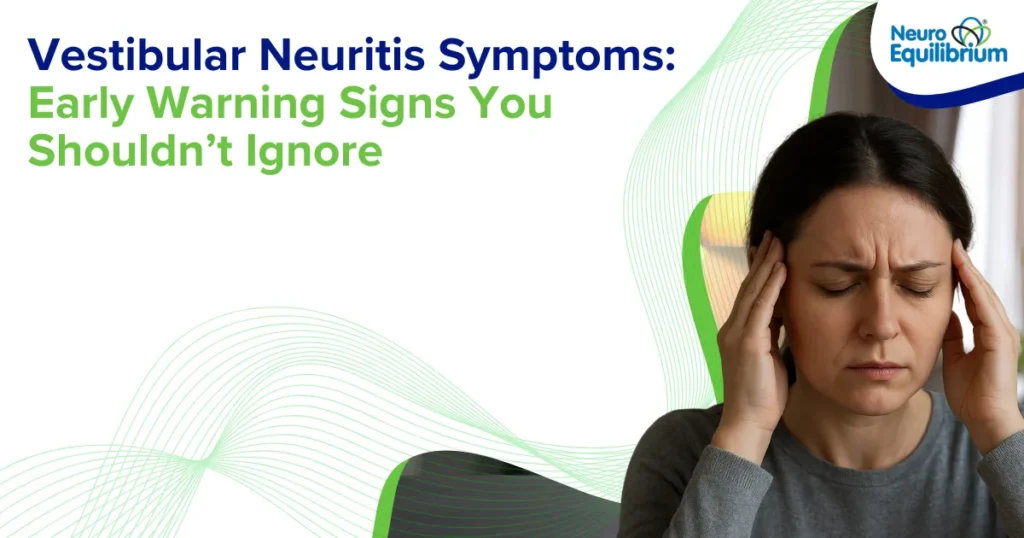
It often begins quietly. You can experience an abnormally shaky feeling on your feet, difficulty in walking, or uncertainty in turning your head. Even elementary actions that used to be automatic will suddenly demand additional effort and focus.
Concern is a natural result of these feelings as they persist. You might feel like you feel disbalanced or that your body is no longer in balance. These symptoms are associated with the case of vestibular neuritis, an illness associated with the system of balancing caused by the affected individuals, and which can manifest abruptly, without a clear reason.
The uncertainty itself can be a stressful factor, yet the knowledge of what is going on can have a significant impact. Fear often is replaced by confidence and hope when you are aware of the causes of these symptoms and the ways to cure them.
This guide describes the symptoms of vestibular neuritis, emphasizes its early warning signs, treatment options available, and makes you realize when it is necessary to have medical attention to ensure that you take the informed steps to recovery and stable balance again.
Know More About Vestibular Health
- What is the Vestibular System?
- Top 5 Vestibular Rehabilitation Exercises for Vertigo Relief
- Vertigo Exercises And Home Remedies
What Is Vestibular Neuritis?
Vestibular neuritis is a condition in which the nerve connecting the inner ear to the brain and transmitting balance signals is inflamed. (vestibular nerve) is inflamed.
This inflammation is most commonly triggered by a viral infection, such as a cold or flu.
When this nerve becomes inflamed, the brain receives distorted signals. One side of the balance system performs well, and the other one conveys false signals. The result? When you are not spinning, your brain thinks that you are spinning.
A simple way to understand Vestibular neuritis is by using an analogy. Bring your inner ear and brain into contact by a telephone wire, all the way along the vestibular nerve. The significance of the wire is that it carries important messages about balance and movement.
In case the wire is broken or turned noisy, the messages are not transmitted in a clear form. Consequently, there is an implication of mixed or wrong signals to the brain. The symptoms associated with this confusion may include feeling dizzy, unsteady or the feeling that your body is not stable, but nothing in the surrounding is in motion.
Vestibular Neuritis Symptoms You Should Not Ignore
The symptoms of vestibular neuritis usually start suddenly and are often intense. Many people mistake them for food poisoning, low blood pressure, or even a panic attack.
1. Sudden and Severe Vertigo
The most common symptom is strong spinning dizziness that starts without warning.
You may feel like:
- The room is rotating
- You’re being pulled to one side
- You can’t stay upright
This vertigo can last for hours or even days, not just a few seconds.
2. Nausea and Vomiting
Because the brain is confused about balance, the stomach reacts strongly.
Many people experience:
- Continuous nausea
- Repeated vomiting
- Loss of appetite
This can lead to dehydration if not managed properly.
3. Dizziness That Lasts for Days
Unlike some vertigo conditions where dizziness comes and goes, vestibular neuritis symptoms last longer.
The worst phase may last:
- 2 to 5 days
- Followed by weeks of imbalance or lightheadedness
This long duration is a key clue.
4. Blurry or Shaky Vision When Moving Your Head
You might notice:
- Difficulty focusing on text
- Objects jumping or blurring when you turn your head
- Trouble watching TV or using a phone
This happens because the eye and head coordination system is affected.
5. Poor Balance and Unsteady Walking
Standing or walking may feel unsafe.
Some people:
- Need support to walk
- Feel like they’ll fall to one side
- Avoid moving because it worsens symptoms
What Vestibular Neuritis Does Not Cause
One key point doctors use to identify vestibular neuritis is no hearing loss.
If you have:
- Hearing loss
- Ringing in the ears (tinnitus)
- Ear fullness
It could be labyrinthitis, a different and more serious condition that needs urgent care.
When to Seek Emergency Help
Inner ear or balance problems are not the cause of all dizziness or vertigo. Dizziness can be a sign of a serious medical emergency.
seek medical care urgently and visit an emergency room in case of the following symptoms:
- Slurred or unclear speech
- Weakness in the arms or legs
- Sudden numbness, especially on one side of the body
- Double vision or sudden loss of vision
- Fainting or loss of consciousness
These symptoms are the indicator of severe neurological disorders, including the stroke, and cannot be neglected.
How Vestibular Neuritis Is Diagnosed
In vestibular neuritis, routine imaging tests such as MRI or CT scans are often normal. This is because the inflammation affects the vestibular nerve at a microscopic level and cannot always be seen on standard scans.
For this reason, specialized balance testing plays a crucial role in diagnosis. Specialists evaluate how your eyes, head movements, and balance reflexes work together using advanced vestibular function tests. These assessments help identify which side of the balance system is affected and determine the severity of the nerve involvement, allowing for more accurate diagnosis and targeted treatment.
Vestibular Neuritis Treatment: What Recovery Looks Like
The good news is that vestibular neuritis is treatable, and most people recover fully with the right approach.
1. Managing the Acute Phase
In the early days, doctors may focus on:
- Reducing inflammation
- Controlling nausea and vomiting
- Stabilizing severe vertigo
This helps you get through the most difficult phase safely.
2. Vestibular Rehabilitation Therapy (VRT)
Once the spinning reduces, vestibular neuritis treatment shifts to recovery.
Vestibular rehabilitation involves:
- Gentle head and eye exercises
- Balance training
- Movements that retrain the brain
These exercises help the brain re-learn balance and adjust to the damaged nerve.
Recovery is not instant, but with consistency, most people see steady improvement.

Why Choose NeuroEquilibrium for Vestibular Care
Medications alone cannot fully resolve balance problems. You need:
- Accurate diagnosis through detailed balance assessment.
- We will explain you clearly what is going on.
- A structured recovery plan focused on long term stability.
At this point, specialized balance oriented facilities. like NeuroEquilibrium comes in. We are aimed at efficient assessment, accurate treatment, and further care that enables patients to be more stable and gain their confidence and control.
Final Thoughts
Symptoms of vestibular neuritis can be frightening, especially when they appear suddenly or feel intense. However, with proper understanding and timely, appropriate treatment, most people recover well. If you or a loved one is experiencing unexplained vertigo, imbalance, or persistent dizziness, it is important not to ignore these signs. Early intervention can make a meaningful difference in recovery.
Science-based, patient-focused balance care, such as that provided by NeuroEquilibrium, helps guide patients toward clarity and stability, one step at a time.
How long does it take for vestibular neuritis to heal?
The process of vestibular neuritis recovery is different in different individuals. The acute symptoms such as severe vertigo tend to disappear after a few days to weeks yet the recovery of balance may take weeks or even months. Other individuals develop residual imbalance or movement sensitivity. Vestibular rehabilitation and early diagnosis can contribute greatly to enhancing the speed of recovery and making the brain able to compensate more successfully.
Is vestibular disorder curable?
Certain forms of the vestibular disorders are completely treatable whilst others only can be managed effectively but not always fully reversed.. Infections or inflammation caused conditions can heal with time, but chronic disorders can be managed long term through vestibular rehabilitation. Through appropriate treatment, rehabilitation and lifestyle modification, the majority of the individuals record significant improvement in symptoms and are able to resume normal life activities with limited restrictions.
What can aggravate vestibular neuritis?
Sudden or incorrect head movements., physical immobility, stress, sleeplessness, and the long-term use of drugs that depress the sense of balance aggravate the state of the vestibular neuritis. Extensive immobility can slow brain compensation and therefore slows down the recovery. Symptoms can also be worsened by bright lighting and visually busy environments. and fatigue especially during the early stages of recovery
How to calm down the vestibular nerve?
The soothing of the vestibular nerve will usually include a set of short-term medications on the acute symptoms and a set of exercises of a rehabilitation program in order to stimulate healing. Moving the head and balance gently, with guidance, with time, the brain is re-trained. Specialized centers such as NeuroEquilibrium. are dedicated to specific forms of vestibular therapy, as opposed to long-term drug use, which enables quicker and steadier recovery.
Can vestibular neuritis come back?
Vestibular neuritis is typically a single episode., usually associated with the virus infection, though it can reoccur in some few individuals. The risk may be enhanced by such factors as weakened immunity, stress, or recurrent viral illnesses. Gradual movement and vestibular rehabilitation (where necessary) can also lead to proper recovery and aid the brain in compensating and reducing the risk of balance issues in the long term or recurrence.