





Why Relying Only on Vertigo Pills Can Delay Real Recovery
Feeling like the world is spinning even when you are standing still is not just uncomfortable; it is disorienting. It can be frightening and disruptive. The first instinct for most people is to search for vertigo tablets or any quick medicine that might stop the dizziness.
But this is where many go wrong. Vertigo is not a disease. It is a symptom, and relying only on tablets often provides temporary relief while the real problem remains untreated. In some cases, overuse of these medicines can even slow recovery.
This blog will help you understand when vertigo tablets can genuinely help, when they may be harmful, and what safer long-term solutions you can consider if you experience dizziness or giddiness often.
Related Guides on Symptoms, Exercises, and Testing
- Vertigo Symptoms: A Complete Guide for Patients
- Vertigo Exercise Chart: A Simple Guide for Patients
- What Is a Vertigo Test?
Difference Between Giddiness, Dizziness, and True Vertigo
Vertigo is a sensation that makes you feel as if you are moving or that your surroundings are moving, even though everything is still. It is a specific type of dizziness that creates a feeling of spinning or motion. When vertigo occurs, you may feel any of the following:
- The room is spinning or whirling
- You are being pulled to one side or losing your balance
- You are rocking, swaying, or about to fall
Many people use the terms giddiness, dizziness, and vertigo interchangeably, but they do not mean the same thing:
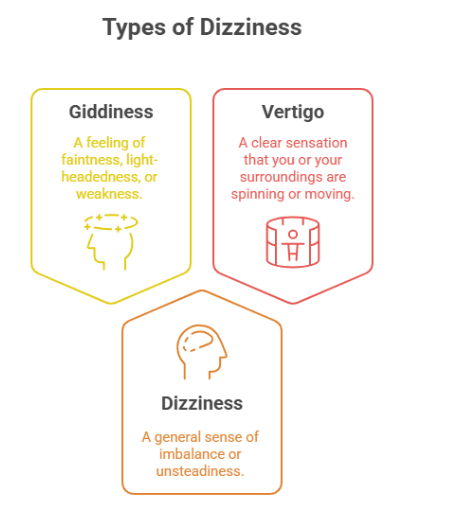
- Giddiness: a feeling of faintness, light-headedness, or weakness
- Dizziness: a general sense of imbalance or unsteadiness
- Vertigo: a clear sensation that you or your surroundings are spinning or moving
Understanding these differences helps doctors identify the underlying cause and choose the most appropriate treatment.
Short-Term Use During Acute Attacks Only
Doctors usually prescribe vertigo tablets for short-term relief, not long-term use. These medicines are recommended in two main conditions:
1. Meclizine, Betahistine, and Vestibular Suppressants
Drugs that assist in this case include Meclizine, Betahistine, or any other vestibular suppressant drugs when the symptoms are severe.
They are prescribed during:
- A sudden feeling of the head spinning.
- Cases of nausea and vomiting.
- Initial phases of such conditions as Vestibular Neuritis.
Caution: Do not take them longer than a few days, since they can slow the routine healing of your brain.
2. Disease-Based Drug Use for Ménière’s, Migraine, Neuritis, PPPD
These medicines are part of a structured plan based on diagnosis.
Conditions vs Drug Classes and Purpose
| Condition | Medication Type | Purpose |
| Ménière’s Disease | Diuretics | Reduce inner ear fluid pressure, combined with a low-salt diet |
| Vestibular Migraine | Migraine-preventive medicines | Reduce the frequency of attacks |
| Vestibular Neuritis / Labyrinthitis | High-dose steroids | Reduce inflammation and prevent hearing loss |
| PPPD | Anxiety-modulating medications (if required) | Calm the overactive balance system |
These are not general vertigo tablets but disease-specific treatments.
Five Key Risks of Chronic Use
Some patients keep taking vertigo tablets daily, believing they help, but this often delays proper healing.
Here’s why long-term use is discouraged:
1. How Medicines Delay Natural Balance Recovery
These medicines prevent the brain from naturally rebalancing itself (central compensation).
2. Why Symptoms Get Hidden
Symptoms may temporarily improve, but the real problem stays hidden.
3. Sedatives, BP meds, allergy tablets
Some drugs can actually cause dizziness, such as:
- Sedatives
- Blood pressure medicines
- Certain allergy tablets
- Motion-sickness drugs
4. Antibiotics and other drugs that damage inner ear
Some medicines may harm the inner ear, including:
- Aminoglycoside antibiotics
- TB medicines
- Malaria medications
5. Benzodiazepines and cognitive side effects
Long-term benzodiazepine use can lead to dependency, sleepiness, poor focus, and memory issues.
Root-Cause Therapies
Mechanical or functional problems cause most cases of vertigo, so non-drug treatments are often more effective.
1. Epley and Crystal-Repositioning Techniques
For vertigo triggered by lying down, turning in bed, or tilting your head, BPPV is usually the cause.
Maneuvers like:
- Epley
- Semont
- Barbecue Roll
- Zuma maneuver
Such manoeuvres are used to push off displaced inner-ear crystals in order to get them back into their usual place, which can relieve a person in most cases within just a day.
2. Balance and Gaze Training Programs
Useful for:
- Vestibular neuritis
- PPPD
- Chronic dizziness
- Post-infection imbalance
VRT consists of the gaze stabilisation and balance training exercises. Virtual reality is also applied in modern centers in individual rehabilitation.
3. Managing Anxiety-Driven Dizziness
Helpful when dizziness is linked to:
- Anxiety
- PPPD
- Fear of movement
- Stress
CBT reduces ‘dizziness anxiety’ and helps restore normal activity levels.
4. Migraine Triggers and Low-Salt Diet
Certain conditions improve significantly with lifestyle control.
For vestibular migraine:
Avoid triggers like:
- Aged cheese
- Chocolate
- MSG
- Caffeine
- Irregular sleep
For Ménière’s disease: Follow a low-salt diet and manage stress to stabilise inner ear fluid.
Red Flags Like Hearing Loss or Weakness
Seek help if you notice:
- Sudden hearing loss
- Vertigo that lasts longer than a few minutes.
- Difficulty in walking
- Weakness or numbness on one side of the body
- Vision issues
- Vertigo after injury

How To Recover From Vertigo Without Depending on Vertigo Tablets
Modern vertigo care relies on detailed evaluation of:
- Balance system function
- Eye–ear coordination
- Nerve pathways
- Body movement and gait
- Migraine or anxiety precipitants.
Advanced centres offer:
- Computerised balance testing
- Virtual reality–based rehab
- Accurate BPPV manoeuvres
- Treatment for vestibular migraine
- Person-centred vestibular therapy
These solutions focus on root-cause treatment, not temporary relief.
Technology-Driven Diagnosis and Individualized Therapy
Vertigo pills can provide short-term relief, but long-term use may hide the real cause of dizziness and delay proper recovery. Understanding the difference between giddiness, dizziness, and true vertigo, along with knowing when to use medication and when to rely on alternatives such as Vestibular Rehabilitation Therapy (VRT) or repositioning maneuvers, is essential for lasting improvement.
NeuroEquilibrium supports this process by offering high-quality, science-based vertigo care. Their technology-driven diagnostic systems and personalized treatment plans focus on identifying the root cause rather than masking symptoms. With a strong emphasis on reducing unnecessary use of vertigo pills and promoting accurate, long-term therapy, NeuroEquilibrium provides a holistic approach that helps restore balance and improve overall quality of life.
Sources
- Hain T. C. (2003). Pharmacological treatment of vertigo. CNS Drugs. https://pubmed.ncbi.nlm.nih.gov/12521357/ (PubMed)
- Hunter B. R., et al. (2022). Efficacy of Benzodiazepines or Antihistamines for Patients with Acute Vertigo: A Systematic Review and Meta-analysis. JAMA Neurology. https://jamanetwork.com/journals/jamaneurology/fullarticle/2793943 (JAMA Network)
- Dyhrfjeld-Johnsen J., et al. (2019). Management of peripheral vertigo with antihistamines. PMC. https://pmc.ncbi.nlm.nih.gov/articles/PMC6783586/ (PMC)
- Viola P., et al. (2022). The pharmacological treatment of acute vestibular syndrome. PMC. https://pmc.ncbi.nlm.nih.gov/articles/PMC9500199/ (PMC)
- Casani A. P., et al. (2021). Current insights into treating vertigo in older adults. PMC. https://pmc.ncbi.nlm.nih.gov/articles/PMC8342368/ (PMC)
- “Medications for Dizziness & Vertigo.” Vestibular Disorders Association (VEDA) — recommendations about vestibular suppressants and their use. https://vestibular.org/article/diagnosis-treatment/treatments/medication/ (Vestibular Disorders Association)
- Samy H. M., Egan R. A. (2024). Dizziness, Vertigo, and Imbalance — Treatment & Management. Medscape. https://emedicine.medscape.com/article/2149881-treatment (Medscape)
- R. Swartz (2005). Treatment of Vertigo. American Family Physician. https://www.aafp.org/pubs/afp/issues/2005/0315/p1115.html (aafp.org)
What is the best pill for vertigo?
The most appropriate pill against vertigo is based on the cause of the condition. Meclizine is usually prescribed to ease the feeling of lightheadedness or nausea whereas Cinnarizine treats inner ear disruptions. Betahistine is commonly used in Meniere’s Disease or balancing recurrence problems. The use of antihistamines or anti-nausea drugs can alleviate severe dizziness or vomiting in the short term, but can cause drowsiness or other side effects. The effectiveness depends on the nature of vertigo and in some situations such as Benign Paroxysmal Positional Vertigo (BPPV), medications can provide short-term treatment, whereas physical movements are more conclusive. It is necessary to consult a doctor and select the treatment that can be considered the safest and the most effective.
What is the name of the pill for vertigo?
No single pill can treat vertigo since it is a matter of its cause. The most regularly used are Meclizine, which decreases dizziness, nausea; Cinnarizine, which suppresses inner-ear problems; and Betahistine, which is usually used in Meningiere’s disease or the intermittent vertigo. Dimenhydrinate may assist in the treatment of nausea and dizziness in the short-term. Not all conditions react to the same type of effect and thus it is necessary to consult a doctor to determine the safest and the most appropriate medication to be used.
Which tablet is best for vertigo in India?
The most appropriate tablet in the treatment of vertigo in India is based on its cause. A common prescription is with Betahistine, which is most commonly used with Méniere disease or vertigo caused by inner ear disease, to improve blood flow and reduce dizziness; Cinnarizine (sold as Stugeron or Vertigem), containing an antihistamine which is used to relieve dizziness, nausea, and motion-sickness; and Meclizine, an antihistamine that is used to treat dizziness, nausea, and motion-sickness symptoms. A doctor must select the most appropriate drug depending on personal diagnosis and health.
What is the fastest medicine for vertigo?
Short-term symptom-relief tablets are the fastest medicines used in vertigo. Meclizine and dimenhydrinate are fast acting, usually in an hour, to help with feeling dizzy, causing nausea and vertigo as a result of motion sickness. Promethazine can also be employed in severe nausea and vomiting. Although these drugs relieve vertigo quickly, they do not cure the causes of vertigo. It is important to consult the doctor and determine the underlying problem so as to be able to treat it safely and effectively.
How quickly do vertigo tablets work?
The pills of Vertigo normally begin to show the effect in 30 minutes to 1 hour depending on intake, having regard to the kind of medications and how your body reacts to the medicine. As an illustration, most commonly, the dizziness and nausea caused by various factors can be alleviated with the help of such medications and drugs as Meclizine and Dimenhydrinate, whereas Betahistine might take days of regular use to soothe the symptoms of such conditions as Meniere’s disease. The cause of vertigo is also important to determine the effectiveness and therefore it is important to consult the doctor in order to get the appropriate diagnosis.