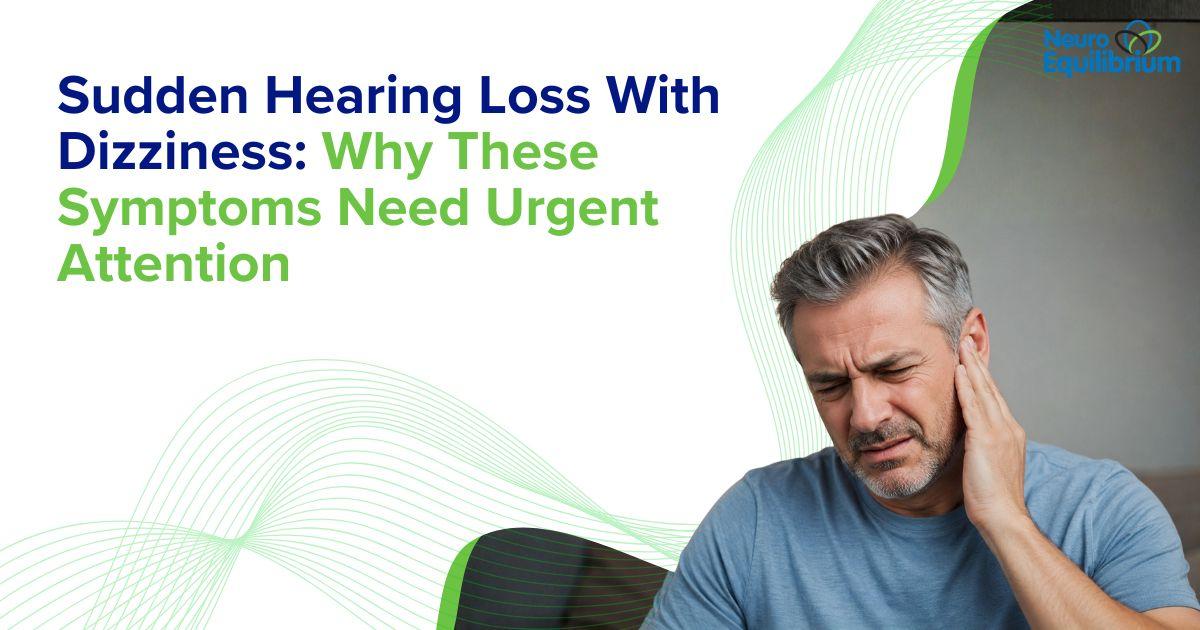








Imagine waking up one morning to find that sounds are muffled, or noticing that one ear has suddenly stopped working the way it should. This is not just an unsettling experience. For thousands of patients every year, this is the first sign of sudden sensorineural hearing loss (SSNHL), a condition that demands immediate medical attention.
The term “ear stroke” has begun to circulate in medical conversations for a very good reason. It draws a direct parallel to a brain stroke. In both cases, a sudden interruption of blood supply leads to rapid, irreversible damage, and the treatment window is painfully narrow. Understanding what sudden hearing loss is, why it happens, and what the treatment timeline looks like could make the difference between recovering hearing and losing it permanently.
What Is Sudden Sensorineural Hearing Loss (SSNHL)?
Sudden sensorineural hearing loss is a sudden drop in hearing of 30 dB or more in three consecutive frequencies, within 72 hours. It usually involves a single ear and may occur suddenly, sometimes overnight.
The cochlea of the inner ear is an extremely sensitive organ. It depends on a fine, complex network of small blood vessels to function. The cochlea is one of the few organs in the body that lacks any backup circulation. Any loss of blood flow, even for short periods, can cause damage to the hair cells in the cochlea. These sensory cells convert vibrations into signals that the brain can interpret.
The most sobering fact about cochlear hair cells is that they cannot regenerate. Once damaged, they are gone. This is what elevates sudden hearing loss from a concerning symptom to a true otologic emergency.
Know More About
- The Link Between Hearing Loss and Vertigo: Understanding the Hidden Connection
- Vestibular Neuritis Symptoms: Early Warning Signs You Shouldn’t Ignore
- Unilateral Hearing Loss and Tinnitus: What You Need to Know
What Causes an Ear Stroke? Understanding the Triggers of Sudden Hearing Loss
In many cases, the exact cause of sudden hearing loss remains unidentified, which is why the medical community classifies it as idiopathic SSNHL. However, several well-recognized triggers are worth understanding.
1. Compromised Blood Flow to the Inner Ear
This is the “ear stroke” mechanism. When a clot, spasm, or vascular event reduces or cuts off circulation to the cochlea, the sensitive hair cells begin to die within minutes. Conditions such as high blood pressure, diabetes, high cholesterol, and cardiovascular disease all increase the risk of vascular events in the inner ear, just as they increase the risk of stroke in the brain.
2. Viral Infections
Some viruses, such as herpes simplex virus, mumps virus, cytomegalovirus, and influenza virus, may directly affect the hair cells or the auditory nerve. This is particularly important if the acute hearing loss follows a recent upper respiratory tract infection. The infection can trigger inflammation, potentially leading to permanent and extensive damage to cochlear structures.
3. Autoimmune Inner Ear Disease
In some patients, the immune system mistakenly targets inner ear tissues. This form is more likely to be bilateral and fluctuating, and it responds particularly well to immunosuppressive treatments when caught early.
The 48-to-72-Hour Steroid Window: Why Timing Is Everything
The treatment of sudden hearing loss is largely governed by one principle: the earlier, the better. This is not a condition where a wait-and-watch approach is appropriate, and no patient should be told to “come back in a week” after reporting sudden hearing loss in one ear.
The primary treatment for sudden sensorineural hearing loss involves corticosteroid anti-inflammatory medications that reduce swelling in the inner ear, reduce cochlear inflammation, and help restore blood flow to the auditory structures. Two main delivery methods are used.
- Oral corticosteroids, such as prednisolone, are the first-line treatment in most cases and are most effective when started early and continued for one to two weeks, as advised by a clinician.
- Intratympanic steroid injections (IT injections): If oral steroids are ineffective or unsafe for the person to take (e.g., diabetes or other systemic disease), they can be delivered through the eardrum into the middle ear space. This allows the medication to be delivered closer to the cochlear structures while minimizing systemic side effects.
Clinical evidence consistently shows that patients treated within 48 to 72 hours of symptom onset have significantly higher rates of hearing recovery than those who delay. This window is sometimes described as the “steroid window,” after which the inflammation and cellular damage begin to become permanent. Even within this window, every additional hour of delay reduces the chances of a full recovery.
Recognizing the Symptoms: When to Seek Help Immediately
Sudden hearing loss doesn’t necessarily have a loud entrance. It is often described by patients as cotton wool in the ear or as muffled hearing. Some people first notice it while using the telephone, when they realize that one ear hears much less clearly than the other. Common associated symptoms are:
- Sudden feeling of pressure or fullness in one ear
- Tinnitus, which may sound like ringing, buzzing, or roaring in the affected ear.
- Impaired balance, dizziness, or vertigo, especially with involvement of the vestibular system
- Problems understanding speech, especially in noisy environments
If any of these symptoms occur suddenly and for no apparent reason, it is important to see an ENT specialist immediately. Don’t expect hearing to come back on its own. In some instances, spontaneous recovery occurs, but without treatment, the chances of a complete recovery diminish.
Why Sudden Hearing Loss Is Classified as an Otologic Emergency
The designation “otologic emergency” should not be taken lightly. It means the condition should be assessed and treated with the same urgency as other time-sensitive medical events. The answer is simple: untreated or late-treated sudden hearing loss may cause permanent, irreversible effects.
- Permanent sensorineural hearing loss in the affected ear: If cochlear hair cells are destroyed, medication or surgery may not restore hearing.
- Chronic tinnitus: Ringing or buzzing in the ears that can last for a long time and cause a significant impact on life, sleep, and attention.
- Balance disorders and chronic vertigo: If the inner ear’s vestibular system is also affected, patients may experience ongoing dizziness, unsteadiness, and spatial disorientation.
The tragedy of sudden hearing loss, from a clinical perspective, is that many patients spend days assuming the problem will resolve on its own, or that it is simply earwax or sinus pressure. By the time they reach an ENT specialist, the steroid window has closed. The intervention that could have saved their hearing is no longer effective.
A 2026 PMC study confirms that sudden hearing loss with vertigo (as in labyrinthitis) requires urgent evaluation as an otologic emergency, with steroids most effective when started early to prevent permanent damage.
Can Sudden Hearing Loss Be Prevented? What the Evidence Suggests
Not every case of sudden hearing loss can be prevented. Idiopathic SSNHL, by definition, does not have a clearly identified cause. However, certain lifestyle choices and health habits can meaningfully reduce the risk of vascular events in the inner ear and, by extension, lower the overall risk of an ear stroke.
Protect Hearing from Acoustic Trauma
Prolonged or intense noise exposure does not cause classic sudden sensorineural hearing loss, but it weakens cochlear resilience over time. Concerts, power tools, industrial machinery, and even earphones at high volumes accelerate cochlear aging. The practical guidance from NeuroEquilibrium’s audiologists follows the 60/60 rule: keep earphone volume below 60% and limit continuous listening sessions to 60 minutes. In noisy professional or recreational environments, earplugs or noise-canceling earmuffs are non-negotiable.
Maintain Cardiovascular Health
The inner ear is highly dependent on a healthy blood supply. Conditions that harm blood vessels elsewhere in the body may also affect cochlear circulation. Keeping blood pressure controlled, managing diabetes carefully, maintaining healthy cholesterol levels, and avoiding smoking are all steps that protect inner ear health at the vascular level. Regular physical exercise improves overall circulation, including to the delicate vessels of the cochlea.
Manage Stress and Sleep
Chronic stress and sleep deprivation have been associated with increased risk of sudden hearing loss in several observational studies. The mechanism is believed to involve elevated cortisol levels, vascular constriction, and immune dysregulation, all of which can affect inner ear health. Managing stress through structured strategies, along with good sleep hygiene, can be part of a holistic approach to hearing protection.

How NeuroEquilibrium Approaches Sudden Hearing Loss
Suspected sudden hearing loss requires urgent ENT assessment and condition-appropriate hearing investigations at a suitable diagnostic facility. equipped with advanced audiological diagnostics, including pure tone audiometry, speech discrimination testing, and tympanometry. When a patient presents with suspected sudden sensorineural hearing loss, the pathway is fast-tracked: an audiogram is performed on the same day, the ENT clinician reviews the results immediately, and treatment is initiated without delay.
For patients who do not respond adequately to oral steroids, intratympanic steroid injections may be offered as salvage therapy, typically as a series of three to four injections over two weeks. This approach may still offer benefit for selected patients who seek treatment beyond the initial 72-hour window, depending on clinical evaluation.
The goal at NeuroEquilibrium is not only to treat the acute episode but to investigate the underlying cause. A thorough workup, including MRI of the internal auditory canal to rule out acoustic neuroma, blood tests to evaluate for autoimmune or hypercoagulable conditions, and cardiovascular risk assessment, provides patients and clinicians with the clearest picture of why the hearing loss occurred and how to prevent future episodes.
Conclusion: Act Within Hours, Not Days
Sudden hearing loss is a medical event that is often underestimated precisely because it is painless. There is no bleeding, no visible injury, and in many cases, no obvious cause. But beneath the surface, the inner ear may be suffering irreversible damage.
If hearing suddenly drops in one ear, whether noticed in the morning, after a loud event, or following a viral illness, the correct response is to seek emergency ENT evaluation the same day. The 48-to-72-hour steroid window should not be treated as something that can be casually stretched. It is a biological reality shaped by the rate at which cochlear hair cells deteriorate without intervention.
“Sudden sensorineural hearing loss (SSNHL) is a true otologic emergency where cochlear hair cells die rapidly without a blood supply. The 48-72-hour steroid window is critical; every hour of delay reduces the chances of recovery. Patients often notice muffled hearing or ear fullness, frequently accompanied by sudden tinnitus and vertigo.”
Dr. Anita Bhandari, Co-founder, NeuroEquilibrium Vertigo Clinics
At NeuroEquilibrium, sudden hearing loss is treated with the urgency it deserves. With specialist clinics across India staffed by experienced ENT surgeons and audiologists, the network is equipped to evaluate, diagnose, and begin treatment within the optimal timeframe. Do not wait. Once hearing is lost, it may not return.
Frequently Asked Questions
Is sudden hearing loss a medical emergency?
Yes. Sudden sensorineural hearing loss is an otologic emergency because inner ear hair cells can be permanently damaged. Same-day ENT evaluation is strongly recommended.
What are the warning signs of sudden hearing loss?
Symptoms include sudden hearing loss in one ear; ear fullness; tinnitus; dizziness; vertigo; imbalance; or hearing difficulties with speech, particularly in loud environments.
How soon should treatment begin for sudden hearing loss?
Treatment should be started within 48-72 hours of symptom onset. Early steroid use may be helpful in the recovery of hearing.
How do you know if you have hearing loss?
If sounds seem muffled, you often ask people to repeat themselves; you struggle to hear speech during loud activities; you turn up the television or telephone volume; or you experience ringing, buzzing, or a feeling of fullness in the ear, you might be losing your hearing. If hearing loss occurs rapidly, particularly in one ear, see your ENT doctor ASAP.
How do you treat permanent hearing loss?
The treatment for the remaining hearing loss typically involves hearing aids, cochlear implants, assistive listening devices, tinnitus management, and routine audiology care. Correct treatment depends on the nature and extent of hearing loss; therefore, a hearing test and consultation with an ENT are important.