


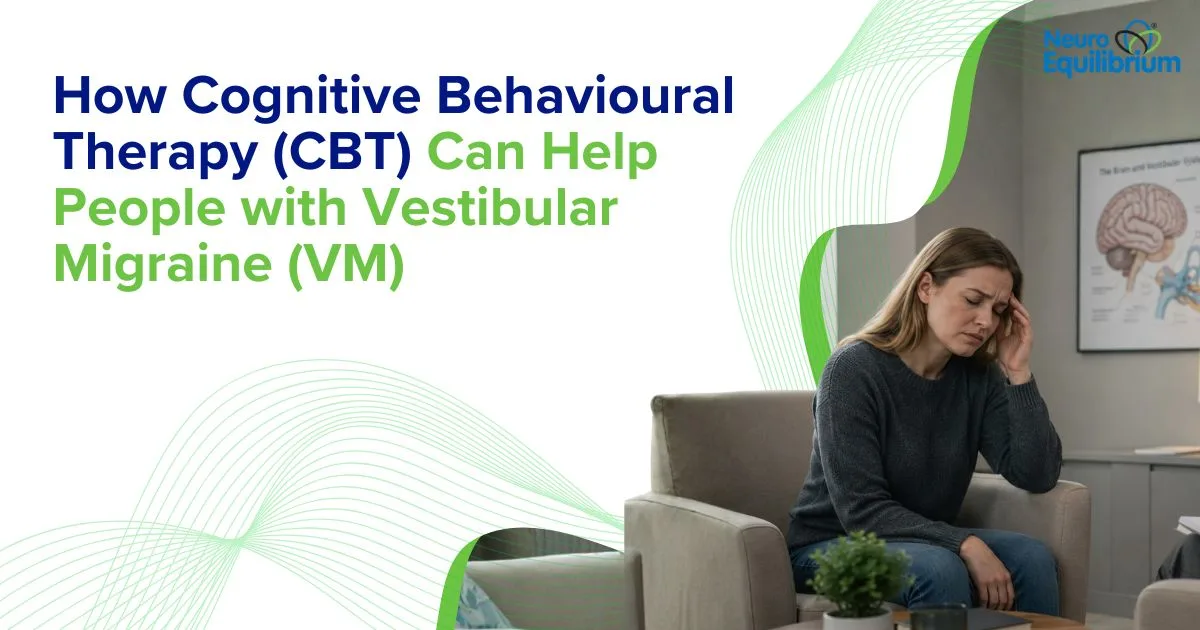





Having a vestibular migraine can be challenging. On the outside, it may appear to be all right. However, inside, the world can seem to continually rotate. The symptoms of vertigo, dizziness, nausea, blurred vision, and brain fog can come on suddenly, and even the most basic of activities can become frightening. Then, the prospect of the next episode can be as draining as the episode itself, over time.
This is why Cognitive Behavioural Therapy (CBT) is important. While it is not a replacement for medical treatment, it can take care of something that the medications alone may fail to address: coping emotionally and psychologically with the chronic dizziness and vertigo.
Understanding Vestibular Migraine
Vestibular Migraine is a neurologic disease of the balance system of the brain. It is different from a regular migraine because it doesn’t always cause a headache. The principal symptoms are rather:
- Vertigo (spinning sensation)
- Dizziness and imbalance
- Motion sensitivity
- Visual disturbances
- Nausea
- Cloudiness of the brain and loss of focus.
Episodes can be brief or prolonged (several hours) and may occur with or without warning. Stress, lack of sleep, hormonal fluctuations, bright lights, specific foods, and screen time are all common triggers.
These triggers are unpredictable, and often, many patients begin to feel anxious all the time as they worry about when the next attack will occur. That worrying then becomes the trigger itself, and a very hard cycle ensues.
The Psychological Impact of Vestibular Migraine
One of the most common factors of having a migraine with vestibular involvement is a state of hypervigilance. Patients can begin monitoring themselves for dizziness and wait to see whether it occurs.
Some psychological issues that may arise include:
- Anxiety: Many people get anxious and become afraid of future attacks, and so they avoid activities out of caution.
- Avoidance behaviors: They may stop traveling, attending social events, or exercising because they feel it may be dangerous.
- Low mood: repeated episodes may lead to helplessness and intense frustration.
- Catastrophic thinking: Patients might come to believe that normal bodily sensations indicate an episode is imminent. Unbalanced standing up can seem like the beginning of an attack. This thought feeds into anxiety, which in turn further perpetuates symptoms.
This fear cycle can have a profound impact on one’s quality of life over time.
The Mind-Body Connection in Vestibular Migraine
Stress does not cause vestibular migraine, but may make it significantly worse. A number of physical changes occur when a person is feeling anxious or stressed:
- Muscle tension increases throughout the body.
- Sleep is disturbed or disrupted.
- The nervous system remains in a state of alertness/activation
- There is heightened focus on sensations in the body, and symptoms feel more intense
This forms an obvious feedback loop:
Dizziness → Anxiety → Avoidance → Increased sensitivity → More distress
CBT is a particular kind of therapy that is intended to break this cycle. Helps patients identify the precise thoughts and behaviors that keep the cycle going and teaches practical tools to interrupt it.
What Is Cognitive Behavioural Therapy (CBT)?
CBT is an evidence-based therapy that is structured and helps patients to recognize and adjust unhelpful patterns of thoughts and behaviors. It aims at four interrelated areas:
- Thoughts: how a person speaks to themselves regarding their symptoms
- Emotions: the fear, frustration, or sadness that ensues
- Behaviours: What are the behaviours that occur in response, such as avoidance
- Physical reactions: the ways the body reacts to stress and anxiety
CBT’s central principle is simple: Our attitude and understanding of symptoms directly impact our reaction to them, and by altering our attitude and understanding, we can change our reaction.
How CBT Helps People with Vestibular Migraine
1. Identifying and Changing Unhelpful Thoughts
Individuals with chronic dizziness can have automatic negative thoughts, including:
- “I will never be fixed.
- I can’t deal with any more.
- I must be in some kind of deep trouble with myself,” he thinks.
A trained CBT therapist can assist the patient in reviewing these thoughts and reframing them with more balanced, realistic thoughts. For instance, “This episode is uncomfortable, but I have managed it before, and I will manage it again. This change of thinking can help to diminish the intensity of the anxiety reaction and, consequently, the distress associated with the dizziness.
2. Reducing Avoidance with Gradual Exposure
Avoidance may provide a short-term solution, but it perpetuates fear in the long run. The more that an individual can avoid driving, crowded spaces, screens, or exercise, the more real danger the brain will perceive.
CBT does this by means of gradual exposure therapy. A therapist helps a patient gradually and safely reengage in activities they have avoided, taking small steps at a time. The brain becomes less sensitive each time it succeeds because it is taught that it is not so bad. Episodes of vestibular migraine tend to get less and less intense with practice.
3. Stress Management Techniques
CBT provides skills to relax the nervous system, such as:
- Slow breathing to reduce heart rate and help alleviate dizziness
- Relaxation of muscle tension accumulated by chronic stress through progressive muscle relaxation
- Mindfulness techniques for staying in the moment and feeling ‘grounded’ during an episode
- Grounding strategies for the panic attack, lowering the panic response when symptoms start
These techniques stimulate the body’s natural calm-down system, or the Parasympathetic Nervous System. They reduce nervous system activation and make episodes easier to manage when used regularly.
4. Behavioural Activation
When patients withdraw from life because of symptoms, low mood, and depression can develop. CBT encourages re-engagement in meaningful activities, even in small steps. Reconnecting with things that bring purpose and joy helps break the cycle of isolation that vestibular migraine often creates.
5. Improving Sleep and Daily Routine
Irregular sleep is a well-known trigger for vestibular migraine. CBT often includes guidance on sleep hygiene, building a consistent daily routine, and managing overstimulation. Better sleep directly reduces the frequency of episodes for many patients.
CBT in Medical Settings: Why It Works Best as Part of a Team Approach
CBT is not a stand-alone treatment for vestibular migraine. It has been best seen as part of a multidisciplinary treatment plan, along with:
- Assessment and diagnosis of neurological conditions
- ENT evaluation
- Vestibular rehabilitation therapy
- Medication Management as required
It is not a substitute for any of these. Rather, it assists patients in better managing the emotional and behavioral responses to a chronic vestibular condition. A combination of physical and psychological therapies guarantees a better recovery and long-term success.
Psychological interventions have been demonstrated to have a positive impact on anxiety levels, functional ability, and greatly increase the quality of life in individuals with a vestibular disorder. After 4-6 weeks of regular CBT sessions, most patients will start to experience significant results.
A Real-Life Example
Take an example of the patient who used to travel alone, but instead, due to a very bad episode of vertigo, he has stopped traveling on his own. The subsequent thought was: “I am not safe away from home.
It was one thought that caused a few months of avoidance, less independence, and increased anxiety. CBT helped the patient identify and dispute that fearful thought, practice relaxation techniques prior to and during trips, and progressively reintroduce traveling alone in small increments.
Confidence was restored over the years. Episodic symptoms remained present, but no longer dominated the patient’s life.

Why Choose NeuroEquilibrium for Vestibular Migraine Care?
NeuroEquilibrium is India’s largest network of specialized Vertigo and Balance Disorder clinics with clinics across the country. The team consists of neurologists, otorhinolaryngologists, and specialists in vestibular rehabilitation, all of whom provide care to individuals and to the team as a whole.
It’s more than just drugs. Advanced diagnostic testing, custom vestibular rehabilitation therapy, and a complete care plan are provided to the patient, which includes both the physical and psychological aspects of vertigo and dizziness. The aim is not only to relieve symptoms but to restore patients’ confidence and independence in their daily lives.
Final Thoughts: Healing Vestibular Migraine Means Treating the Whole Person
Vestibular migraine doesn’t only involve the balance system. It can affect an individual’s sense of safety in their body, their freedom to move about in the world, and their confidence in managing everyday life.
Addressing the physical symptoms leaves a crucial gap in recovery. CBT is designed to address that gap by breaking the cycle of stress-vertigo, altering negative thought patterns, developing coping skills, and slowly reopening up to all the activities and confidence that the chronic vertigo leaves behind.
If a person’s life is being impacted by vestibular migraine or chronic dizziness, there is the right help. The crucial first step is to contact a team of experts with scientific knowledge of balance and an understanding of the psychological burden of living with it.
Frequently Asked Questions
What are the 5 steps of CBT?
The 5 main elements of CBT involve: Identifying negative thoughts, noticing how they affect emotions and behaviors, challenging negative thoughts, replacing negative thoughts with more balanced ones, and implementing new thoughts and coping strategies. CBT is an organized, goal-oriented approach that can be applied to acquire new thoughts and behaviors as a response to troublesome situations like tinnitus-related distress.
Can I do CBT therapy on my own?
There are some CBT techniques you can use independently through self-help books, worksheets, mobile apps, and guided exercises. These tools can be helpful for identifying negative thoughts and developing new, healthy responses. However, sometimes, working with a trained therapist may be more effective, especially when the anxiety symptoms are ongoing, the depression symptoms are more serious, the tinnitus is interfering, and the emotional issues are complicated, because the therapist can provide one-on-one guidance and support.
What is CBT and how does it work?
Cognitive Behavioral Therapy (CBT) is a form of psychological therapy that is designed to help people recognize how their thoughts, feelings, and behaviors are related. It entails identifying negative thought patterns and replacing them with more positive, helpful ones. Through practice, CBT can help an individual to become less distressed, better able to cope, and more likely to develop healthier habits. It’s popular for treating anxiety, depression, stress, insomnia, and tinnitus.
What does a CBT session look like?
In a CBT session, the patient will typically discuss the issues causing them difficulty, the thoughts and behaviors related to those issues, and how to make practical changes. The therapist and patient work together to develop targets, face challenges to negative thinking, and also create coping techniques. Homework exercises may be set during sessions to practice new skills and help consolidate progress and change behavior between sessions.
What is the 5-minute rule in CBT?
The 5-minute rule is one of the CBT strategies to overcome avoidance and procrastination. It’s about doing something for 5 minutes, no matter how unmotivated you are. People tend to persevere beyond the initial 5 minutes. It helps reduce anxiety, build momentum, and make tasks easier because you’re not focused on perfection.