
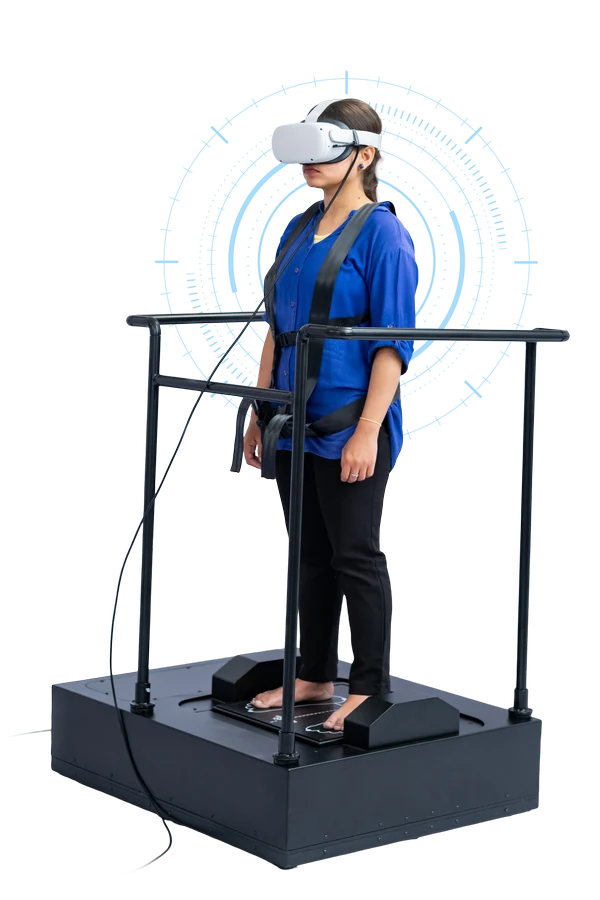






NeuroEquilibrium CDP offers a thorough and precise method for assessing and treating balance disorders, ensuring effective diagnosis and personalized rehabilitation strategies.
A CDP test stands for Computerized Dynamic Posturography. It is used to assess how well a person maintains balance when sensory conditions such as vision or surface stability are altered. The test evaluates how the brain integrates visual, vestibular, and sensory input, helping identify balance disorders, fall risk, and causes of unexplained dizziness or unsteadiness.
The CDP exam is a balance assessment where a person stands on a specialized platform while visual surroundings or surface conditions change. These controlled challenges measure postural responses and stability limits. At advanced balance centers like Neuroequillibrium, CDP exams are used to precisely identify which sensory system is contributing to balance problems and guide targeted rehabilitation.
In the CTET exam, CDP stands for Child Development and Pedagogy. It is a core subject that evaluates a teacher’s understanding of how children learn and develop. The section covers growth stages, learning theories, inclusive education, and teaching strategies, focusing on applying developmental concepts to classroom teaching and student-centered learning.
In education, CDP refers to Child Development and Pedagogy. It studies the physical, cognitive, emotional, and social development of children and how these processes influence learning. CDP helps educators design age-appropriate teaching methods, understand learner diversity, and support students’ individual needs effectively within formal and informal learning environments.
In exams, CDP usually means Child Development and Pedagogy, especially in teaching eligibility and recruitment tests. It assesses knowledge of child psychology, learning processes, motivation, intelligence, and inclusive education. The goal is to ensure that candidates understand how students think and learn, enabling effective teaching practices across different age groups and abilities.



