


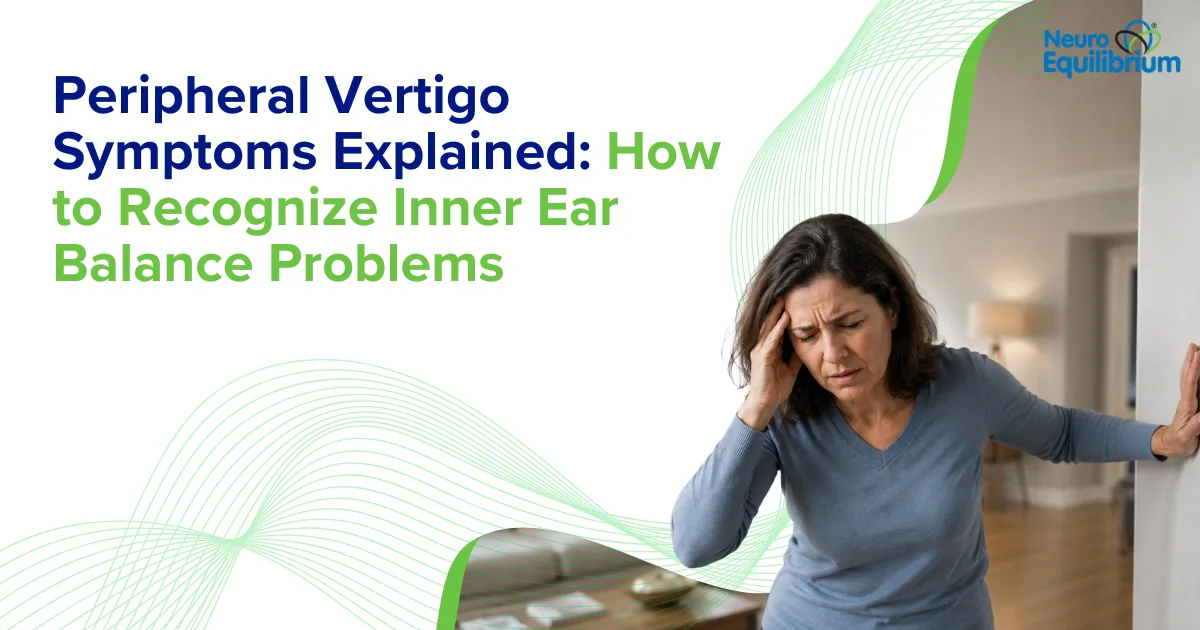





Have you ever been sitting still when, all of a sudden, it felt as though the whole room was spinning? Or perhaps you turned over in bed, looked up, or bent down, and suddenly everything seemed to spin?
If you’ve experienced this, you’re not alone. Vertigo can be frightening and overwhelming, making even simple daily activities feel difficult. The good news is that most cases of vertigo are caused by problems in the inner ear and can be diagnosed and treated effectively.
The initial step toward feeling better is to understand what is going on in your body. Let’s understand this in a simple language.
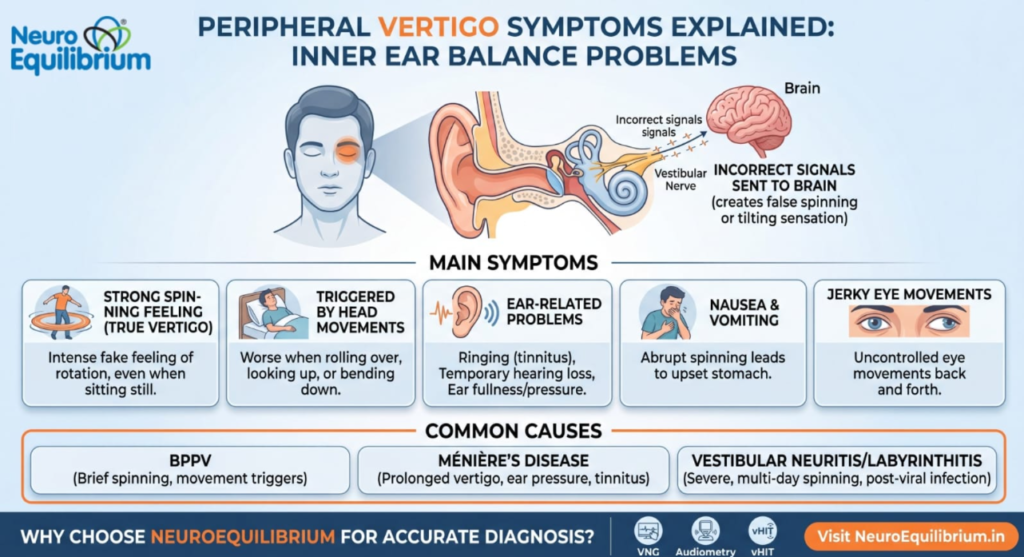
What Is Peripheral Vertigo, and Why Does It Feel So Intense?
The inner ear is a mini GPS device in your body.It constantly tells your brain how your head is moving and helps you stay balanced while standing, walking, or turning. If there is a problem in the inner ear or the balance nerve that connects it to the brain, incorrect signals are sent to the brain.
The result? An intense, False feeling that you or all of your surroundings are rotating or tilting. This is called peripheral vertigo, and it is caused by a problem in the inner ear or balance nerve, not the brain itself.
This is an important distinction. Unlike central vertigo, which may be caused by conditions affecting the brain such as a stroke, peripheral vertigo usually does not occur with warning signs like slurred speech, double vision, weakness or numbness in the arms or legs, or difficulty speaking. If any of these symptoms occur, seek emergency medical care immediately.
Know More About
- Travel-Induced Vertigo: Flights, High Altitude & Motion Triggers
- Hormonal Causes of Vertigo (PCOS, Thyroid, Pregnancy, Menopause)
- What a Neurotologist Checks That ENT Doctors Miss in Vertigo Cases
Main Peripheral Vertigo Symptoms You Should Be Aware Of
Identifying peripheral vertigo symptoms early can make a big difference. Here are the most common symptoms that may suggest your inner ear is sending incorrect signals to your brain:
1. A Strong Spinning Feeling, Also Called True Vertigo
This does not mean being lightheaded or even a bit woozy. Peripheral vertigo produces a very powerful false perception that it is you (or the surrounding room) that is spinning. It can just occur abruptly, and it can be extremely strong, even when you have not moved in the least.
2. Symptoms Triggered by Head Movements
Among the most obvious indications of peripheral vertigo is that symptoms are usually aggravated by head movement. Some common causes include rolling over in bed, bending down to pick something up, or tilting your head back to look up. If you experience dizziness during the following movements, it may be due to an issue in the inner ear.
3. Ear-Related Problems: Hearing, Fullness, or Ringing.
Since your hearing and balance organs are in the same space within the inner ear, peripheral vertigo is often accompanied by ear symptoms. These can include:
- Ringing or buzzing in the ear (so-called tinnitus)
- Pain or fullness in the ear.
- Temporary hearing loss in one ear.
4. Nausea and Vomiting
The spinning sensation can make you feel sick to your stomach. Many people with peripheral vertigo symptoms Experience nausea and may even vomit, especially during a severe episode.These symptoms usually improve as the spinning settles.
5. Jerky Eye Movements (Nystagmus)
This is one sign a doctor will look for. When your inner ear sends false signals, your eyes may move rapidly back and forth in an uncontrolled, jerky manner. This is called nystagmus, Most people do not notice these eye movements themselves, but they can help your doctor identify the cause of your vertigo.
“Peripheral vertigo originates from inner ear or vestibular nerve problems, characterized by intense true spinning (not just lightheadedness), triggered by specific head movements, often with tinnitus, ear fullness, nausea/vomiting, and jerky eye movements (nystagmus).
BPPV causes brief (Less than one minute) spinning from head position changes; Ménière’s includes fluctuating hearing loss and ear pressure; vestibular neuritis/labyrinthitis brings severe, days-long spinning often post-viral infection.”
Dr. Anita Bhandari, Co-founder, NeuroEquilibrium Vertigo Clinics
What Inner Ear Condition Might Be Causing Your Peripheral Vertigo Symptoms?
Peripheral vertigo symptoms do not always appear in the same way. The duration and pattern of your spinning episodes may help identify the underlying inner ear disorder:
BPPV (Benign Paroxysmal Positional Vertigo)
BPPV is the most common cause of peripheral vertigo caused by an inner ear problem. It causes brief, intense spinning episodes that usually last less than a minute and are almost always triggered by head movements. The good news? BPPV usually does not cause hearing loss or ringing in the ears.
Ménière’s Disease
In Ménière’s disease, vertigo attacks are unpredictable and may persist for several hours. They may be accompanied by fluctuating hearing loss, a loud ringing sound in the ear, and a strong sense of fullness or pressure in the ear. These peripheral vertigo symptoms result from a buildup of fluid in the inner ear.
Vestibular Neuritis and Labyrinthitis
These two conditions commonly occur after a viral infection, such as a bad cold or the flu. They can cause intense, severe dizziness and spinning that may last for days. Labyrinthitis may also cause sudden hearing loss in one ear along with balance problems.
A 2023 NCBI review identifies: BPPV, Ménière’s, vestibular neuritis, and labyrinthitis as the primary peripheral vertigo causes, distinguished by their unique symptom duration, triggers, and auditory involvement.
Peripheral vs. Central Vertigo: An Easy Way to Understand the Difference
A question many people ask is: Could my dizziness be due to my brain? It is a valid concern. Here is a simple way to think about it:
Peripheral vertigo symptoms are usually:
- Triggered by movement
- Often associated with ear symptoms, such as ringing or hearing changes.
- Usually not associated with neurological warning signs.
Central vertigo, which is related to the brain, may be accompanied by:
- Blurred vision or difficulty focusing.
- Slurred or unusual-sounding speech.
- Sudden weakness or numbness in the arms or legs.
- Difficulty walking or moving normally.
If you notice any of those brain-related symptoms along with dizziness, go to the hospital as soon as possible. However, if your symptoms suggest peripheral vertigo, an inner ear specialist can help identify the cause and recommend treatment.
When Should You Seek Help for Peripheral Vertigo Symptoms?
When spinning episodes begin affecting your daily life, when you cannot work, sleep, or even get out of bed, it is time to have a proper assessment. Many people wait too long because they believe it will clear on its own. It does sometimes, but without proper diagnosis and treatment, the episodes may continue to recur.
Special tests, such as a Videonystagmography (VNG) test, a hearing (audiometry) test, or a Video Head Impulse Test (vHIT), can help identify what is happening in your inner ear. It is possible to plan appropriate treatment, whether a repositioning procedure, vestibular rehabilitation exercises, or medication, based on this detailed assessment.

Why Choose NeuroEquilibrium for Vertigo Care?
An accurate diagnosis is the key to effective treatment for peripheral vertigo. NeuroEquilibrium is a specialized chain of vertigo and balance clinics across India, created to help patients find accurate diagnosis and effective treatment.
At NeuroEquilibrium, care goes beyond a routine clinic visit. The clinics use advanced tools for vestibular assessment, NeuroEquilibrium clinics use VNG, SVV, DVA and Caloric Testing, selected according to the patient’s symptoms and clinical assessment., to build a comprehensive picture of your inner ear function. It is not based on guesswork. It is accurate, technology-based care designed to identify your unique inner ear issue.
The team is available to provide online vestibular rehabilitation to patients who are unable to visit a clinic in person, so that help is available wherever you are in India. No matter what inner ear disease you are dealing with: BPPV, Ménière’ss Disease, vestibular neuritis, or another inner ear disorder, NeuroEquilibrium has the tools and expertise to help you move toward recovery.
The First Step to Feeling Better Is Understanding Your Peripheral Vertigo Symptoms
Replace with more accurate words: “Vertigo can be frightening and frustrating. The spinning sensation, nausea, and worry about when the next episode might happen can affect your daily life. The good news is that most inner ear balance disorders are well understood. With an accurate diagnosis and the right treatment, most people experience significant improvement.
What is wrong? You don’t need to keep guessing what is wrong. Everything can change with an accurate diagnosis from a specialist with expertise in vestibular disorders.
Frequently Asked Questions
What is the most common cause of Peripheral vertigo?
The most common cause of peripheral vertigo is benign Paroxysmal Positional Vertigo, a disorder in which small calcium crystals in the inner ear become dislodged and disrupt the balance canals. This leads to the sensation of sudden spinning, especially when turning the head, lying down, or getting up.
How to fix peripheral vertigo?
Correction of the inner-ear imbalance that causes dizziness is used to treat peripheral vertigo. The quickest remedy in the case of Benign Paroxysmal Positional Vertigo BPPV is the Epley Maneuver that repositions the loose crystals. Other measures may include vestibular rehabilitation, hydration, anti-vertigo medication, and treatment of infections/inflammation where necessary.
Can vertigo go away on its own without treatment?
Yes, some mild cases of vertigo may improve on their own. However, the symptoms can return, increase the risk of falls, and interfere with daily activities. Some conditions, such as BPPV, usually improve more quickly and reliably with treatment than by waiting for them to resolve on their own. If your symptoms are severe, keep coming back, or last for more than a few days, you should see a healthcare professional.
What are the long-term effects of vertigo?
Long-lasting, untreated vertigo may lead to balance instabilities, fear of movement, anxiety, nausea, poor concentration, sleep disturbance, and frequent falls. Chronic dizziness develops as well, by inhibiting normal head movements, which impair the brain’s adaptation to balance over time.
What are the top 3 causes of vertigo?
Benign Paroxysmal Positional Vertigo, Meniere’s Disease, and vestibular neuritis are the top three causes of vertigo. The three cause effects in the balance system of the inner ear, but they vary in triggers, duration, and other related symptoms, including hearing changes, nausea, and long-term unsteadiness.