


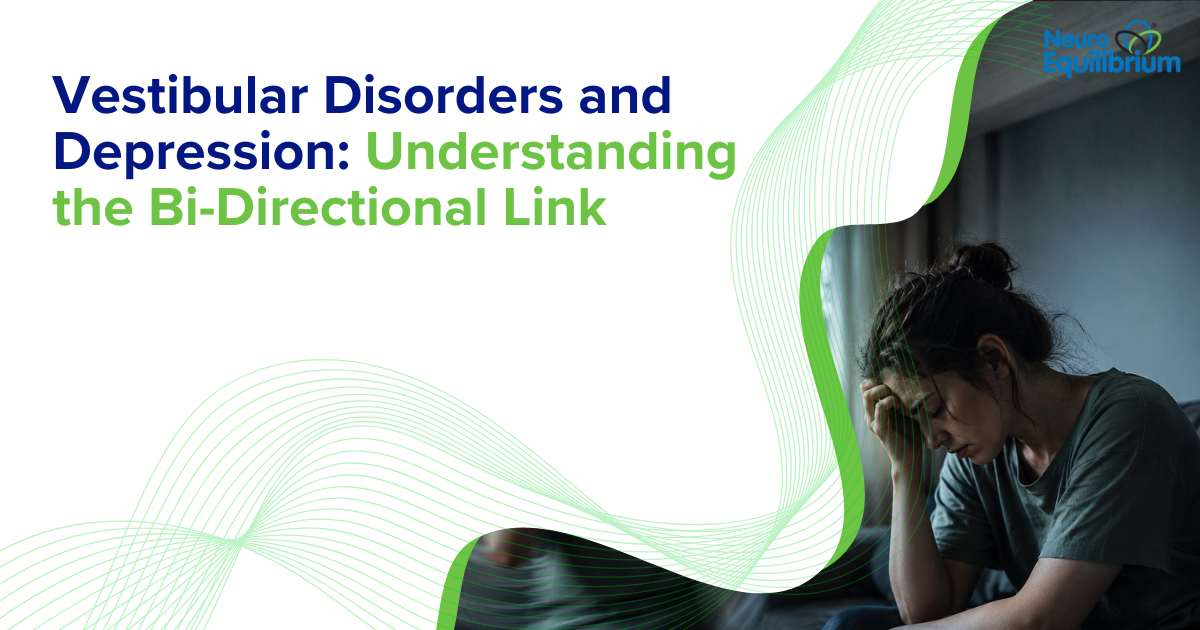





Having dizziness, vertigo, or balance issues can have a significant impact beyond movement. Many individuals feel fear and anxiety, have decreased confidence, social isolation, and even depression as a result of vestibular disorders. We will discuss the bi-directionality between chronic dizziness and mental health: how emotional upsets can be associated with vestibular symptoms and how anxiety and depression can worsen vestibular symptoms. We will also try to explain the light conditions, such as PPPD, and the importance of the right balance of therapy, rehabilitation, and specialist care to achieve the best possible outcome during recovery.
We often see patients who walk into our clinic after a really difficult experience: a sudden dizzy spell at a shopping mall, a panic attack on the metro, or feeling completely off-balance during a work meeting. One of our patients once told us that she stopped going to the market alone because she was scared it would happen again. That fear is just as real as the dizziness itself.
Why Living with Vertigo Takes a Toll Beyond the Physical
The Invisible Burden: What It Feels Like When the World Will Not Stop Spinning
What if you woke up one day and didn’t know whether the room around you would be still or not? Now imagine getting dizzy at the supermarket, at work, or just while talking to someone, and being unable to get anyone’s attention to explain it. For millions of people suffering from vestibular disorders, that’s the reality every day.
Physical symptoms (spinning, swaying, and feeling unsteady) are just part of it. After some time, the anxiety of when the next dizzying occurrence will happen can take over your mind. People start staying home, canceling appointments with friends and family, and slowly stepping back from the life they’re accustomed to. This loss of independence is truly experienced and is one of the more painful aspects of having a vestibular disorder.
Chronic dizziness doesn’t just affect the body. It’s an emotional one as well, and both should be attended to and cared for.
Know More about
- How the Brain Rewires After Vestibular Injury
- Vestibular Dysfunction Explained: Symptoms and Treatment
- How Neuro Rehabilitation Helps Patients Recover from Stroke, Vertigo, and Brain Injuries
How Common Is Depression and Anxiety in Vestibular Patients?
Studies indicate that as many as 60 percent of chronic vestibular patients have concurrent anxiety or depression. For every 10 people struggling with persistent dizziness, around 6 silently suffer from fear, overwhelm, or low mood. Persistent Postural-Perceptual Dizziness (PPPD) often overlaps with anxiety disorders and is frequently mistaken for anxiety itself.
Dizziness is not the only symptom linked to anxiety, fatigue, or emotional exhaustion; if you have been experiencing these symptoms too, you’re not imagining them. There is a clinical recognition and a very good understanding of the link between dizziness and anxiety.
Why Many Patients Are Told “It Is Just Anxiety” And Why That Is Incomplete
Being dismissed is one of the most common complaints among vestibular patients. Often, dizziness is not noticed during routine tests, and sometimes patients are told their dizziness is stress-induced or psychological. Stress and emotions are important (and influential) factors, but there is usually more to it.
There is a feedback loop between vestibular disorders, mental health symptoms, and balance-related physical symptoms. One is confused with the other, and the proper treatment is delayed in either direction. To really recover, it’s important to recognize the issue on both sides.
The Biology Behind the Vestibular-Anxiety Connection
Shared Neural Pathways: Why the Balance System and Emotional Brain Are Neighbors
What many people don’t realize is that the part of the brain that regulates balance, the vestibular nuclei, is directly linked to the amygdala, the brain’s emotional alarm system. It is also linked to the parabrachial nucleus, which activates fear responses.
This will cause the vestibular system to trigger anxiety signals in the brain. Vertigo and anxiety are not a coincidence or a sign of weakness; they are deeply connected through the brain’s wiring. There are pathways that the two systems share, and working on one often means working on the other.
Hypervigilance and Postural Threat: How Chronic Dizziness Rewires Thinking
The brain adapts to dizziness, which can last for weeks or months, but not always for good. It starts to over-monitor all the balance signals, becoming hyper-aware of any movement and sensation. This hypervigilance puts the nervous system on edge, and even a little dizziness can feel overwhelming.
Over time, this results in avoidance behaviors, missing out on social outings, avoiding screens, and refusal to travel, all of which interfere with the process of vestibular compensation and exacerbate physical and emotional effects.
The Role of Brain Chemistry in Both Disorders
The brain chemicals serotonin and norepinephrine play a role in both mood regulation and vestibular processing. That is why some antidepressant drugs and anti-anxiety drugs (such as SSRIs and SNRIs) are effective in treating other conditions, such as vestibular migraine, mental health issues, and PPPD. The biological connection between vertigo and depression is far stronger than many people realize.
The Bi-Directional Loop: How Each Condition Feeds the Other
Direction One: How Vestibular Disease Triggers Emotional Distress
It may begin with a sudden episode of dizziness or fainting, perhaps at work or while traveling. The experience is frightening. Because it can happen again unexpectedly, the mind begins anticipating it constantly. The fear of dizziness leads people to avoid certain situations and gradually limits their world.
The less they move and interact, the more their balance system is challenged. As their balance becomes increasingly compromised, they become increasingly anxious. It is this vicious cycle that is the hallmark of vertigo, depression, and anxiety that occurs in chronic vestibular patients.
Direction Two: How Anxiety and Depression Amplify Dizziness
Anxiety is not only bad for the body, but it also alters the physiology of the body. Muscles of the neck and shoulders tense up when the nervous system is in fight-or-flight. This directly disrupts the balance signals sent from the inner ear to the brain, thus enhancing sensations of imbalance.
Rapid heartbeat and shallow breathing, or hyperventilation, are also common symptoms of anxiety. This lowers carbon dioxide levels in the blood and can reduce oxygen delivery to the brain and inner ear, potentially worsening dizziness and spinning sensations. In summary, not only is the connection between dizziness and anxiety emotional, but it’s measurable.
Persistent Postural-Perceptual Dizziness: When the Loop Becomes the Diagnosis
PPPD is a very common and underdiagnosed vestibular disorder in India. It was formally defined in 2017 by the Bárány Society as a condition involving persistent non-spinning dizziness, rocking, or swaying sensations caused by increased sensitivity in the brain’s balance system following an initial vestibular event.
Mental health triggers and anxiety are not merely related to PPPD, but also exacerbate it in PPPD. PPPD is more than just half a problem if the emotional loop is not addressed.
Anxiety, Avoidance, and the Shrinking World of Vestibular Patients
Why Supermarkets, Screens, and Busy Spaces Become Difficult
For many people with a vestibular disorder, crowded spaces like grocery stores, heavy traffic streets, and scrolling through lots of information can trigger symptoms. This is because the anxious vestibular system begins to rely on visual input for balance. With that visual environment, and when it’s in motion, the brain struggles to cope.
Patients often develop a fear of entering these environments, which may resemble agoraphobia, but it is actually the brain’s attempt to avoid sensory overload. The difference is very significant when it comes to the right support.
Social Withdrawal, Work Loss, and Relationship Strain
Constantly canceling plans or failing to report for work due to dizziness may lead others to believe they’re being lazy or exaggerating. It’s actually one of the normal neurological and emotional responses to a chronic illness. Social, occupational, and personal problems that result from chronic dizziness can be just as crippling as the dizziness.
Why Avoiding Physical Activity Makes Both Conditions Worse
When dizzy, it seems sensible to rest. However, inactivity is associated with reduced brain compensation for vestibular dysfunction. It also decreases the body’s production of endorphins, the natural chemicals that can lift mood and further aggravate depression and anxiety. One of the best ways to interrupt both cycles simultaneously is gentle, structured exercise led by a specialist.
Evidence-Based Treatments That Work for Vestibular Disorders and Mental Health
Cognitive Behavioral Therapy: Rewiring the Fear Around Dizziness
CBT is a psychological therapy that has been studied extensively in the treatment of vestibular anxiety and PPPD. Working with a trained counselor, patients learn to identify catastrophic thought patterns such as ‘I will never get better’ or ‘I can’t function like this. These thoughts are then gently challenged and replaced with more balanced ones.
CBT also includes graded exposure therapy, where patients gradually reintroduce themselves to situations they have been avoiding. This helps the brain understand that these are safe places to be, and it will begin to feel less dizzy and anxious over time. Deep breathing and progressive muscle relaxation are also learned as relaxation techniques to calm the nervous system.
Mindfulness-Based Cognitive Therapy: Changing Your Relationship with Dizziness
MBCT helps patients observe their dizziness without resisting it, so they notice it without immediately falling into fear. Hypervigilance slowly tapers off as this relationship with dizziness changes from one of threat to one of observation. This is a life-changing treatment for many patients.
Vestibular Rehabilitation Therapy: More Than Just Balance Exercises
Vestibular Rehabilitation Therapy (VRT) is a type of physical therapy that includes a series of carefully planned exercises to retrain the brain and inner ear to function together normally. VRT builds confidence; however, it also enhances balance. As each exercise is completed, it will show the patient that movement is safe, thus directly lowering vertigo and anxiety. VRT is most effective when combined with psychological assistance.

Why Choose NeuroEquilibrium for Vestibular Disorder and Mental Health Care
We know that dizziness is not just a physical problem. And we know that mental health struggles are not just about emotions. They are connected. And we treat both.
Our care team includes a neurologist, an ENT specialist, a vestibular physiotherapist, and a counselor. Together, they look after every part of you, your inner ear, your brain, and how you are feeling emotionally. You get complete care, all in one place.
We also offer therapy for anxiety, stress, and low mood that often come with vestibular disorders. CBT, graded exposure therapy, and mindfulness-based cognitive therapy are all part of our psychological support. These are trusted, proven therapies that we use to help people dealing with conditions like PPPD, vestibular migraine, and the emotional challenges that come with them.
We use advanced diagnostic tools to get a clear picture of what is happening in your vestibular system. This means your diagnosis and your treatment are based on real findings, not guesswork. You will always know where you stand.
We understand how exhausting and isolating chronic dizziness can be. That is why emotional support and counseling are part of your care from day one, not something added on later.
At NeuroEquilibrium, you do not have to choose between treating your dizziness and looking after your mental health. We take care of both. If you are dealing with vertigo and anxiety, dizziness-related depression, vestibular migraine, or any related mental health challenge, we are here to help you feel steady and confident again.
Conclusion: Treating the Whole Person, Not Just the Inner Ear
The relationship between vestibular disorders and depression and/or anxiety is well established, valid, and quantifiable, but it is generally ignored in clinical practice. Dizziness and anxiety do not mean that people are imagining things or are weak. It’s biology and should be treated as such.
It is difficult to live with chronic dizziness. However, the correct treatment, which addresses both the vestibular system and the emotional burden of chronic dizziness, can truly help. Recovery is not only possible – it is what many patients would never have imagined they would achieve.
If you or a loved one is suffering from mental health issues like vertigo, depression, lasting dizziness, or vestibular disorder, it is crucial to seek expert help. NeuroEquilibrium supports you through this journey with expertise, compassion, and a care model designed specifically for complex vestibular conditions.
Vestibular disorders and depression do not have to define your life. With the right support, it is possible to restore both physical and emotional balance.
Frequently Asked Questions
How to get rid of anxiety vertigo?
For anxiety-induced vertigo, physical stress responses and nervousness can be calmed, thereby improving vertigo. There are several factors that can help decrease anxiety-related dizziness: slow breathing exercises, getting a good night’s rest, adequate hydration, regular meals, light physical activity, and stress management techniques. Counseling, relaxation therapy, or treatment for an anxiety disorder might also be suggested if symptoms become frequent or severe.
How to get rid of vertigo naturally?
Hydration, avoiding sudden head movements, rest, stress reduction, and balance exercises, including Vestibular Rehabilitation Therapy, are natural methods for managing vertigo. Another therapeutic technique that is beneficial for some patients with BPPV is guided repositioning, which includes the Epley Maneuver.
What is called the red flag in vertigo?
These symptoms may indicate a serious neurological disorder rather than just an inner ear issue and are called “red flags” in vertigo. These are things such as weakness, slurred speech, severe headache, double vision, passing out, chest pain, numbness, and sudden hearing loss. Urgent medical evaluation of vertigo with these symptoms is a must, as stroke or other severe conditions may be involved.
What is the #1 worst habit for anxiety?
It is one of the most unhealthy practices to have when it comes to anxiety – overthinking and avoiding behavior. Constantly fearing symptoms, withdrawal from normal activities, difficulty sleeping, excessive caffeine consumption, and chronic stress can increase the anxiety cycle and lead to increased physical symptoms such as dizziness.
Who is most prone to anxiety?
Those who are chronically stressed, have a family history of anxiety disorders, have poor sleep, have a high work demand, have experienced trauma, or have had a long-term health issue may be more susceptible to anxiety. Anxiety is a feeling that can happen to anyone, but is more common in people who are stressed for a long time or going through significant life changes.
Is vestibular disorder and depression together dangerous?
Yes, together, vestibular disorders and depression can be serious if left untreated. Persistent dizziness, imbalance, and anxiety can decrease self-confidence, impact sleep, and restrict activities. This, over time, can aggravate mental well-being and increase the danger of falling or isolation. Balance symptoms and emotional responses can be greatly reduced, and patients can gain control over their daily lives safely through early diagnosis, vestibular rehabilitation, stress management, and proper medical support.
Can I recover from vestibular disorder with depression?
Absolutely, many people heal or improve significantly from vestibular disorders and depression when they receive the proper treatment. Treatment may involve vestibular rehab, medication if needed, counseling, lifestyle changes, stress management, and other factors. It is important to treat both the balance disorder and emotional symptoms simultaneously, as they influence each other. Through regular therapy, medical supervision, healthy sleep, and emotional support, patients can regain confidence and gradually resume normal activities, balancing their movement.
Will it help to cure NBT?
Neuro Balance Therapy (NBT) can help alleviate symptoms of a vestibular disorder by improving your ability to maintain balance, coordinate your movements, and adapt your brain. It is used in conjunction with other medical and vestibular rehabilitation exercises. It is not a cure for all vestibular system problems, but many patients experience less dizziness, greater stability, and improved functioning in daily life. It works based on the cause of the health problem, its severity, and adherence to therapy and health professional advice.