

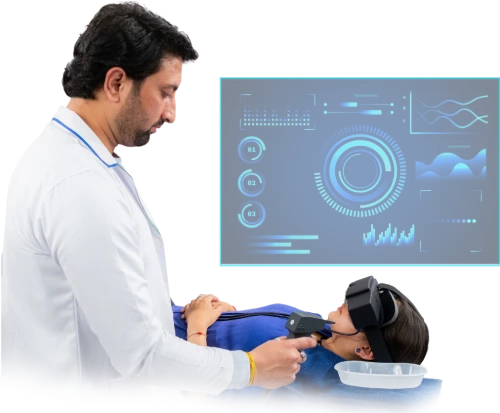
Ear imbalance is a condition that arises as a result of a fault in the mechanism of balance in the inner ear. This balance is known as the vestibular system. It sends messages to the brain to help in balance and in steadfast eye sight.
The brain will receive the wrong signal when this system is broken. This can cause:
Among the causes of ear imbalance include:
The advantage of it is that the majority of problems with balance may be successfully handled with the help of proper care.
The symptoms can vary depending on the person. The slight discomfort can be experienced by some and extreme dizziness can be experienced by others.
Common symptoms include:
Consulting a professional is important in case these symptoms persistently manifest themselves and interrupt the normal lifestyle.
The inner ear has tiny structures that detect movement and position. When these structures are disturbed, balance is affected.
Common causes include:
Sometimes, stress or anxiety may worsen the symptoms, but they are usually not the main cause.
Understanding the exact cause is the first step toward effective Vertigo-Treatment.
Correct diagnosis is very important. Not all dizziness is the same. That is why detailed evaluation is required.
Our experts follow a systematic approach:
We carefully listen to:
Specific tests are conducted and the manner in which the inner ear and the brain are operating together with each other is determined. They are non- invasive and painless tests.
They may include:
The tests are implemented to establish the nature of the problem as a dysfunction of the vestibular apparatus, otolith disorder, or the cause of the issue is a vestibular migraine.
The treatment will be precise and effective when the root cause is identified.
Treatment depends on the exact cause of the imbalance. We provide personalized ear imbalance treatment plans designed for each patient.
The so-called repositioning manoeuvres are applied in the case that the problem is related to the shifted ear crystals (BPPV).
These:
It is a non-hazardous and easy process that is done under the supervision of experts.
Vestibular Rehabilitation Therapy is a type of specific exercises, which are intended to re-train the brain and the balancing system.
It includes:
The exercises help the brain to adapt and compensate for inner ear weakness.
Our experts design a differentiated VRT plan on the personal outcomes of the test.
For patients with long-standing imbalance or age-related issues, structured balance training is helpful.
This may include:
The goal is to improve confidence and reduce the risk of falls.
In case the dizziness can be connected with migraine:
When well cared of, frequency and intensity of episodes can decline greatly.
In certain cases recovery is time-consuming. Regular follow-ups ensure:
The safety and comfort of the patient are our priority during the treatment series.
The selection of the center of choice does matter when it comes to recovery.
The service is unique in that:
Every patient is attended to, time and a clear explanation of his condition is given to him.
It is not only the control of the symptoms, but the restoration of the balance.
Professional assistance is to be suggested in case:
Early diagnosis will result in quick recovery and avoidance of complications.
Being stuck with a feeling of being dizzy or unstable is stressful. It is capable of restricting autonomy and producing anxiety. However, treatment can work.
We offer holistic ear imbalance care depending on the needs of the patient. Balance can be re-established safely and with confidence with professional attention, sophisticated testing and rehabilitation exercises.
Do not overlook repeated dizziness or instability. Make a reservation now and start to feel confident steps in the right direction. Our professionals will be pleased to assist you in getting back in control and enabling your living conditions.
Treatment is followed by diagnosis. A correct diagnosis makes the treatment more efficient, and quick.Vestibular rehabilitation treatment, positional therapy to correct the BPPV, antibiotics or anti-inflammatory medications, and non-pharmacologic treatment such as consuming a lot of fluids and not making sudden head movements can be prescribed to the patients by the physicians.
Rest, hydration and not making abrupt moves can help improve vertigo. Rehab exercises conducted by a trained physiotherapist help improve vertigo, prescribed anti-nausea or anti-dizziness medications, and balance training can be used to improve the symptoms and avoid any re-occurrence.
BPPV is frequently resolved rapidly through repositioning maneuver to move the crystals that have been pushed out in the inner ear back to their usual position. Most of the patients are relieved greatly after only one or two sessions.
Affected ears are assessed by doctors using physical examination and positional tests such as Dix-Hallpike test. The eye muscles direction (nystagmus) of the test can be used to determine which ear is affected.
The problem of vitamin D deficiency has been associated with a higher risk of BPPV. Keeping the levels of vitamin D healthy can decrease the rate of repeat episodes.
Vertigo, Headaches, nausea, or ringing in your ears? Find its root cause. Talk to expert.