



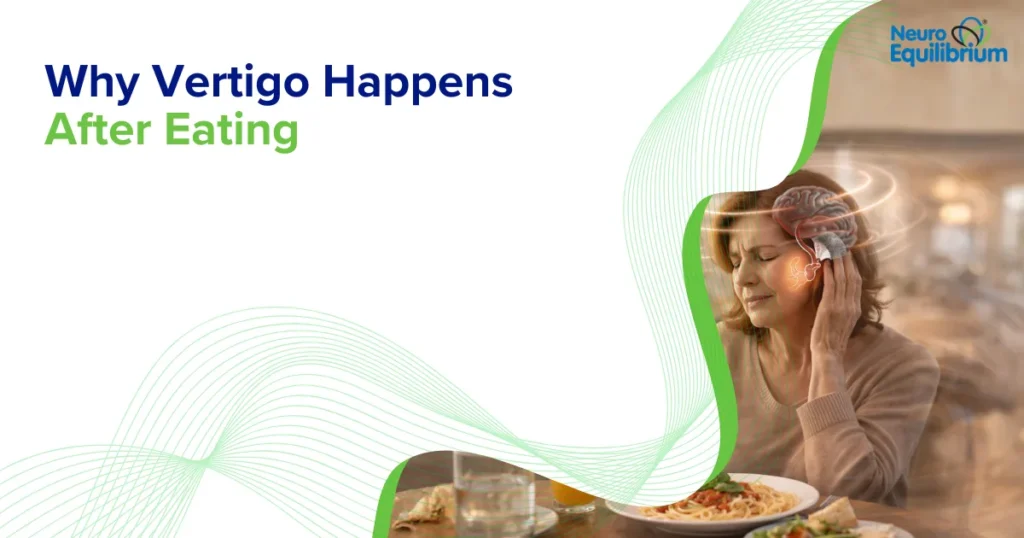
You just finished eating your meal and suddenly your room starts rotating. You are giddy, wobbly, and even nauseous.
When you have ever happened to feel this, you are not dreaming. Post-meal dizziness is a reality that is surprisingly prevalent and most individuals have to contend with vertigo issues that most of them do not even suspect that their food might be causing the issue.
What Is the Connection Between Food and a Vertigo Problem?
Vertigo is not a disease, it is a symptom. It occurs when the body system of balance is sent the wrong signals or confused signals. You have your inner ear, you have your eyes and you have your brain, which makes you steady. When that communication about what you eat is included in that communication is upset a vertigo problem may hit.
Food influences your body in some strong manners: it can alter your blood sugar and blood pressure, as well as, fluid in your inner ear. Any of such alterations may be sufficient to provoke dizziness in a person who already has a delicate balance system.
Know More About
- Vertigo Tablets Explained: Uses, Side Effects & Safe Alternatives
- Symptoms of Gastric Vertigo: How Digestive Issues Can Affect Your Balance
- 7 Effective Yoga Poses for Vertigo Relief
Can Blood Sugar Spikes and Crashes Cause a Vertigo Problem After Meals?
Yes and this is one of the most prevalent causes of people feeling dizzy immediately after having eaten.
When you have a meal full of sugary meals, white bread or processed carbohydrates, your blood sugar spikes rapidly. Then your body flies and comes to drag it down. This sudden and severe increase and decrease can cause you to feel dizzy, undecided and unstable typical symptoms of a vertigo issue which is enhanced by diet.
Even a slight variation in blood sugar can provoke an inner ear condition that you already have to the point of falling off the edge. It is because consumption of balanced meals containing complex carbohydrates, healthy fats, and proteins can change a lot. Your sugar level remains constant, as does your head.
How Does Salty Food Trigger a Vertigo Problem in the Inner Ear?
This is the one that most people are surprised by and salt is what is among the largest dietary transgressors in regards to a vertigo issue especially when it comes to Méniere disease.
The fluid that is contained in your inner ear is very well balanced. This is the fluid that makes you feel that you are moving and balancing. When you consume a meal that is high in sodium content, consider fast food, canned soups, chips, or any processed snacks your body stores an excess of fluid in all areas, including the inner ear.
The resultant surplus fluid causes inner ear labyrinth pressure. The pressure accumulates and breaks the delicate signal balance that is sent to your brain. The result? There is also a sudden spinning feel, fullness in the ear, and hearing changes, amongst others, that accompany the dizziness.
A single high-salt meal can cause a full episode in people with Méniere’s disease. One of the best methods of minimizing this form of vertigo problem is to maintain sodium levels at a low and regular level.
Can Certain Foods Trigger a Vestibular Migraine and Cause Dizziness?
And many and absolutely do not even know they are having a vestibular migraine since there can be little or no headache.
A migraine in which it is the vertigo and not the head that is mostly felt is called a vestibular migraine. It is a major and highly mis-diagnosed reason for recurring vertigo issues. There are food additives and food substances that are a direct chemical trigger to these attacks.
Vestibular migraine triggers are common food triggers and they include:
MSG (monosodium glutamate) a flavour additive present in several foods in the restaurant and packaged snacks.
- Old cheeses such as cheddar, parmesan or blue cheese.
- Chocolate
- Fried meat products bacon, salami or ham.
- Artificial sweets in low-calorie beverages and low-sugar foods.
When you find that you experience vertigo, always after eating in a particular restaurant, or after having eaten certain kinds of food, then it is quite possible that an instance of a trigger in a vestibular migraine is the cause. It can be beneficial to you and your specialist to keep a food diary writing down what you eat and when your dizziness begins.
Does Alcohol or Caffeine with Your Meal Make Vertigo Worse?
Yes, and significantly so. The food you eat is only as significant as the beverage you use with the food.
Alcohol influences the fluid of your inner ear directly. It alters the density of that fluid and this makes the signals that your inner ear sends to your brain confused. Even minimal doses may create a vertigo issue or make it more severe, particularly in individuals who have vestibular pathologies.
Caffeinated beverages such as strong coffee, energy drinks or some teas are diuretics. They expel fluid out of your body and this has the potential to disrupt the fluid equilibrium in your inner ear. They may also have an effect on blood pressure that increases the probability of dizziness.
Cutting down on alcohol and caffeine particularly at mealtime is one of the easiest things to do in order to feel a difference in case you are experiencing frequent dizziness.
Could a Drop in Blood Pressure After Eating Also Cause Dizziness?
It is a fact worth knowing, although it is a bit atypical of vertigo.
By taking a huge meal, your body directs the body to supply more blood to the digestive system in order to digest food. This temporarily lowers the blood pressure in the rest of the body of a few people particularly the elderly. The effect is immediate lightheadedness or dizziness immediately after eating, otherwise known as postprandial hypotension.
Although this is not similar to a problem of vestibular vertigo, it can be quite similar. In case the changes in diet have not helped to alleviate your post-meal dizziness, this should be brought up with a specialist.

Simple Dietary Changes That Can Help Reduce Post-Meal Vertigo
The positive news about vertigo issues that are caused by diet is that in most cases, these problems can be addressed rather well with the help of simple and regular changes. The following is what experts usually suggest:
- Never skip breakfast: Missing meals and especially the first meal of the day are some of the most frequent causes of further imbalance and dizziness. It makes your balance system more susceptible, in the form of a decrease in blood sugar to too low.
- Eat regular, balanced meals: Instead of two or three big meals, small and frequent meals are useful in maintaining the blood sugar level during the day. Proteins, healthy fats, and complex carbohydrates must be present in every meal.
- Reduce sodium in your diet: Watch what you eat, say no to processed and packaged foods and cook more often at home to be able to control the amount of salt in your food. This is particularly necessary when your vertigo is also accompanied by Méniere disease.
- Keep a food diary: Recording seeing the time when you feel dizzy, write down all that you eat and drink. In the long run, you will begin to observe formed patterns. The present diary is also very handy to share with a vertigo specialist since he will be provided with a first-hand piece of evidence to operate with.
- Limit alcohol and caffeine: These do not merely constitute lifestyle recommendations to a large number of patients, but these are actual medical precipitants that constitute a direct aggravation of a vertigo issue.
Why Choose NeuroEquilibrium for Your Vertigo Problem?
It can be hard to treat a vertigo issue independently particularly in the presence of food. Not only do you not know what tests to take, what foods to avoid, or why your dizziness is recurring even when you are making a special effort to eat mindfully.
NeuroEquilibrium is the biggest chain of specialized clinics in vertigo and balance disorder. It is not just a general check-up here. With the help of more complicated functional testing comprising evaluations that determine how your inner ear, eyes, and brain are interacting, Our experts can determine the exact cause of your vertigo issue, be it dietary, a vestibular condition, or something completely different.
When the root cause is identified a personalised treatment plan is developed in a structured manner that involves dietary education, vestibular rehabilitation and specific medical attention. No guesswork is involved and no general solution.
Expert assistance is not as distant as you may think since there are also clinics in India and online rehabilitation websites.
Conclusion: Your Plate Might Be the Missing Piece
Your problem of vertigo after eating is how your body tells you that something is being thrown out of balance in your balance system and food is a very definite trigger. Whether it is blood sugar highs and lows or too much salt, migraine causing additives or alcohol, what you eat is the direct cause of how steady you feel.
The appropriate dietary modifications would go a long way in lowering the occurrence and intensity of your dizziness. However, when the episodes continue, when they are getting worse, when they are accompanied by changes in hearing or other symptoms, the time to have a proper diagnosis is arrived at.
What is the best treatment for vertigo?
The most appropriate intervention in vertigo would be based on the cause of the condition. Vertigo is associated with inner ear disease in most instances like benign paroxysmal positional vertigo (BPPV), vestibular neuritis, or Meniere’s disease. In the case of BPPV, physicians usually prescribe repositioning maneuver, which assists in returning the calcium crystals in the inner ear (which have been displaced) to their intended positions. Symptoms can be managed with the help of antihistamines, vestibular suppressants, or anti-nausea drugs. The balance and eye-movement exercises form a form of the so-called Vestibular rehabilitation therapy (VRT) is also considered to be extremely effective in terms of enhancing stability and alleviating dizziness in the long run.
What triggers vertigo?
There are many factors that can cause vertigo, particularly the ones that influence the inner ear or balance system of the body. Sudden head movements, turning in bed, bending down and/or rising too quickly are common triggers. Examples of other triggers are inner ear infection, migraines, dehydration, sleep deprivation, stress and some medications. Dizziness can also be exacerbated by the bright lights, congested surroundings or excessive screen time in certain individuals. Recognizing the triggers that one experiences can assist them in controlling and lessening the vertigo nature.
Is there a permanent cure for vertigo?
The treatment of vertigo is usually successful when the underlying cause is known. Some ailments like BPPV usually respond excellently to repositioning maneuvers and can be cured entirely after therapy. Nevertheless, there are chronic diseases, such as Meneres disease, which might have no lasting treatment but can be treated successfully by means of medication, changes in a diet, and lifestyle modification. The early diagnosis and proper therapy have a great impact on the possibilities of long-term alleviation of the symptoms of vertigo.
Does vertigo go away by itself?
Yes, vertigo may also resolve on its own, particularly when it is due to some transient causes like simple inner ear infections or inflammation. BPPV episodes can also improve spontaneously as the body repositions the position of crystals within the inner ear. Never to be overlooked, however, should be recurring or persistent vertigo. When dizziness persists and becomes acute, as well as in cases when it is accompanied by other signs, such as hearing loss, intense headache, or walking difficulties, it is appropriate to visit the doctor.
What are the 10 signs of vertigo?
The symptoms that are common to vertigo are spinning, headache, dizziness, lack of balance, nausea, vomiting and inability to stand or walk. Individuals experiencing vertigo can also develop the sensation that their environment is in motion or tilted, blurred vision, headache and motion sensitivity. There might be some who hear ringing in the ears (tinnitus) or the hearing changes depending on the cause. These symptoms may be of varying degrees of intensity and they may suddenly occur especially on specific head movement.