







Have you ever felt like the room is spinning, even when you’re standing or sitting still? That strange feeling is called vertigo, and it can make it really hard to walk, stand straight, or focus. But here’s something important to know—vertigo is not a disease, it’s actually a symptom. That means it’s your body’s way of telling you that something might be wrong, usually in your inner ear or brain, which are the parts that help you keep your balance.
A lot of people confuse vertigo with dizziness or imbalance, but they’re not exactly the same. Vertigo feels like you or everything around you is spinning, even though nothing’s moving. Dizziness is more like feeling lightheaded or about to faint. Imbalance is when you feel wobbly or like you might fall over, especially when you try to walk. All of these can be signs that your balance system isn’t working the way it should.
Vertigo Symptoms and Treatment – A Simple Overview
Vertigo symptoms and treatment are closely linked because how vertigo feels often gives doctors important clues about what’s causing it.
Common vertigo symptoms include:
- Spinning sensation
- Nausea or vomiting
- Imbalance or unsteadiness
- Head motion sensitivity
- Visual disturbance or swaying
Vertigo treatment depends on the cause.
Some conditions respond immediately to physical maneuvers, while others need medications, rehabilitation, or long-term management.
Know More About Vertigo
- What is Vertigo? Causes, Symptoms, & Treatment
- Beware of Falls: The Importance of Fall Prevention in Elderly
- Top 3 Essential Vertigo Tests: How to Identify and Manage Balance Disorders
How Is Vertigo Treated After the Cause Is Identified?
Vertigo treatment depends on the condition producing the symptoms. Confirmed BPPV is generally treated with a canal-specific repositioning maneuver. Vestibular migraine may require migraine-directed medication and lifestyle management. Ménière’s disease may need hearing monitoring, dietary measures and condition-specific medicines. Vestibular neuritis may require short-term symptom control followed by vestibular rehabilitation. PPPD commonly needs a combined rehabilitation and psychological approach.
No single exercise, tablet or home remedy works for every cause of vertigo. The safest treatment pathway is: identify the symptom pattern, exclude urgent causes, confirm the likely diagnosis and then select the treatment that applies to that condition.
| Underlying diagnosis | Main treatment pathway | What the treatment can do | What it cannot do |
| BPPV | A canalith repositioning maneuver selected for the affected ear and semicircular canal | Move displaced inner-ear crystals out of the affected canal and reduce position-triggered spinning | It does not treat vestibular migraine, Ménière’s disease, PPPD or unexplained continuous dizziness. |
| Vestibular migraine | Migraine-directed treatment, regular sleep and meals, hydration, trigger management and selected rehabilitation | Reduce the frequency or severity of migraine-related vertigo and motion sensitivity | They mainly help manage symptoms and improve quality of life, rather than eliminating the disorder altogether. |
| Ménière’s disease | Hearing monitoring, dietary measures and medicines or other interventions selected according to severity | Reduce attacks and help manage hearing and inner-ear symptoms | It cannot guarantee that attacks will never recur or restore all established hearing loss. |
| Vestibular neuritis | Short-term control of severe symptoms followed by diagnosis-specific vestibular rehabilitation | Support compensation, visual stability, walking and balance recovery | Rehabilitation cannot replace emergency assessment when a stroke or another central cause remains possible. |
| PPPD | Education, vestibular rehabilitation, CBT and selected medication when clinically appropriate | Reduce persistent rocking, visual sensitivity, movement fear and functional restriction | A BPPV maneuver or short‑term vertigo medication does not address the full pattern of PPPD symptoms. |
| Non-vestibular dizziness | Treatment of the identified blood-pressure, cardiovascular, metabolic, medication-related, visual or neurological cause | Address the health condition producing lightheadedness or imbalance | Inner-ear exercises cannot correct every non-vestibular cause. |
Why Diagnosis Comes Before Treatment
The following details help determine which treatment pathway is most appropriate:
- Whether the sensation is spinning, faintness, rocking or imbalance
- Whether an episode lasts for seconds, minutes, hours or days
- Whether turning in bed or another head movement triggers it
- Whether hearing loss, tinnitus or ear pressure is present
- Whether headache, light sensitivity or visual-motion sensitivity is present
- Whether symptoms began after an infection, injury or medicine change
- Whether the patient can stand and walk safely
- Whether neurological or cardiovascular warning signs are present
Vestibular testing may evaluate the balance organs, eye movements and vestibulo-ocular reflex, but no single test diagnoses every possible cause. The findings must be interpreted with the patient’s history and physical examination.
Common Causes of Vertigo
Here are some of the most common causes:
- Meniere’s Disease happens when too much fluid builds up in part of your inner ear. This can make you feel dizzy, lose some hearing, and hear a ringing sound in your ears (called tinnitus). If it’s not treated, it can slowly damage your hearing.
- Vestibular Neuritis is when a nerve in your inner ear gets swollen because of a viral infection.It can cause sudden dizziness, nausea, and blurry vision, especially when you move your head. Starting balance exercises early can help you feel better faster.
- Otolithic Disorders affect tiny parts inside your ear called otolith organs. They help you know which way is up or down. If they’re damaged, you might feel off-balance or have shaky vision. Doctors use special tests and exercises to help with this.
- Vestibular Migraine is a type of migraine where instead of just a headache, you also feel dizzy or like the room is spinning. You might also feel sick with motion, or be sensitive to lights and sounds. Doctors treat it with lifestyle changes and on a case specific basis.
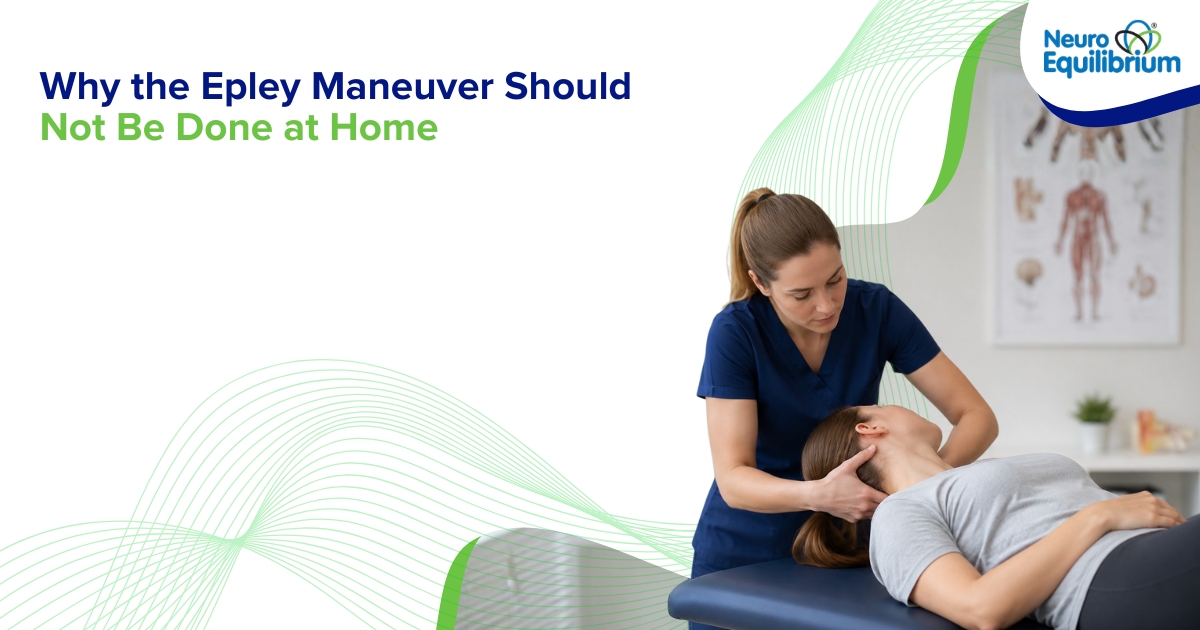
- BPPV (Benign Paroxysmal Positional Vertigo) is one of the most common types of vertigo. It happens when tiny crystals in your ear move into the wrong place and trick your brain into thinking you’re moving when you’re not. It’s more common in older adults but can happen after an ear infection or head injury. Simple head movements, like the Epley treatment maneuver, can usually fix it. The appropriate treatment for BPPV involves specific repositioning maneuvers—such as Epley’s, Semont’s, Barbeque, Zuma, or Gufoni—chosen based on the affected semicircular canal where the displaced crystal (otolith) is located.
- Labyrinthitis is an infection in your inner ear that affects both balance and hearing. It can cause strong dizziness, hearing loss, and ringing in your ears. Medicine helps, but doing balance therapy early on also makes a big difference.
- Perilymph Fistula is when a small tear in the ear causes fluid to leak out. This can throw off your balance and cause hearing problems. It might happen after lifting something heavy or sneezing really hard. Doctors might suggest surgery or changes in activity to fix it.
- Vestibular Paroxysmia is when a blood vessel presses on a balance nerve, causing short bursts of dizziness many times a day. An MRI scan can help doctors find it, and treatment depends on how severe the symptoms are.
- SSCD (Superior Semicircular Canal Dehiscence) is a rare condition where a bone in your inner ear is too thin or damaged. Loud sounds or sneezing can cause dizziness. It’s usually found through special tests, and surgery might be needed.
- Mal de Débarquement Syndrome (MdDS) is when your brain still feels like it’s moving even after you’ve gotten off a boat or plane. You might feel like you’re swaying even though you’re standing still. It can also happen without travel. Treatment might include balance therapy, medication, or even virtual reality training.
- Acoustic Neuroma (Vestibular Schwannoma) is a slow-growing, non-cancerous tumor on the balance nerve. It can cause dizziness, hearing loss, and even tingling on your face. If it gets too big, it may need to be treated with surgery or radiation.
- Multiple Sclerosis (MS) is a disease where your immune system attacks the protective covering of your nerves. This messes with signals between your brain and body. It can cause dizziness, balance problems, and vision issues. There’s no cure, but treatment helps manage the symptoms.
Vertigo Treatments at a Glance
What Vertigo Treatment Means
Effective management of vertigo symptoms and treatment always starts with identifying the root cause rather than suppressing symptoms alone.
Approaches to Treatment
- Physical Maneuvers: Specific head and body movements that reset displaced ear crystals.
- Medications: Medicine to slow down dizziness, nausea or inner ear pressure.
- Rehabilitation: Special activities which retrain the brain to learn how to respond to balance signals.
- Surgery (Selective Cases): Surgery is thought to be an option when abnormalities and tumors are structural in nature.
What Each Treatment Option Can and Cannot Do
| Treatment option | May help when | Does not treat | Important safety point |
| Repositioning maneuver | A particular type of BPPV has been confirmed | Migraine, Ménière’s disease, neuritis, PPPD or undiagnosed continuous dizziness | The affected side and canal should guide the maneuver. |
| Vestibular-suppressant medication | Severe acute vertigo or nausea requires short-term symptom control | The structural or functional cause of recurring vertigo | Sedation, falls and delayed compensation may become concerns with inappropriate prolonged use. |
| Disease-specific medication | A diagnosed condition such as migraine or Ménière’s disease requires medical management | Every type of vertigo | Selection and duration depend on the diagnosis and patient’s health profile. |
| Vestibular rehabilitation | There is vestibular weakness, persistent imbalance, motion sensitivity or incomplete compensation | Displaced BPPV crystals or an untreated emergency condition | Exercises should be tailored to test findings and fall risk. |
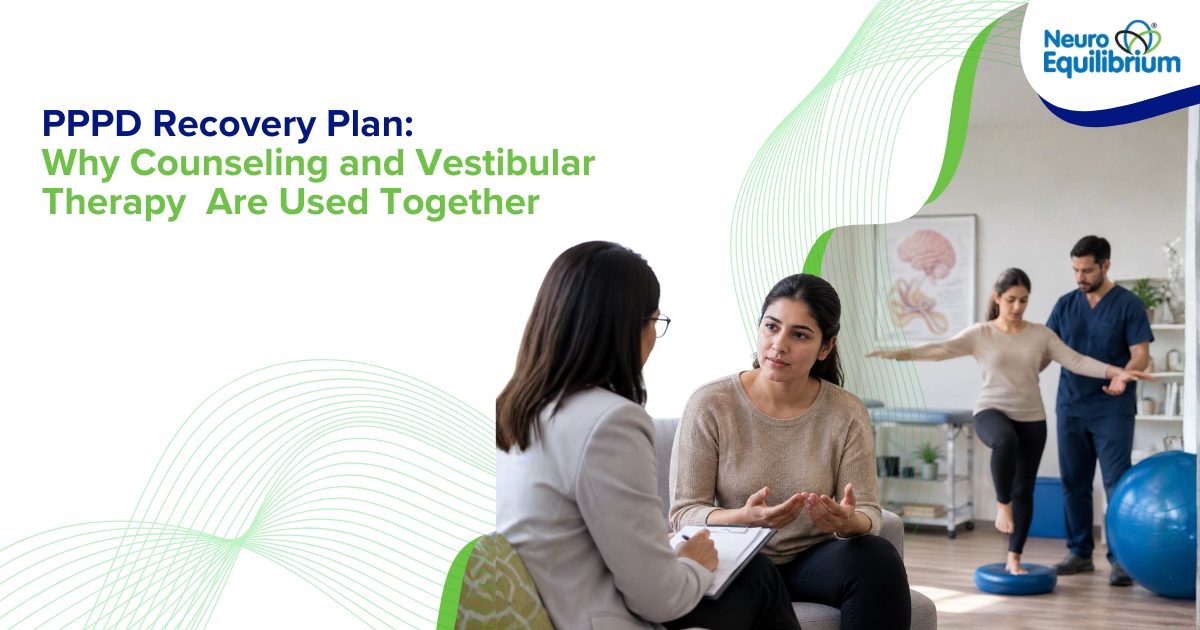
| CBT | Fear, anxiety, avoidance or PPPD contributes to persistent symptoms | BPPV crystals, sudden hearing loss or neurological emergencies | It is generally one component of combined treatment. |
| Surgery or a procedure | A confirmed structural disorder or treatment-resistant condition warrants escalation | Routine uncomplicated vertigo | Risks, expected benefits and alternatives require specialist review. |
Treatment Pathways: Symptom → Cause → Therapy
- Sudden spinning on head movement → Benign paroxysmal positional vertigo (BPPV) → Epley maneuver.
- Vertigo with ear fullness + ringing → Ménière’s disease → Diuretics + betahistine to control inner ear fluid.
- Severe vertigo after viral infection → Vestibular neuritis → Corticosteroids + vestibular rehabilitation.
- Vertigo linked with migraine → Vestibular migraine → Lifestyle adjustments + preventive migraine medicines.
- Hearing loss with progressive vertigo → Otosclerosis → Stapedectomy surgery or hearing aids.
Red-Flag Checklist: When to See a Doctor
Seek urgent care if vertigo occurs with:
- Sudden hearing loss.
- Frequent falls or persistent imbalance.
- Chest pain, double vision, or slurred speech.
- Vertigo lasting days instead of minutes/hours.
Comparison Table: Vertigo Treatment Options
| Treatment | How It Works | Best For | Limitations |
| Canalith Repositioning | Shifts displaced inner ear crystals | BPPV | Needs trained provider |
| Betahistine | Enhances blood flow in inner ear | Ménière’s disease | Long-term use, variable effectiveness |
| Vestibular Rehabilitation | Retrains brain to adapt to balance signals | Vestibular neuritis, chronic vertigo | Requires time, consistency, effort |
| Corticosteroids | Reduces inflammation in vestibular nerve | Vestibular neuritis | Side effects if used long-term |
| Surgery | Corrects structural or tumor-related issues | Otosclerosis, acoustic neuroma | Rare, considered last-resort approach |
Expected Treatment Timelines
| Condition | When improvement may begin | Longer-term expectation |
| BPPV | Some patients improve after one correctly selected maneuver. | Additional treatment or reassessment may be needed, and recurrence can occur. |
| Vestibular neuritis | Severe continuous symptoms may begin settling over several days. | Residual imbalance and motion sensitivity may take weeks or months to resolve. |
| Vestibular migraine | Acute attacks may settle within hours or days. | Preventive treatment and lifestyle measures require a monitored trial over time. |
| Ménière’s disease | Acute treatment may reduce symptoms during an attack. | Ongoing monitoring and adjustment may be needed because attacks can recur. |
| PPPD | Changes may be gradual rather than immediate. | Rehabilitation, CBT and medication may require consistent use over several weeks or months. |
| General or systemic dizziness | Depends on correction of the underlying trigger. | Persistent symptoms may require review for more than one contributing cause. |
Treatment timelines are estimates rather than guarantees. Progress should also be measured by fewer attacks, safer walking, improved visual stability, reduced falls and better ability to complete daily activities.
Why Vertigo Can Return After Treatment
Vertigo may recur because:
- BPPV crystals become displaced again
- Vestibular migraine or Ménière’s disease remains episodic
- Vestibular compensation is incomplete
- Rehabilitation was stopped too early or did not match the impairment
- A medicine suppressed symptoms without treating the cause
- PPPD or anxiety-related avoidance developed after the original episode
- A new illness, injury, medicine or trigger changed the pattern
- More than one vestibular condition is present
- The original diagnosis was incomplete
Recurrence does not automatically mean that the original treatment was performed incorrectly. However, if the symptom pattern changes, it should be reassessed rather than assuming every episode has the same cause.
Symptoms of Vertigo
When you experience vertigo, it’s not just a regular feeling of dizziness. It can be a bit more intense and can affect your balance and everyday activities. Here are some common symptoms that people with vertigo might feel:
Spinning – It can feel like you or the room is spinning in circles, even though you’re actually standing still.
Dizziness – This is a lightheaded or woozy feeling, like you might faint or lose your balance.
Headaches – Sometimes, vertigo comes with headaches, which may make you feel pressure or pain in your head. This can also be tied to vision problems.
Imbalance – You might feel unsteady, like you’re going to tip over or fall while standing or walking.
Falling – Vertigo can cause sudden loss of balance, making it easy to trip or collapse unexpectedly.
Swaying – It may feel like you’re rocking back and forth, like being on a boat, or as if the ground is shifting beneath your feet.
If you experience any of these symptoms, it’s important to see a doctor, as they can help figure out what’s causing the vertigo and guide you on the best treatment. Reach out to your nearest NeuroEquilibrium Centre today to get help.

How Doctors Check Vertigo (Chakkar ka Test aur Diagnosis Kaise Hota Hai)
If you feel like the room is spinning or you’re unsteady often, it could be vertigo. To figure out why this is happening, doctors use different tests. These tests help them understand what’s causing your dizziness and how to treat it.
What Doctors Do
When you visit a doctor for vertigo, they’ll first check thorough history and ask you questions about what you’re feeling. They might want to know when the dizziness started, how it feels, and if anything makes it worse. This helps them understand what might be causing your symptoms.
When Should You See a Doctor Right Away?
Sometimes, vertigo can be a sign of something more serious, so it’s important to know when to see a doctor right away. If your dizziness comes on suddenly and feels very strong, or if you experience other symptoms like slurred speech, weakness in your arms or legs, or trouble walking, it’s important to seek medical help immediately. You should also get medical attention if you notice blurred or double vision, sudden hearing loss, or ringing in your ear. Fainting or feeling like you’re going to faint is another sign that requires urgent care. These symptoms could indicate a serious problem, like a stroke or another issue with your brain or nervous system, and they need quick medical attention.
How Long Do Vertigo Symptoms Last?
The duration of vertigo symptoms varies depending on the cause:
- BPPV: Seconds to minutes, triggered by head movement
- Vestibular neuritis: Days to weeks, gradually improving
- Ménière’s disease: Episodic attacks lasting hours
- Vestibular migraine: Minutes to days
- Central causes: Often persistent without treatment
Persistent or worsening symptoms require medical evaluation to guide appropriate treatment.
Common Tests to Find the Cause of Vertigo
Doctors may use different tests to check your balance system and eye movements. These help them know what part of your body is causing the issue.
- Dix-Hallpike Test – A simple test where the doctor gently moves your head to see if it triggers spinning or unusual eye movement.
- VNG (Videonystagmography) – A test that watches how your eyes move when your head moves, which helps track balance issues.
- SVV (Subjective Visual Vertical) – Checks if you can correctly tell what is upright, which shows how your inner ear is working.
- DVA (Dynamic Visual Acuity) – Tests if your vision stays clear when your head is moving.
- The exact combination of VNG, SVV, DVA and Caloric Testing is selected after clinical examination., which is linked to balance.
- CCG (Craniocorpography) – Looks at how your body moves when you’re standing or walking.
- Audiometry – A hearing test, since ear problems can sometimes cause dizziness.
- MRI or CT Scan – These are detailed images of your brain or inner ear, used when doctors need a closer look.
Vertigo Treatment
For some types of vertigo, like BPPV (Benign Paroxysmal Positional Vertigo), special head movements like the Epley or Semont Maneuver are used. These exercises help move crystals in your inner ear back to their correct position, and they can immediately help reduce dizziness. NeuroEquilibrium uses special diagnostic tools to make sure BPPV is correctly diagnosed and treated.
For people with Meniere’s Disease, which causes fluid to build up in the inner ear and leads to hearing loss and dizziness, diuretics (water pills) are used to help remove excess fluid. A low-salt diet also helps control fluid levels. If the condition gets worse, doctors might recommend steroid injections or gentamicin treatment, and sometimes surgery. At NeuroEquilibrium,we use precise testing to diagnose Meniere’s Disease and offer treatment options that work best for each person.
If you have Vestibular Neuritis, which is inflammation of the balance nerve, corticosteroids are used to fight the inflammation. NeuroEquilibrium also offers VR Therapy (Virtual Reality Therapy), which helps retrain your body and brain to handle dizziness and improve balance over time.
For temporary relief from dizziness, medications like Meclizine or Betahistine might be prescribed. However, these are generally used only for short periods while other treatments start to work.
The most effective long-term solution for most people with vertigo is Vestibular Rehabilitation Therapy (VRT). At NeuroEquilibrium, we personalize this therapy—both in-clinic and through online counselling, to help retrain your brain and body, enabling you to manage dizziness and improve your balance.
Home Remedies for Vertigo
If you’re dealing with vertigo at home, there are a few things you can do to help reduce symptoms. However, it’s always best to consult a doctor before trying any of these remedies.
- Stay hydrated: Drinking enough water helps your body stay balanced and prevents dizziness caused by dehydration. Make sure you’re drinking water regularly throughout the day.
- Avoid sudden head movements: Moving your head too quickly can make vertigo worse. Try to move your head slowly and carefully, especially when getting up or turning your head.
- Get enough sleep: Lack of sleep can make dizziness worse, so aim for 7-8 hours of sleep each night. If vertigo is affecting your sleep, talk to a professional for advice.
- Manage stress: Stress can make vertigo worse. Try using relaxation techniques like deep breathing or listening to music to help you calm down. If stress is causing frequent vertigo, consider consulting a specialist.
- Avoid triggers: Some people find that caffeine or alcohol makes their vertigo worse. Keep track of how these substances affect you and reduce their consumption if needed. Always talk to your doctor before making changes to your diet or lifestyle.
Conclusion
The effectiveness of vertigo management largely depends on selecting the right treatment based on the root cause. Vertigo can appear as a one-time occurrence or as recurring episodes.
Understanding vertigo symptoms and treatment together helps patients seek timely care, avoid unnecessary anxiety, and achieve better recovery outcomes.
Sources
- Stanton M., et al. (2023). Vertigo in Clinical Practice: Evidence-Based Diagnosis and Management. NCBI Bookshelf. https://www.ncbi.nlm.nih.gov/books/NBK482356/ (NCBI)
- “Vertigo.” MedlinePlus. 2023. https://medlineplus.gov/ency/article/001432.htm (MedlinePlus)
- “Vertigo: Symptoms, Causes & Treatment.” Healthdirect (Australia). 2024. https://www.healthdirect.gov.au/vertigo (Health Direct)
- “Vertigo: Symptoms, Causes, Treatment, and More.” Healthline. https://www.healthline.com/health/vertigo (Healthline)
- “Vertigo — Diagnosis and Treatment.” Mayo Clinic. https://www.mayoclinic.org/diseases-conditions/dizziness/diagnosis-treatment/drc-20371792 (Mayo Clinic)
- “Dizziness & Vertigo — Treatment & Management.” Medscape. 2024. https://emedicine.medscape.com/article/2149881-treatment (Medscape)
- Swartz R. (2005). “Treatment of Vertigo.” American Family Physician. https://www.aafp.org/pubs/afp/issues/2005/0315/p1115.html (aafp.org)
Frequently Asked Questions
How can you stop a vertigo attack?
The prevention of a vertigo attack is conditional on its cause, however, in order to avoid falls and minimize the symptoms, it is necessary to immediately sit or lie down. It is usually beneficial to remain still, look at a fixed point and avoid sudden movements. In the case of recurrent vertigo because of inner ear or balance disorders, the specialized assessment and treatment in such centers as Neuroequillibrium can be used to reduce the severity and occurrence of attacks as time goes by.
Book a consultation at your nearest NeuroEquilibrium Clinic today.
How long does vertigo last?
The length of vertigo depends on the cause of vertigo. There are those attacks that can end up in a few seconds or minutes, and those attacks that can end up in hours, days or even days. Some such conditions as benign paroxysmal positional vertigo usually lead to short-term episodes, but longer durations can be observed in cases of vertigo induced by vestibular neuritis or migraine. The episode duration can only be comprehended and managed through proper diagnosis.
Book a consultation at your nearest NeuroEquilibrium Clinic today.
What is the best medication for vertigo?
Vertigo has no best medication since it can be treated depending on the cause. Antihistamines, anti-nausea medication, or vestibular suppressants can be prescribed to doctors to minimize symptoms. In other instances, there is use of medication to migraine or anxiety. Symptoms, rather than the cause of those symptoms, are normally treated with medication thus combined with balance therapy or lifestyle changes.
Book a consultation at your nearest NeuroEquilibrium Clinic today.
What triggers a vertigo attack?
Sudden head movements, position changes, inner ear infections, dehydration, stress, sleep deprivation or migraine cause vertigo attacks. Some medical disorders of the inner ear or the nervous system may also contribute to it. Symptom monitoring can assist in identifying the personal triggers, which in turn can be used to decrease the number of attacks in the future and make better treatment choices.
Book a consultation at your nearest NeuroEquilibrium Clinic today.
When should I see a doctor for vertigo?
Vertigo should also be seen by a doctor when episodes are frequent, severe, worsening or when the vertigo disrupts normal daily activity. Immediately consult the doctor when vertigo comes with hearing loss, vision impairment, weakness, numbness, chest and difficulty in speaking. Neuroequillibrium is one of the clinics that offer detailed balance and neurological testing to help determine underlying causes and provide relevant treatment.