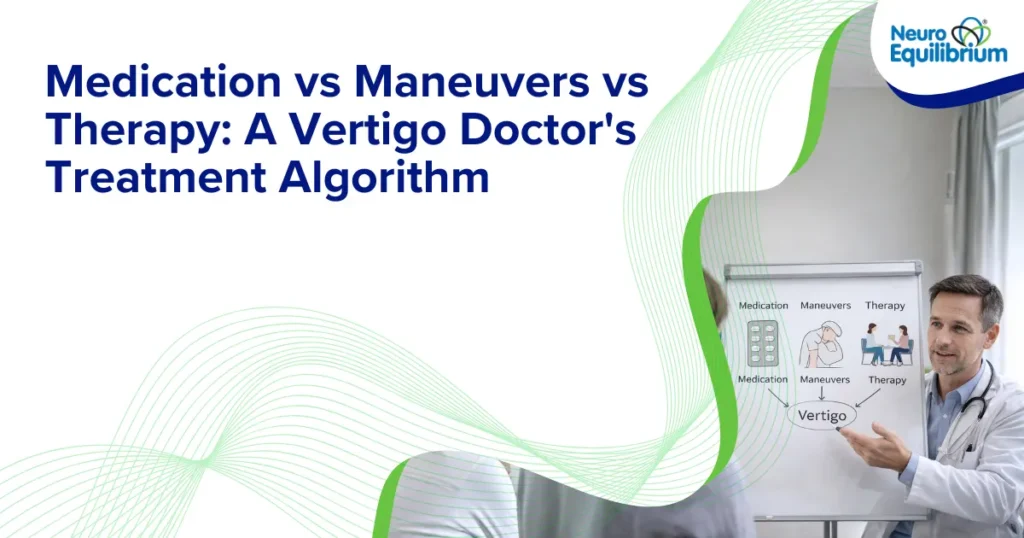





Feeling the room spin even when you’re standing still can be frightening. It’s one of the main reasons people search online for a vertigo tablet that might offer quick relief. But many don’t realise that vertigo is not a disease; it is a symptom, and medicine alone is often not enough to fix the underlying cause.
If you keep asking yourself, “Why am I dizzy?”, “Which medicine is best for vertigo?”, or “Is dizziness listed in ICD-10?”, you’re not alone. This guide will help you understand what vertigo medicines can and cannot do, when they are helpful, and what steps you should consider next.
What Is Vertigo & Why Do Doctors Sometimes Prescribe Vertigo Tablets?
Vertigo is a feeling that you or your surroundings are moving, spinning, or tilting, even though everything is actually still. Some people experience it when they stand up, lie down, turn their head, or walk. A commonly used medical identification code for vertigo-related symptoms is ICD-10 R42, which refers to dizziness and giddiness.
Vertigo can be uncomfortable, but not everyone needs medication. Doctors usually prescribe vertigo tablets only when symptoms are severe, sudden, or interfering with daily activities. The medicines are mainly used for short-term relief, especially if the spinning sensation is so strong that it causes nausea, vomiting, or difficulty walking and focusing.
Common reasons why doctors give tablets for Vertigo:
1. To Control Sudden, Intense Spinning
Medicines like Meclizine or Betahistine temporarily stabilise the balance system. They are known as vestibular suppressants. They do not solve the root problem; they only make episodes easier to handle for a day or two.
2. To Treat Specific Inner Ear Problems
Sometimes doctors prescribe the need for targeted medicines too.:
- Ménière’s disease: Water pills (diuretics) help reduce excess fluid in the inner ear.
- Vestibular neuritis or labyrinthitis: Doctors may use steroids or antiviral medicines early to reduce nerve inflammation.
- Vestibular migraine: preventive migraine medicines help stop attacks before they start.
- Anxiety-related dizziness: Sometimes anti-anxiety medicines are used for short periods.
Know More About Vertigo
- How to Stop Vertigo – Simple Steps That Work
- What to Expect During Vertigo Treatment
- Why Some Vertigo Treatments Don’t Work the First Time
Side Effects of Vertigo Tablets You Should Know
Vertigo tablets may seem harmless, but using them for longer than recommended can actually make dizziness worse.
Why Overusing Vertigo Tablets Can Be Risky
Your brain has a natural healing process called central compensation. This process helps your brain relearn balance after an issue with the inner ear or vestibular nerve.
When vertigo tablets are taken for more than 2–3 days, they can slow down this natural compensation. As a result, recovery takes longer, and dizziness may persist or even worsen.
Other Common Side Effects of Vertigo Tablets
- Drowsiness or sleepiness
- Difficulty concentrating
- Blurred vision
- Reduced alertness
- Dependence on certain medications
- Masking or confusing symptoms can delay an accurate diagnosis
Medicines That Can Cause Dizziness
Some medications cause dizziness as a known side effect. A few are considered ototoxic, meaning they may affect the inner ear or balance system. When the inner ear becomes irritated, it can send irregular signals to the brain, leading to dizziness, imbalance, or vertigo.
Below are common categories of medicines that may trigger dizziness:
Antibiotics
Certain antibiotics, especially those used for serious infections (such as aminoglycosides), may affect the inner ear and disrupt balance.
Malaria Medications
Some anti-malaria drugs can influence the nervous system and balance centres, leading to temporary dizziness or a spinning sensation.
Blood Pressure or Allergy Medicines
Antihistamines and some blood pressure medications may reduce blood flow or affect how the body responds to posture changes, causing dizziness or light-headedness.
Sedatives or Sleeping Tablets
These medications slow down the central nervous system. In some individuals, this can lead to drowsiness, poor coordination, or a sense of imbalance.
When to Seek Help
If dizziness begins after starting a new medication, consult your doctor or pharmacist. They may adjust the dose, recommend an alternative medicine, or suggest safe ways to manage symptoms. Never stop taking a prescribed medication without medical guidance.
Safe & Long-Term Alternatives That Work Better Than Tablets
Most vertigo causes are mechanical. That means the body needs movement-based solutions, not long-term medication. The good news is that non-invasive treatments are highly effective when done correctly.
These approaches are similar to those provided by advanced balance clinics and diagnostic centres like Neuroequilibrium.
1. Repositioning Manoeuvres (For BPPV)
If your vertigo happens when you lie down, turn your head, or get up from bed, you may have BPPV, the most common vertigo condition.
BPPV is caused by tiny crystals in your inner ear moving to the wrong place.
Specialists use methods like:
- Epley Maneuver
- Semont Maneuver
- Barbecue/Roll Manoeuvre (for horizontal canal)
- Zuma Maneuver
A correctly performed manoeuvre often provides instant relief, sometimes in just one session.
2. Vestibular Rehabilitation Therapy (VRT)
VRT is a set of exercises that trains your brain to balance again.
It includes:
- Gaze stabilisation exercises
- Head movement training
- Balance practice on soft or uneven surfaces
- Habituation exercises
Modern programs may include virtual reality modules, motion tracking, and app-based training to make therapy more effective and engaging.
VRT is especially helpful for:
- Vestibular neuritis
- Long-term dizziness after BPPV
- Motion sensitivity
- Imbalance due to inner-ear weakness
This is one of the key areas where centres like Neuroequilibrium have developed strong expertise.
3. Psychological Support for Chronic Dizziness
Some vertigo types, such as PPPD (Persistent Postural Perceptual Dizziness), require more than physical therapy.
Helpful approaches include:
- Cognitive Behavioural Therapy (CBT)
- Relaxation training
- Exposure therapy for motion triggers
- Breathing exercises
- Sleep training for 7–9 hours
Stress, anxiety, and fear worsen dizziness. Treating them reduces episodes significantly.
4. Diet & Lifestyle Changes for Vertigo
Food and daily habits affect your inner ear and migraine triggers.
Helpful lifestyle tips:
- Reduce salt to control fluid pressure (Ménière’s disease).
- Eat regularly to avoid low sugar levels.
- Stay away from caffeine, alcohol, processed meats, MSG, chocolate, and aged cheese if you have vestibular migraine.
- Drink 2–3 litres of water daily.

Why Correct Diagnosis Matters More Than Tablets
One of the biggest mistakes patients make is assuming all dizziness is the same.
There are over 20 different causes of vertigo, including BPPV, vestibular neuritis, migraine, PPPD, cervical issues, fluid problems, and more.
Each requires a different treatment plan. A proper diagnostic setup usually includes:
- Eye-movement tracking
- Balance platform testing
- Positional testing
- Audiology checks
- Migraine assessment
- Nerve-function evaluation
These advanced assessments help specialists find the exact cause instead of just giving tablets.
Why Neuroequilibrium Is the Best Place to Evaluate Early Vertigo Symptoms
Many people live with dizziness for months because they only take tablets, but never get diagnosed. A high-quality balance centre like Neuroequilibrium offers:
- Advanced vestibular testing
- Expert evaluation of over 20 vertigo causes
- Personalised rehabilitation programs
- VR-based therapy
- Migraine and PPPD care
- Specialised positional manoeuvres
- Non-invasive treatment plans
Our treatment focuses on the root cause, modern diagnostics, and comprehensive vertigo care rather than temporary symptom relief.
Conclusion
Vertigo tablets can help you feel better temporarily, but they cannot fix the underlying issue. The safest and strongest long-term results come from accurate diagnosis, repositioning manoeuvres, vestibular rehabilitation, lifestyle changes, and a complete evaluation of the balance system.
If you’re tired of spinning, dizziness, or imbalance, it’s time to look beyond temporary medicines and get the right help. Centres powered by Neuroequilibrium use advanced, evidence-based, and personalised methods to help patients recover safely and confidently. Get tested today.
Sources
- Hain T.C. (2003). Pharmacological treatment of vertigo. CNS Drugs. https://pubmed.ncbi.nlm.nih.gov/12521357/ (PubMed)
- Dyhrfjeld-Johnsen J., et al. (2019). Management of peripheral vertigo with antihistamines. PMC. https://pmc.ncbi.nlm.nih.gov/articles/PMC6783586/ (PMC)
- Stanton M., et al. (2023). Vertigo in Clinical Practice: Evidence-Based Diagnosis and Management. NCBI Bookshelf. https://www.ncbi.nlm.nih.gov/books/NBK482356/ (NCBI)
- “Vestibular Suppressants & Vertigo Medication.” Vestibular Disorders Association (VEDA). https://vestibular.org/article/diagnosis-treatment/treatments/medication/ (Vestibular Disorders Association)
- “Dizziness, Vertigo, and Imbalance — Treatment & Management.” Medscape. https://emedicine.medscape.com/article/2149881-treatment (Medscape)
- “Vertigo Medicines for Suppression.” The Vertigo Doctor (blog/overview). https://thevertigodoctor.com/blog/medications/ (The Vertigo Doctor)
- “Vertigo: Symptoms, Causes and Treatment.” WebMD. https://www.webmd.com/brain/vertigo-symptoms-causes-treatment (WebMD)
- “What is the best way to get rid of dizziness or vertigo?” — article by The Ohio State University Wexner Medical Center, on vestibular rehabilitation and non-medication therapies. https://health.osu.edu/health/brain-and-spine/vertigo-treatment (health.osu.edu)
Which vertigo tablet is the best?
There is no single best vertigo tablet because treatment depends on the underlying cause. Short-term relief can be provided by medicines such as Meclizine or Betahistin, however, the correct treatment is determined by the underlying cause (BPPV, vestibular migraine, Meneres disease, neuritis, etc.).
Is it safe to take vertigo tablets for a long time?
No. Vertigo medication is generally only required over a period of 2-3 days in episodes of severe vertigo. Long-term use may slow brain recovery, cause drowsiness, aggravate imbalance, and complicate diagnosis.
Can vertigo be cured without medicines?
Yes, the majority of vertigo cases respond better to non-pharmacological treatments such as repositioning, vestibular rehabilitation, migraine/lifestyle management, and anxiety/PPPD support, as per the underlying cause.
Why does my dizziness come back even after taking tablets?
Tablets are not very effective as they only suppress symptoms. Dizziness can recur if the underlying cause such as BPPV, inner ear inflammation, migraine, or PPPD is not correctly diagnosed and treated.
Should I visit a vertigo or balance specialist?
Yes, especially if dizziness lasts more than a few days, affects your walking, causes nausea, or persists despite tablets. Balance specialists may conduct higher levels of non-invasive testing of the vestibular system in order to discover the precise cause and initiate the individualized treatment in the form of non-invasive methods instead of using tablets.