

- Bhavnagar, Gujarat | 1 CLINIC
SVV Test in Bhavnagar
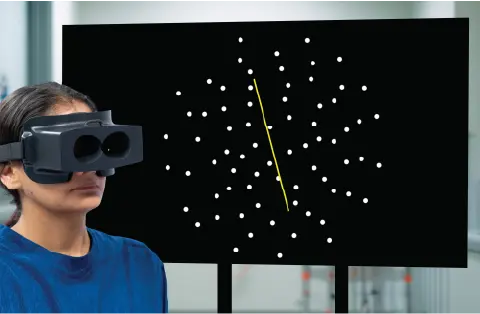
Get a Subjective Visual Vertical (SVV) test in Bhavnagar at NeuroEquilibrium’s partner clinic. It examines how precisely you perceive vertical alignment in order to evaluate your balance system.
Book Consultation
Advanced Diagnostics
SVV test is non-invasive and completed in a single visit.
Preparing for Your Vertigo Assessment
A little preparation can help the vertigo experts understand your symptoms and complete the required assessment efficiently.
Bring previous reports.
Carry previous hearing tests, vestibular reports, MRI/CT reports and prescriptions.
Bring your medicine list.
Bring a list or photo of current medicines; do not stop prescribed medication without advice.
Avoid eye makeup when advised.
Eye makeup can interfere with goggles used during eye-movement tests.
Wear comfortable clothing.
Some assessments involve standing, walking or controlled head and body movement.
Plan your return journey.
Assessments may temporarily reproduce dizziness; avoid driving and consider bringing a companion.
Do not take vestibular suppressant (vertigo medicine) before 6 hours.
These medicines can mask symptoms during tests.
When Dizziness May Require Emergency Care
Most episodes of vertigo are not medical emergencies. However, sudden dizziness or vertigo should not be treated as a routine clinic concern when it occurs with:
Patient Voices
Hear it From Our Patients
Real stories of recovery – in their own words, in their own language.
Common questions
FAQ - SVV Test in Bhavnagar
You can get a Subjective Visual Vertical (SVV) test at NeuroEquilibrium's partner clinic in Bhavnagar. The test helps assess vertical perception and vestibular function as part of an evaluation for dizziness and balance problems.
You can book a consultation through the NeuroEquilibrium website for its partner clinic in Bhavnagar. The specialist will assess your symptoms and determine whether an SVV test or other vestibular assessments are appropriate.
An SVV test may be recommended for people experiencing persistent dizziness, balance difficulties or symptoms suggesting vestibular dysfunction. It can also help specialists assess certain vestibular disorders and monitor changes during rehabilitation.
No special preparation is usually required for a Subjective Visual Vertical (SVV) test. Bring your previous medical reports, a list of your current medicines and any glasses you normally use. Follow any specific instructions provided by your clinic.
During an SVV test, you look through a viewing device and adjust a visual line until it appears vertical. The test measures how accurately you perceive vertical orientation and is non-invasive. It is generally painless.
SVV test results show how accurately you perceive vertical alignment and can help identify abnormalities associated with vestibular dysfunction. Your specialist interprets the findings alongside your symptoms and other test results to determine whether further evaluation is needed.
Abnormal SVV results may indicate a problem with the vestibular system, including the otolith organs, which help your body sense gravity and orientation. Your specialist may recommend additional vestibular tests or treatment based on the underlying cause.
Recovery depends on the underlying condition, symptom severity and response to treatment. Depending on the diagnosis, treatment may include vestibular rehabilitation, specific repositioning maneuver or medical management. Your specialist can guide you on expected recovery and follow-up.