




Why Feeling Light-Headed or Unsteady Is Often Linked to Dehydration
Feeling dizzy, light-headed, or suddenly unsteady, sometimes for no apparent reason? Many people assume dizziness signals something serious, but one of the most common triggers is surprisingly simple: your body may be running low on fluid or essential electrolytes.
When hydration and electrolyte levels fall out of balance, your nervous system and inner ear, the parts responsible for stability and balance, cannot function as they should. The result is waves of dizziness, vertigo, or feeling “off.” We’ll try to explain how electrolyte imbalance affects your balance, why dehydration causes dizziness, and the steps you can take to feel steady and well-hydrated again.
Role of Inner-Ear Fluids, Blood Flow, and Nerve Signalling
The system that helps keep you steady and balanced is your inner ear, which operates through a precise mechanism of fluids and small sensors. As things are perfectly balanced, your brain will know where your head and body are in space. However, once fluid or electrolyte imbalance levels become unstable, your balance may be affected.
- Fluid and Electrolyte Stability: Electrolytes are minerals such as sodium, potassium, calcium, and magnesium and the electrolytes assist in regulating the motions of the fluids in your body, including the liquid in your inner ear.
- Inner-ear Sensitivity: The tiniest change in the amount of fluid or the chemical composition within your ear can impair the tiny sensors that inform your brain where you are, leading to dizziness or vertigo, possibly linked to an electrolyte imbalance.
- General Health Effects: Healthy hydration keeps blood pressure, nerve activity as well as the regular blood flow and circulation, all of which keep your brain and balance systems at work.
That’s why staying hydrated and maintaining good electrolyte balance isn’t just about thirst; it’s key for helping you avoid dizziness and balance problems related to fluid shifts and potential electrolyte imbalance.
Related Articles on Dizziness Diagnosis and Inner-Ear Problems
- Nystagmus Explained: How Careful Eye Tests Lead to Better Dizziness Diagnosis
- Is Your Dizziness Labyrinthitis or Something Else?
- What Happens When Dizziness and Blurry Vision Come Together?
Mechanisms Behind Dehydration-Related Vertigo
Many people don’t realise just how closely hydration is linked to dizziness, or even vertigo. Here’s how dehydration or low electrolytes can lead to trouble:
- Fluid Decrease: There is a reduction in the total body fluid volume when you do not drink enough water. This will lead to a decrease in fluid in the inner ear and interfere with its normal function, causing dizziness or balance problems.
- Blood Pressure and Blood Flow Problems: Dehydration can reduce blood volume and pressure, reducing the amount of blood (and oxygen) reaching your brain. That will leave you feeling light-headed or wobbly.
- Effects of Electrolyte Imbalance: Electrolytes help nerves and muscles function correctly. When dehydration, excessive sweating, or low mineral intake disrupts electrolyte levels, the inner-ear sensors may not work correctly, triggering dizziness, vertigo, or hearing issues, a clear effect of electrolyte imbalance.
- Motion Sickness band & Other Stressors: Sometimes motion (such as travel) exacerbates dizziness or spinning and motion sickness band usually causes dehydration or loss of electrolytes (with or without nausea or vomiting). The domino effect: fluid loss leads to inner-ear imbalance, which then causes dizziness or vertigo often linked to electrolyte imbalance.
Difference Between Electrolyte-Related Dizziness and Other Types of Vertigo
| Feature | Vertigo from Electrolyte Imbalance | Vertigo from Other Causes (Inner Ear, Neurologic, etc.) |
| Onset | Often gradual, linked to dehydration, sweating, illness, or poor fluid intake | Can be sudden, often triggered by head movements or underlying ear disorders |
| Type of Sensation | Light-headed, floaty, unsteady, woozy | True spinning sensation (room rotates) is more common |
| Triggers | Heat, exercise, vomiting/diarrhea, not drinking enough fluids, alcohol, medications that dehydrate | Head movements (BPPV), infections (vestibular neuritis), allergies, fluid buildup (Ménière’s) |
| Accompanying Symptoms | Thirst, dry mouth, muscle cramps, fatigue, palpitations, headache, nausea | Hearing loss, ringing in ears, ear pressure, severe or prolonged spinning, imbalance when turning head |
| Effect of Standing Up | Dizziness worsens when standing quickly (orthostatic dizziness) | Usually not related to posture; triggered more by head position changes |
| Duration | Can be short episodes that improve with hydration | Episodes may last seconds (BPPV) or hours (Ménière’s/vestibular neuritis) |
| Improvement After Fluids | Symptoms often improve quickly after drinking water or electrolyte replacement | Hydration usually does not relieve symptoms |
| Blood Test Indicators | Low sodium, potassium, magnesium, or calcium | Usually normal unless another condition is present |
| Ear Symptoms | Typically none | Ear ringing, pressure, hearing changes common depending on cause |
| Balance Issues | Mild unsteadiness, feeling “off” | More pronounced imbalance, difficulty walking straight in some conditions |
| When It Happens | After dehydration events (exercise, illness, heat exposure) | Often occurs without dehydration; may follow infections or stress on the inner ear |
Practical Hydration and Nutrition Strategies
You don’t always need medicine to help; often, small lifestyle changes can make a big difference. Here’s what many health-wise folks recommend:
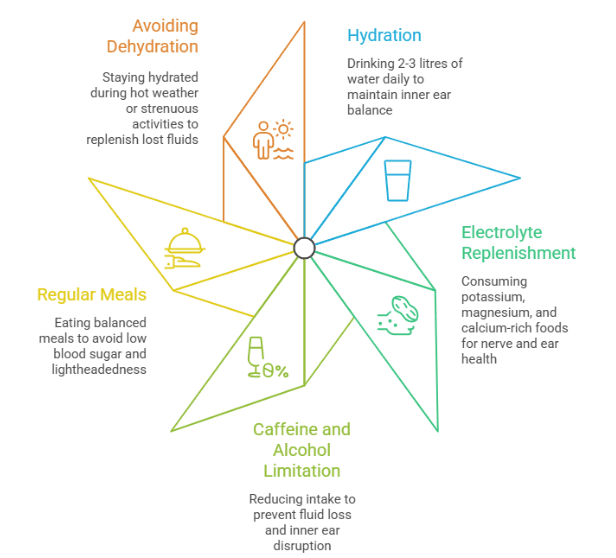
- Drink enough water: About 2–3 litres (6–8 glasses) of water each day. This helps sustain the inner-ear balance and fluid levels. This is an easy recommendation in (Many dizziness-prevention guides).
- Replenish your electrolytes: To keep your nerves and ears healthy, consume foods rich in potassium (bananas, spinach), magnesium (nuts, leafy greens), and calcium.
- Limit caffeine and alcohol: Both can lead to fluid loss (they are diuretics), which disrupts fluid balance in the inner ear, a trigger of the sensation of dizziness.
- Eat regular meals without long gaps: A low blood sugar level can also lead to lightheadedness and dizziness; therefore, a balanced meal should be consumed to prevent significant fluctuations in energy levels.
- Avoid dehydration in hot weather or strenuous work: This is especially important when you are perspiring; replenish the lost salts and fluids.
These simple steps can go a long way in keeping your vestibular system (inner ear balance system) happy and stable.
Risk Groups for Dehydration-Linked Vertigo
Some people are more likely to experience dizziness or imbalance because of deficiency of fluid and electrolytes in the body. You might want to pay extra attention if you:
- Sweat a lot, either due to exercise, hot weather, or heavy work, which can increase fluid loss.
- Often travel (especially by vehicle, ship, aeroplane) and are prone to motion sickness band.
- Follow diets that drastically reduce salt or water, or tend to skip meals, which may contribute to electrolyte imbalance.
- Have a history of balance problems or inner ear conditions (like Ménière’s disease, Benign paroxysmal positional vertigo / BPPV, or inner-ear fluid imbalance).
- Undergo bouts of vomiting, diarrhoea or other conditions that dehydrate body fluids quickly and may trigger electrolyte imbalance.
If you fall into one or more of these categories, keep hydration and nutrients at the top of your mind, especially on hot days or during travel, to help prevent fluid depletion and electrolyte imbalance.
Using Water Trackers and Electrolyte Logs
Sometimes it helps to see things laid out, especially if you tend to forget your water intake, meals or salt levels. You could create a simple fluid & Electrolyte Balance Tracker for yourself or your family. It can include:
- Daily water intake tracker (litres or glasses)
- Foods rich in electrolytes (potassium, magnesium, calcium) list
- Meals schedule to avoid long gaps (to prevent low blood sugar dizziness)
- Notes to limit caffeine/alcohol, especially on travel or hot days
Having these pointers visually, maybe on your phone or fridge, can make it easier to remember good hydration and nutrition habits and avoid issues related to fluid and electrolyte imbalance.
Also, an easy tool like a “motion sickness band” (for those prone to motion sickness), along with hydration, might help ease dizziness triggered by travel or movement. While such aids don’t directly correct fluid and electrolyte imbalance, they can reduce the risk of motion-induced dizziness and limit fluid loss (from nausea or vomiting).

Warning Signs That Dizziness Isn’t Just Dehydration
While dehydration or electrolyte imbalance are often behind dizziness or lightheadedness, not all dizziness is because of water shortage. Sometimes, inner-ear disorders (like BPPV, inflammation, fluid buildup) or neurological issues are involved.
If you experience frequent vertigo, spinning sensations, hearing changes, ringing in the ears (tinnitus), or persistent imbalance, it’s worth getting professional help. These could be signs of underlying conditions involving your inner ear’s structure or fluid regulation or even issues related to electrolyte imbalance.
Holistic Balance Assessment Beyond Hydration
Dizziness, lightheadedness, or vertigo do not always signal something serious; often, your body may simply be asking for better hydration, improved nutrition, or a more balanced lifestyle. But sometimes the cause lies deeper, within the inner ear or vestibular system. That is why at NeuroEquilibrium, we take a comprehensive and compassionate approach to every case. We understand how sensitive the balance system is, and we begin by looking at the basics such as hydration, diet, fluid levels, electrolyte imbalance, and lifestyle habits, before moving on to advanced vestibular assessments when needed.
Whether you are dealing with occasional dizziness or long-standing imbalance, our care remains holistic, evidence-based, and tailored to your unique needs. And if your symptoms persist or feel severe, it is important not to ignore them. The right evaluation can identify underlying issues including those related to fluid regulation or electrolyte imbalance and guide you toward lasting relief. At NeuroEquilibrium, we are here to help you restore stability, and regain confidence in your balance. Book an appointment today.
What causes fluid and electrolyte imbalance in the body?
Electrolyte imbalance could be caused by dehydration due to sweating or due to the absence of necessary fluids, kidney disease that affects electrolyte balance, and gastrointestinal disorders, including acute vomiting or diarrhea. Electrolyte imbalance and disorders such as heart failure, adrenal insufficiency and diabetes are also possible causes of some drugs, such as diuretics, laxatives or chemotherapy drugs. The imbalance will be evoked even with the excessive consumption of water or sodium.
What are the symptoms of fluid and electrolyte imbalance?
These symptoms differ based on the fact whether the body has low or high fluid volume. Dehydration can lead to thirst, dry mouth, headache and fatigue. A high level of fluid can cause swelling of hands or feet, quick weight gain and dyspnea due to the accumulation of fluid in the lungs. General symptoms would be irregular heart rate or rhythm, and mental state changes.
How is electrolyte imbalance treated?
The intervention is aimed at remedying the underlying cause. This can involve treating medical conditions like heart or kidney disease, rehydrating through oral fluid and IV replacement in case of dehydration, and dosage adjustment of medications which affect electrolytes. A medical professional depends on the severity and the cause to treat.
What are the signs and symptoms of fluid imbalance?
Fluid imbalance can be described as either fluid shortage in the body (dehydration) or the excess in the body (fluid overload). Dehydration is characterized by excessive thirst, dry mouth, headache, fatigue, dizziness, and dark-coloured or less volume of urine, whereas fluid overload is characterized by swelling of the hands, feet, or ankles, rapid weight gain, and shortness of breath secondary to the presence of fluid in the lungs. The other general symptoms may involve changes in the heart rate or the heart beat and an altered mental status. At NeuroEquilibrium, we prioritize the precise assessment and sophisticated diagnostics so that patients could know whether it is fluid imbalance or other underlying issues that lead to dizziness or other similar symptoms, and that will help them to receive relevant, efficient, and reliable treatment.
How to restore fluid and electrolyte balance?
The treatment of the underlying cause initiates restoration of the fluid and electrolyte balance. Electrolyte-containing solutions should be used to correct dehydration and the severe cases should be corrected with IV fluids. In case of such factors as kidney disease, diabetes or heart failure leading to the imbalance, they should be controlled properly. Alternations of medications can also be required. Balance in the long term is dependent on frequent hydration and a wholesome diet. At NeuroEquilibrium, we assist in the detection of symptoms of imbalances and prescribe patients to care correctly and efficiently.