







A version of this article first appeared on India Today on Jun 7, 2024 and is reproduced here.
How to Avoid Ear Pain During Flight: Causes, Remedies & Expert Tips
As A Frequent Flier, You’ve Likely Experienced That Peculiar Sensation Of Your Ears Feeling Blocked Or Ear Pain During A Flight. It Can Be Frustrating And Uncomfortable, And As An ENT Specialist, I’ve Seen Many Patients Perplexed By This Issue. Often, People Turn To Quick Fixes Like Cotton Plugs, But These Makeshift Solutions Don’t Address The Root Causes Of Ear Popping. Let’s Delve Into The Science Behind Why Our Ears Pop During Flights.
India Today spoke with By Dr Anita Bhandari A Neurotologist, ENT Surgeon, Director Of Neuroequilibrium,(Neuro Equilibrium Is World’s Largest Chain Of Clinics For Vertigo And Dizziness) She Is An Entrepreneur, Innovator And Author & Dr Anushka Bhandari Is Head R&D At Neuroequilibrium to get more insights.
Sudden Changes In Air Pressure Can Occur On Flights, Particularly During Takeoff And Landing. Our Middle Ear Is Filled With Air And Is Separated From The Outer Ear By The Eardrum. The Eustachian Tube Is A Narrow Passage That Connects The Middle Ear With The Area Behind Your Nasal Passage, Ensuring That The Air Pressure In The Middle Ear Equals The Outside Air Pressure..
Pressure Changes In The Middle Ear Cause The Eardrum To Stretch—Negative Pressure Leads To Indrawing Of The Eardrum, While Positive Pressure Leads To Bulging. This Stretching Can Lead To Discomfort And, Often, Pain. Therefore, The Eustachian Tube Needs To Remain Clear To Allow Proper Ventilation. Sometimes, The Tube Cannot Smoothly Equalise The Pressure, And When It Suddenly Opens, It Causes The Ears To Feel Like They Have Popped. Colds And Allergies Can Cause Blockage Of The Eustachian Tube, Increasing The Risk Of Ear Pain During Flights.
During Takeoff, There Is A Sudden Change In Altitude, Causing The Air Pressure In The Cabin To Become Lower Than The Middle Ear Pressure. Conversely, During Landing, The Cabin Pressure Becomes Higher Than The Middle Ear Pressure.
What Is Airplane Ear?
Airplane ear, medically known as barotrauma, occurs when there is a pressure mismatch between the middle ear and the surrounding cabin pressure during air travel.
Airplane ear treatment focuses on restoring pressure balance across the eardrum and keeping the Eustachian tube open during takeoff and landing.
Why Does Ear Pain Happen in Flight?
Ear pain in flight occurs when the Eustachian tube cannot equalize pressure quickly enough.
This leads to stretching of the eardrum, causing discomfort or pain.
Why Airplane Ear Treatment Is Important
In most cases, airplane ear is temporary. However, untreated or repeated pressure imbalance can lead to:
- Persistent ear pain
- Temporary hearing loss
- Fluid accumulation behind the eardrum
- Rarely, eardrum injury
Timely airplane ear treatment helps prevent complications, especially in frequent flyers or individuals with sinus or nasal issues.
WHY DON’T COTTON PLUGS WORK?
An Eustachian Tube Block Is The Real Cause Of Ear Discomfort Or Popping Ears. Putting Cotton Plugs In The Ear Will Not Help With This Issue.
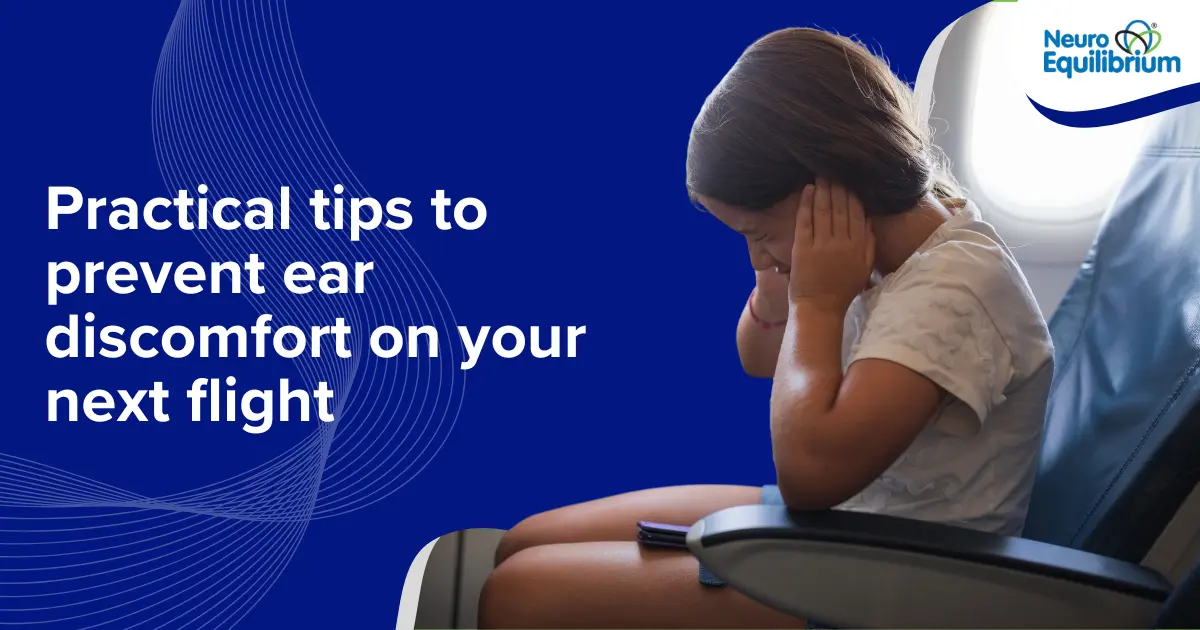
Practical Tips To Prevent Ear Discomfort During Your Next Flight
Before You Fly: How to Avoid Ear Pain During Flight
A few simple steps before boarding can significantly reduce your risk of ear discomfort:
- Stay well hydrated
- Avoid flying with severe cold or sinus infection
- Use nasal decongestant sprays (if prescribed)
- Carry chewing gum or lozenges
These preventive measures are one of the easiest ways to avoid ear pain during flight.

Practical Tips To Prevent Ear Discomfort During Your Next Flight
Slowly Drinking Water Or Chewing Gum: This Helps Activate The Muscles That Open The Eustachian Tube, Facilitating Pressure Equalisation.
Valsalva Maneuver: This Simple Exercise Helps Open The Eustachian Tube. It Involves Pinching The Nostrils And Gently Blowing Out The Cheeks (Like You Are Blowing A Balloon). The Valsalva Should Be Done Without Applying Much Force. Too Much Force Could Increase Ear Pain And Even Damage The Eardrum.
Decongestants: Nasal Decongestants Can Help People With Nasal Blocks, Colds, Or Recurrent Eustachian Tube Problems. The Nasal Drops Should Be Used Before Takeoff And Are Effective For About 8 Hours.
These Practical Tips Can Prevent Ear Discomfort. So Next Time You’re In The Air, Remember To Ditch The Cotton Plugs And Try These Strategies For A Smoother, More Comfortable Flight.
How to Pop Your Ears Safely During a Flight
If your ears feel blocked, here’s how to pop your ears safely:
- Swallow repeatedly (drink water)
- Chew gum or suck on candy
- Try the gentle Valsalva maneuver
- Yawn intentionally
Avoid forceful blowing, as it may damage the eardrum.
Airplane Ear Treatment During the Flight
Effective airplane ear treatment during air travel includes methods that actively open the Eustachian tube, such as:
- Swallowing frequently
- Chewing gum or sucking lozenges
- Performing gentle Valsalva manoeuvres
- Staying awake during descent
These measures help equalise pressure and reduce stress on the eardrum.
Airplane Ear Treatment After Landing
If ear fullness or discomfort persists after a flight:
- Swallow or yawn repeatedly
- Perform gentle pressure-equalisation exercises
- Steam inhalation may help relieve nasal congestion
- Short-term nasal decongestants (if advised by a doctor)
Persistent symptoms beyond 24–48 hours may indicate middle-ear fluid or barotrauma and require medical evaluation.
Ear Pain After Flight: What to Do
If you experience ear pain after flight, try the following:
- Continue swallowing and yawning
- Use steam inhalation
- Stay hydrated
- Use doctor-advised nasal sprays
If symptoms last more than 48 hours, consult an ENT specialist.
Airplane Ear Treatment for People With Colds or Allergies
Individuals with nasal congestion are at higher risk of airplane ear.
Recommended preventive airplane ear treatment includes:
- Using prescribed nasal decongestant sprays before takeoff
- Avoiding flights during severe infections if possible
- Ensuring hydration to keep mucus thin
Children and Airplane Ear: What Parents Should Know
Children are more prone to airplane ear due to narrower Eustachian tubes.
Helpful airplane ear treatment strategies include:
- Feeding or giving a pacifier during takeoff and landing
- Encouraging swallowing
- Avoiding sleeping during descent when possible
Do Specialized Earplugs Help Prevent Ear Pain in Flight?
Unlike cotton plugs, pressure-regulating earplugs can help slow pressure changes.
- Useful for frequent flyers
- Not a replacement for swallowing or Valsalva
- Can reduce discomfort during descent
When to See a Doctor for Airplane Ear
Seek medical attention if you experience:
- Severe ear pain
- Hearing loss lasting more than 48 hours
- Dizziness or vertigo
- Fluid or blood discharge from the ear
These may indicate significant barotrauma requiring specialist care.
Key Takeaway for Flyers
Airplane ear treatment is simple, effective, and usually preventive when done correctly.
Understanding the role of pressure changes and using proven techniques can make air travel far more comfortable and safe for your ears.
Frequently Asked Questions
How long will the airplane ear last?
Airplane ear usually lasts a few minutes to a few hours after landing, once pressure in the middle ear equalizes. In some cases, especially with congestion or sinus issues, symptoms like ear fullness, muffled hearing, or mild pain can last a few days. If discomfort continues beyond a week or worsens, it may indicate fluid buildup or ear injury that needs medical evaluation.
Book a consultation at your nearest NeuroEquilibrium Clinic today.
How do you unclog an ear that won’t pop?
To unclog an ear that won’t pop, try swallowing, yawning, chewing gum, or gently performing the Valsalva maneuver by blowing with your nose pinched shut. Using a saline nasal spray or steam inhalation can help if congestion is present. If blockage keeps recurring after flights, clinics like Neuroequillibrium assess ear pressure and balance function to identify underlying issues.
Book a consultation at your nearest NeuroEquilibrium Clinic today.
What happens if you don’t pop your ears after a flight?
If ears don’t pop after a flight, pressure may remain trapped in the middle ear, leading to prolonged fullness, muffled hearing, discomfort, or fluid buildup. In rare cases, untreated pressure imbalance can cause ear pain or damage to the eardrum. Most cases resolve naturally, but persistent symptoms should not be ignored, especially if hearing changes occur.
Book a consultation at your nearest NeuroEquilibrium Clinic today.
When should I see a doctor for airplane ear?
You should see a doctor if airplane ear symptoms last more than a few days, are severe, or include sharp pain, hearing loss, dizziness, or fluid discharge. Medical attention is also important if symptoms worsen instead of improving. Early evaluation helps rule out infection, eardrum injury, or pressure-related complications that may require treatment beyond home remedies.
Book a consultation at your nearest NeuroEquilibrium Clinic today.
Are specialized earplugs useful for preventing airplane ear?
Yes, specialized pressure-regulating earplugs can help prevent airplane ear by slowing pressure changes during takeoff and landing. They are especially useful for frequent flyers or people with sinus or ear problems. For individuals who continue to experience symptoms despite preventive measures, centers such as Neuroequillibrium provide detailed ear and balance evaluations to guide long-term prevention strategies.
Book a consultation at your nearest NeuroEquilibrium Clinic today.