







Nobody thinks about balance until it’s gone. You’re standing at the kitchen counter one moment, and the next, the room tilts and the floor doesn’t feel solid anymore. For someone living with vertigo, this isn’t a one-off scare. It’s often a daily condition that reshapes how they move, work, and show up for the people around them.
Dizziness doesn’t stay in the body. It spreads into confidence, into relationships, into small decisions people used to make without thinking twice, like walking to the market or taking the stairs instead of the lift. This Doctors’ Day is a good reason to recognize the specialists who spend their careers untangling this: neurotologists, who diagnose and treat balance disorders and help patients get their footing back, literally and otherwise.
Vertigo Changes More Than Just Balance
Vertigo is more common than most people assume. Close to 5 percent of people worldwide may experience chronic vertigo at some point, and the risk often rises with age. But the spinning itself is often the smaller problem.
What follows is usually a fear of falling that shows up in small, specific ways. Someone stops taking the stairs. Someone else avoids escalators entirely, or gives up driving because they don’t trust their own reflexes anymore. A working professional starts declining meetings that require travel. An elderly patient skips a grandchild’s wedding because crowded venues feel unsafe.
Much of this may not show up on a scan. But a good dizziness specialist knows it’s just as real as the vertigo itself, and just as necessary to address.
Why Neurotologists Treat People, Not Just Symptoms
Good vertigo treatment does not always start with a prescription pad. It starts with a conversation.
A neurotologist wants to know exactly when the dizziness hits. On standing up? Turning the head? Completely out of nowhere? Does it pass in seconds, or does it wreck the whole day? These details matter more than they may seem to, because vertigo can have many possible causes, and an incorrect diagnosis can lead to the wrong treatment approach.
Once the specific vestibular disorder is identified, the treatment plan is built around the patient, not a template. That might mean medication, vestibular rehabilitation exercises, or both, with regular follow-up to check that recovery is actually holding.
The Journey Back to Independence
Patients don’t measure recovery in test results. They measure it in ordinary things.
Walking to the corner shop without holding onto a wall. Sitting through a full workday without watching the clock for the next dizzy spell. Driving to the market alone. Picking up a grandchild without a second thought. Sleeping through the night instead of waking up braced for the room to spin. Getting on a train for a family wedding without dreading the journey.
None of this sounds dramatic. That’s the point. Getting normal, everyday life back is the actual goal of treatment, not just reducing the intensity of vertigo.
Patient Stories
- A retired teacher, back on her morning walk. She’d stopped walking with her group after two falls in three months, both triggered by sudden vertigo on uneven ground. A vestibular evaluation helped identify the cause. After a few weeks of treatment, she rejoined her walking group before the season changed.
- A software engineer, back behind the wheel. He hadn’t driven in four months after an episode hit him at a red light. He was taking cabs to work and avoiding weekend trips. After diagnosis and a structured rehabilitation plan, he drove himself to his own follow-up appointment.
- A homemaker, back to running her house. Reaching for a top shelf or bending to pick something off the floor had become genuinely frightening. Weeks of vestibular rehabilitation, plus a doctor who kept checking in, got her back to managing her kitchen and her day without thinking twice.
What Makes a Neurotologist Different?
The short answer is precision. A neurotologist has access to advanced vestibular diagnostic testing that can pinpoint the source of dizziness, and the training to distinguish conditions that look identical from the outside. BPPV, vestibular migraine, Meniere’s disease, vestibular neuritis, and central causes related to the nervous system can all present as “the room is spinning,” but they may need very different treatment approaches.
That’s the part patients rarely see. Two people can describe the exact same symptom and walk out with completely different diagnoses, because the underlying cause was never the same to begin with. Getting that right is what separates a treatment plan that supports lasting recovery from one that only quiets symptoms temporarily.
A Doctor’s Role Goes Beyond Medicine
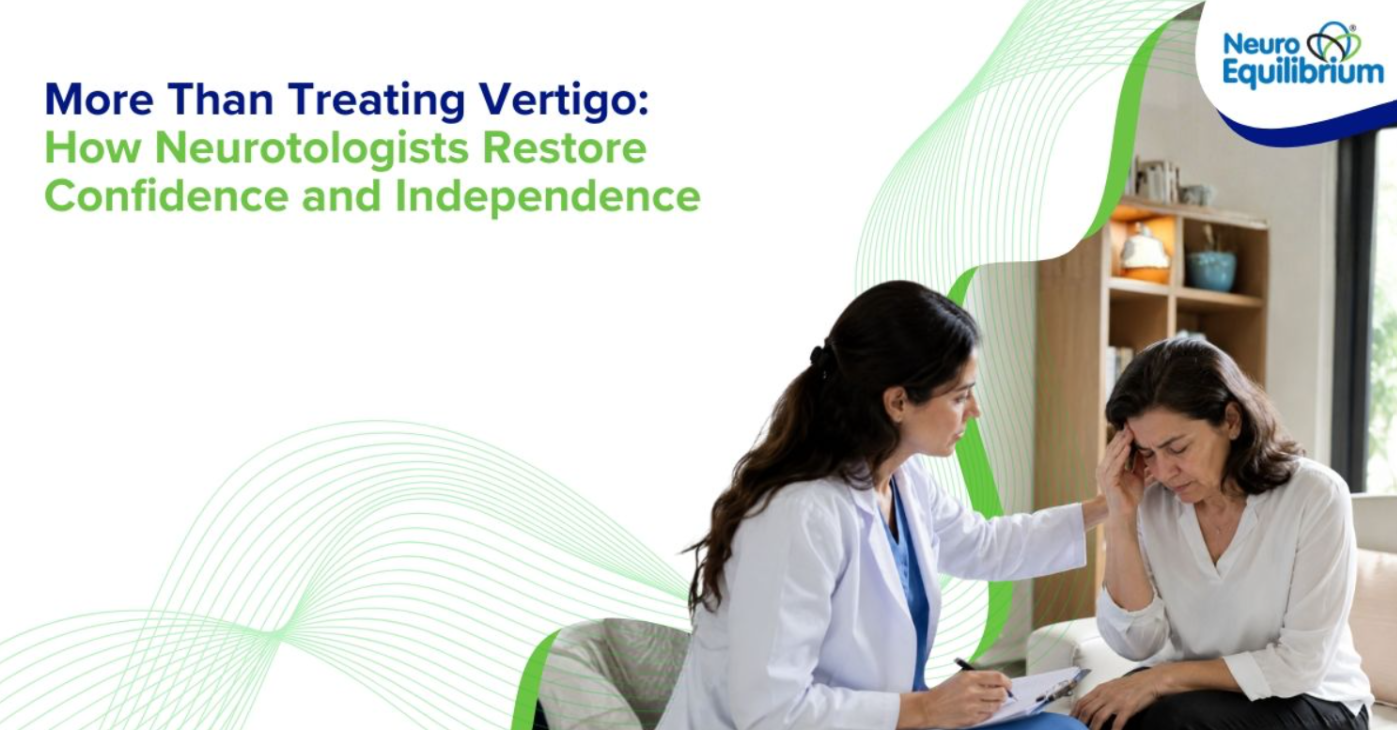
Talk to anyone who has come through vertigo treatment, and they will often talk less about test results and more about how their doctor made them feel.
Calming someone down mid-episode. Sitting with a worried spouse or adult child and actually explaining what a vestibular disorder is, in plain language. Pushing a patient to keep doing rehabilitation exercises on the weeks when nothing seems to be improving. Noticing, and saying out loud, when a patient takes their first unaided walk.
This is the part of the job that doesn’t show up in a treatment plan, and it’s usually what patients remember years later, long after the dizziness itself is a distant memory.

Doctor’s Day Message
This Doctor’s Day, our thanks go out to the neurotologists, ENT specialists, and vestibular therapists who spend their careers restoring something patients often struggle to even name: the confidence to move through the world without bracing for the next fall. It’s the same mission behind NeuroEquilibrium’s network of vertigo and balance clinics across India, helping people get their balance back, and along with it, their lives.
Conclusion
Treating vertigo was never just about making the spinning stop. It’s about handing people back the ordinary parts of life they’d quietly given up: a morning walk, a drive to work, a night of uninterrupted sleep. That’s worth marking this Doctor’s Day.
Two things worth flagging before this goes out: the brief calls for a real doctor quote for authenticity, and I’ve deliberately left that out rather than fabricate one attributed to a named person. Worth asking your NeuroEquilibrium contact for an actual line if you want that in. And this still needs medical review, per the brief’s own editorial notes, before publication.
Frequently Asked Questions
What does a neurotologist do?
A neurotologist is a specialized ENT doctor who diagnoses and treats disorders of the inner ear, hearing, balance system, and related nerves. They manage conditions such as tinnitus, Ménière’s disease, vestibular disorders, acoustic neuromas, and complex hearing loss. Neurotologists may also perform advanced ear surgeries and work closely with audiologists and neurologists to provide comprehensive care for hearing and balance-related conditions.
What’s the difference between a neurologist and a neurotologist?
A neurologist specializes in disorders of the brain, spinal cord, and nervous system, including conditions such as stroke, epilepsy, and multiple sclerosis. A neurotologist is an ENT specialist with advanced training in hearing and balance disorders. While both may evaluate dizziness or nerve-related symptoms, neurotologists focus specifically on the inner ear and auditory-vestibular system.
Why would an ENT send you to a neurotologist?
An ENT may refer you to a neurotologist when you have complex hearing or balance problems that require specialized evaluation and treatment. Common reasons include persistent dizziness, unexplained hearing loss, tinnitus, Ménière’s disease, vestibular disorders, or suspected tumors affecting the hearing nerve. A neurotologist has advanced expertise and diagnostic tools for managing these challenging conditions.
What are common neurotology disorders?
Common neurotology disorders include Ménière’s disease, vestibular migraine, benign paroxysmal positional vertigo (BPPV), tinnitus, sudden sensorineural hearing loss, acoustic neuroma, and chronic balance disorders. These conditions can affect hearing, equilibrium, and quality of life. Symptoms often include dizziness, vertigo, ringing in the ears, hearing difficulties, and imbalance, making specialized diagnosis and treatment important.
What are 5 symptoms neurologists say to never ignore?
Five symptoms that should never be ignored include sudden weakness or numbness, severe unexplained headaches, sudden vision changes, persistent dizziness or loss of balance, and difficulty speaking or understanding speech. These symptoms may indicate serious neurological conditions such as stroke, brain injury, or nervous system disorders. Immediate medical attention can help ensure prompt diagnosis and treatment.