







Each year, a million elderly people fall and end up in hospitals. A minor fall to a younger person may have serious consequences for a senior, such as a broken hip, head trauma, or months of healing. The risks increase when the senior already has a vestibular disorder, such as a balance problem in the inner ear. Elderly people with vertigo do not experience only spinning. It’s a serious health concern that can significantly increase the risk of a life-altering fall without anyone realizing it. The good news? Falling and/or dizziness among older adults is not inevitable. Most falls can be prevented with the right knowledge and care.
Why Vestibular Balance Problems in the Elderly Make Falls So Dangerous
The vestibular system in the inner ear is the body’s built-in GPS. It constantly provides the brain with information about what is up, what is down, how fast the body is moving, and where the body is in space. This system weakens with age, a condition known as presbyvestibulopathy. Over time, the hair cells in the inner ear that detect movement begin to decline, and the brain’s ability to process balance signals also weakens.
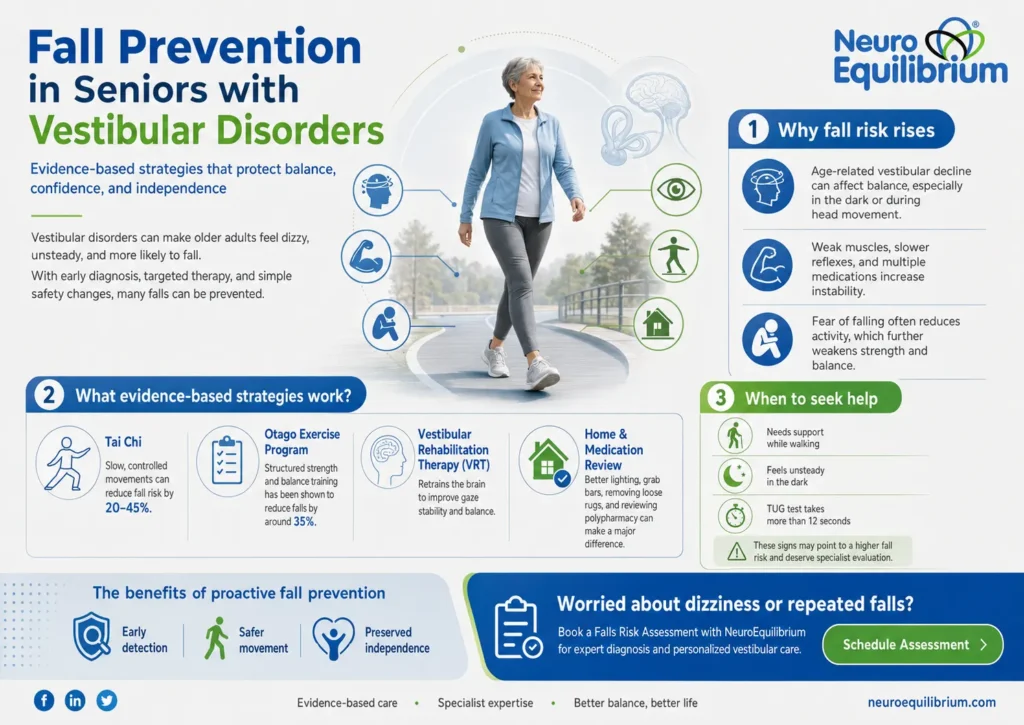
Vestibular dysfunction is faced by about 35% of adults aged 40 years and older, and this goes up steeply as age advances. Many seniors in India remain undiagnosed in the early stages and live with unsteadiness for months or even years before seeking help. Add to this lower muscle strength, delayed reflexes, and sometimes even several medications, and the potential for falls is a reality.
This is because falls are the major cause of injury death among adults aged 65 years and older. In older people, up to one-third of people who suffer a fall fracture of the hip die within one year. There’s an emotional price to it as well as the bodily damage. Many seniors become so afraid of falling that they limit their movement, which eventually weakens their muscles and further increases their risk of falls. This vicious cycle is one of the most crucial things that families need to know.
How to Spot a Senior Who Is at High Risk of a Vestibular-Related Fall
Not every unsteadiness is a sign of “normal aging”. When evaluating vestibular balance problems in elderly patients, there are several important red flags that families and physicians should never overlook:
- Trouble with walking or balance when turning the head
- Requiring a handrail or support for walking safely.Must hold on to walking surfaces or furniture for safety.
- Not being able to stand up without swaying or falling down when it is dark outside
- Dizziness that improves upon sitting for a few minutes after waking up in the morning
- Slips and falls over small objects often
The Timed Up and Go Test (TUG) is a quick and easy measure. The senior just stands up from a chair, walks 3 meters, makes a 180-degree turn, and sits down again. If it requires > 12 seconds, there is a high risk of falling. This can be done easily at home as a preliminary test before meeting a specialist.
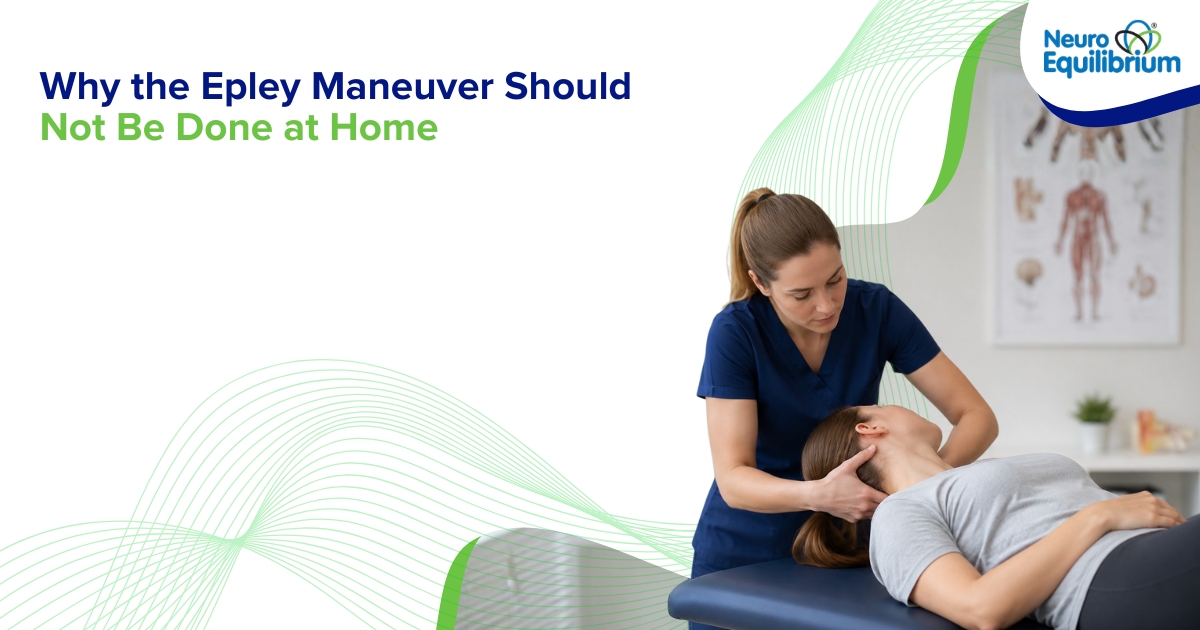
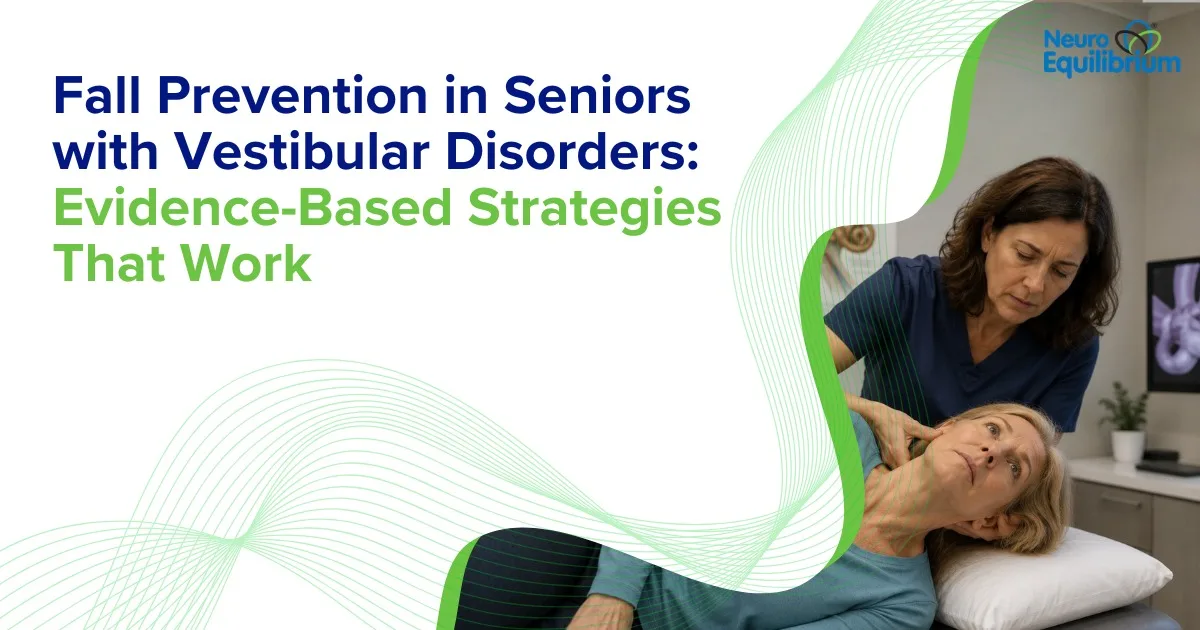
BPPV or Benign Paroxysmal Positional Vertigo is one of the most frequent and most treatable causes of falls and dizziness in the elderly. The little calcium crystals in the ear become dislodged and mislead the brain, leading to BPPV. As people get older, it becomes more common and is closely associated with low levels of Vitamin D. What’s best about BPPV is that it can be effectively treated in a matter of minutes by a trained specialist with a technique known as the Epley maneuver, which can often cure the condition completely.
Evidence-Based Senior Balance Exercises That Genuinely Reduce Fall Risk
Exercise is one of the most powerful tools available for fall prevention for seniors. But not all exercise is equal. The best programs specifically target balance, proprioception (the body’s sense of its own position), and leg strength.
Tai Chi: The Most Evidence-Backed Practice for Senior Balance
In medical research, multiple Cochrane reviews have shown that Tai Chi is a fall-prevention tool that can reduce fall rates by 20%-45%. Slow, deliberate movements to develop confidence, strengthen muscles of the lower limbs, and enhance balance. Tai Chi is simple, safe, and can be done at home in a small area or as a group, and is suitable for seniors in India.
The Otago Exercise Program: A Proven Protocol for Vestibular Fall Prevention
The Otago Program is a 17-exercise program developed in New Zealand and tested in several randomized controlled trials. It has been shown to reduce falls by around 35% among older adults living at home. The program is guided by a physiotherapist and is slow-paced, appropriate for older adults with vestibular balance impairments.
Vestibular Rehabilitation Therapy: Retraining the Brain to Compensate
VRT, or Vestibular Rehabilitation Therapy, is a unique and specialized therapy for people with inner ear disorders. Seniors are guided through exercises that begin in seated positions and gradually progress to standing and dynamic movements, helping them stabilize their gaze and improve balance. For the older patient, these sessions are more gradual, more careful, and more supervised than for younger patients. Advanced VRT clinics now also use Virtual Reality (VR), which places the individual in a real-life scenario, such as a busy market or uneven pavement, but in a completely safe environment.
Making the Home Safer for Seniors with Vestibular Problems
Most falls occur at home, and many can be prevented with simple interventions. The key high-risk locations are the bathroom, night bedroom, and stairways.
- Fit strong grab handles inside the bathroom and by the toilet.
- Install secure handrails on all stairs.
- Have night lights in the bedroom, hallway, and bathroom for safe movement at night.
- Take any loose rugs or mats away that may slip and cause problems
- Make sure chairs and beds are set at the proper height to allow easy standing without straining.
Most families are unaware of the importance of footwear. Thin-soled, firm shoes (as opposed to thick, cushioned shoes) provide better proprioceptive information to the brain, helping it know where the feet are on the ground. The type of walking aid (such as a walking stick or a rollator frame) should be selected based on the senior’s balance pattern, preferably with guidance from a physiotherapist.
Medications That Quietly Increase Fall Risk in the Elderly
Polypharmacy: Many seniors are taking 5 or more medications every day. There are several common types of drugs that can make falling and getting dizzy more likely in older people, but the family or the doctor may not always be aware of this:
- Antihistamines and long-term medications with the effects of an antihistamine can limit the brain’s ability to compensate for balance issues.
- Benzodiazepines (sleeping pills and anti-anxiety medications) can cause drowsiness and slow reflexes.
- Orthostatic hypotension is a sudden decrease in blood pressure that occurs when a person stands up from lying down, and can be caused by certain blood pressure medications.
A comprehensive medication review should be conducted for any senior experiencing new dizziness or falls, especially if they are taking more than five medications. This one-step exercise will sometimes completely remove the dizziness.
The Fear of Falling: Why the Mind Is as Important as the Body
The psychological aspect of fall prevention for seniors is often overlooked. Many seniors, after falling or even just worrying about falling, severely limit their activities. They no longer go for walks, stop attending group social events, and sit/lie more. This contributes to the rapid loss of muscle mass, diminished joint flexibility, and impaired balance, creating an increased risk of falls when they do begin to move.
This fear must be addressed in a comprehensive fall risk plan. Through CBT and a structured counseling process, seniors can recognize and modify negative thinking, gradually gain confidence, and return to the activities that keep them physically strong and emotionally well. An active senior is always a safer senior.

Why Choose NeuroEquilibrium for Vestibular Fall Prevention in Seniors
An assessment of an elderly person involves more than a general health check-up. It requires specialized diagnostics, targeted treatment, and expertise in age-related balance disorders. NeuroEquilibrium has created a dedicated geriatric vestibular pathway, all housed under one roof.
Advanced VNG (Videonystagmography) testing and VEMP testing aid in the comprehensive diagnostic testing to determine the exact cause of a senior’s unsteadiness. Whether it’s BPPV repositioning techniques or a personalized vestibular rehab program provided by a skilled physio, each aspect of the care is customized to the person. Medication reviews make sure there will be no hidden drug side effects that are making the situation worse. An AI-driven monitoring system enables patients and their families to monitor the patient’s progress remotely, eliminating the need for additional travel for follow-ups. Specialist vestibular therapy is no longer confined to the major metro cities, as it has a nationwide network of clinics.
Falls aren’t inevitable. Schedule your Falls Risk Assessment now and help ensure your loved one remains safe, strong, and independent.
Conclusion: A Fall Prevented Is Independence Preserved
Falls and dizziness in the elderly do not have to be a part of the aging process. Vestibular balance disorders in older adults can be accurately diagnosed, treated, and effectively managed. The risk of a fall can be significantly reduced through the combination of appropriate exercises for older adults, home modifications, medication evaluation, and specialist rehabilitation.
In India, NeuroEquilibrium leads the way in this field, equipped with cutting-edge diagnostics, specialized therapy, and heartfelt care, ultimately empowering seniors to regain their confidence and independence. There’s a first step to safer movement, and it’s a first step to help before a fall happens to everything.
Frequently Asked Questions
How do you treat vertigo in the elderly?
Hydration, medication as needed, Vestibular Rehabilitation Therapy, and balance therapy are options for older adults that may help treat vertigo, depending on the cause. When Benign Paroxysmal Positional Vertigo is the cause of vertigo, these maneuvers, such as the Epley Maneuver, may be very helpful. Elderly patients are particularly at risk of falls, for which prevention and close monitoring are critical.
What is called the red flag in vertigo?
Red flags for vertigo include signs and symptoms that indicate a serious neurological or medical emergency, not just an inner ear disorder. Symptoms are sudden weakness, slurring of speech, extreme headache, chest pain, fainting, double vision, trouble walking, numbness, or sudden hearing loss. The symptoms need immediate medical attention since they can be signs of stroke or another serious medical condition.
What is the most common cause of vertigo in the elderly?
Benign Paroxysmal Positional Vertigo is the most frequent cause of vertigo in the elderly. Tiny inner ear crystals, which become dislodged when you change your head from side to side, may cause age-related degeneration of the inner ear.
Is vertigo permanent or temporary?
Vertigo can be temporary or chronic, depending on the cause. Treatment and time can often cure many inner ear conditions, and some individuals may have repeated attacks over months or years. Long-term symptoms and the risk of balance problems can be reduced with early diagnosis and management.
Is vertigo a mini stroke?
Vertigo is typically associated with disorders of the inner ear’s balance, but sudden, severe vertigo can also be caused by a stroke or a transient ischemic attack. If weakness, difficulty speaking, numbness, or vision changes occur in addition to dizziness, seek emergency medical attention to check for a stroke.